
Description
Product Description
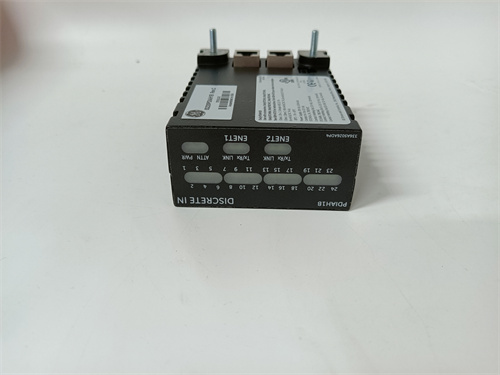
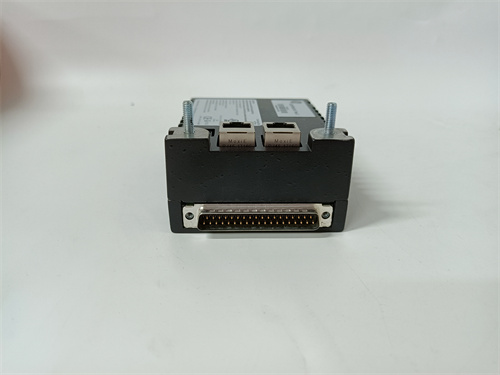
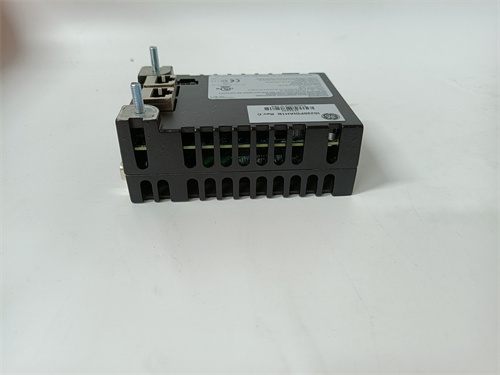
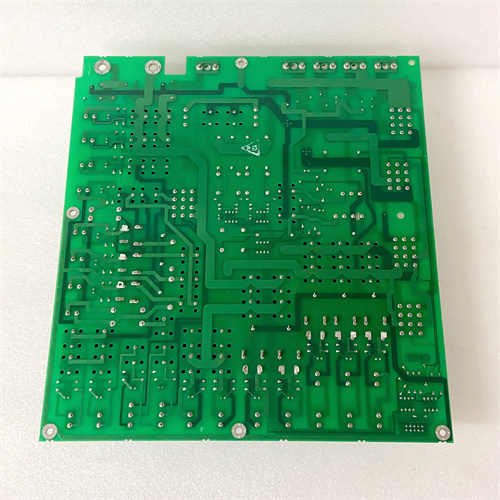
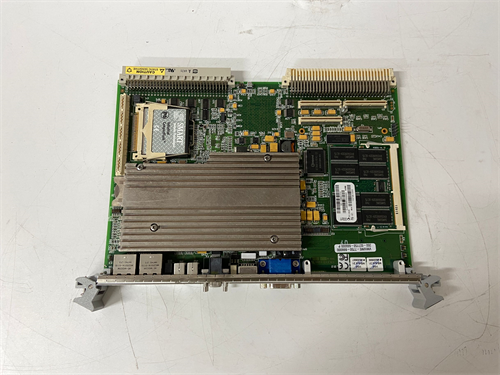
The GE IS220PDIAH1B is a critical Discrete Input Analog (DIA) module for the GE Mark VIe turbine control system. This module, the GE IS220PDIAH1B, serves as a versatile interface designed to handle both discrete (on/off) contact inputs and analog current or voltage inputs from field devices. Its primary function is to convert these mixed field signals into digital data for the Mark VIe controller, enabling it to monitor device statuses (like breaker positions or switch states) and analog process variables (like pressure or temperature transmitter signals) through a single, high-density module. The design of the GE IS220PDIAH1B emphasizes flexibility, high channel count, and reliable signal conditioning for the demanding environment of gas and steam turbine control.
Product Parameters
The technical specifications for the GE IS220PDIAH1B I/O module define its hybrid functionality:
-
Module Type: Discrete Input / Analog Input Module for Mark VIe System.
-
Input Configuration: Provides a combination of discrete and analog channels in one module. A typical configuration might be 16 discrete inputs and 8 analog inputs.
-
Discrete Inputs: Accepts dry contact or wet DC voltage inputs (e.g., 24-120V DC) for status monitoring.
-
Analog Inputs: Accepts standard analog signals such as 4-20 mA current loops or 0-10 VDC voltage signals.
-
Isolation: Features channel-to-channel and/or group isolation to prevent ground loops and protect the controller from field-side transients.
-
Resolution (Analog): High-resolution analog-to-digital conversion (e.g., 16-bit) for accurate measurement.
-
Diagnostics: Includes comprehensive diagnostics for both discrete and analog channels, such as open wire detection for analog loops and input health monitoring.
-
Communication: Connects to the Mark VIe controller via a high-speed, deterministic Ethernet-based backplane (PDH/UDH).
-
Power Supply: Powered from the Mark VIe rack’s power supply.
-
Status Indicators: LED indicators for module health, communication status, and individual channel status.
Advantages and Features
The GE IS220PDIAH1B offers significant advantages for turbine control system design:
-
High Density and Space Savings: The GE IS220PDIAH1B consolidates two types of I/O into a single module slot, optimizing control cabinet space and reducing the total number of modules required for a turbine skid or panel.
-
Wiring Simplification: By grouping related discrete and analog points for a piece of equipment (e.g., a pump’s run status and discharge pressure) on one module, field wiring is organized more logically, reducing cabinet cross-wiring and potential errors.
-
Flexible I/O Allocation: Provides design flexibility, allowing engineers to allocate I/O points more efficiently without being constrained by fixed module types, which can lead to cost savings and a more optimized bill of materials.
-
Deterministic Performance: As part of the Mark VIe’s high-speed I/O network, it ensures fast and predictable data updates, which is critical for the real-time control and protection of turbines.
-
Advanced Diagnostic Capabilities: The integrated diagnostics allow for proactive maintenance by identifying issues like failing sensors or wiring problems before they cause a process trip.
Application Cases in Industry
This hybrid I/O module is extensively used in heavy-duty turbine control applications:
-
Gas Turbine Auxiliary Systems: Monitors lube oil pump run status (discrete) and lube oil pressure (analog) for a single skid, simplifying I/O assignment.
-
Steam Turbine Valve Control: Reads valve limit switch positions (discrete) and valve position feedback signals (analog 4-20 mA) for governor control valves.
-
Compressor Station Control: Interfaces with compressor seal gas system valves (discrete open/close status) and seal gas differential pressure (analog).
-
Power Plant Balance of Plant: Used for motor control centers (MCCs) to read motor starter auxiliary contacts (discrete) and motor winding temperatures (analog via RTD transmitter).
-
Fuel Gas Skid Monitoring: Combines readings from solenoid valve position indicators (discrete) and fuel gas pressure transmitters (analog) on a single module.
Comparisons with Competing Products
When compared to using separate discrete and analog modules or other vendors’ I/O systems, the GE IS220PDIAH1B provides a system-optimized, efficient solution:
-
Integrated Design vs. Separate Modules: Using the GE IS220PDIAH1B is more slot-efficient and cost-effective than installing one discrete input module and one analog input module. It reduces the module count, backplane slots, and associated hardware costs.
-
Mark VIe Native Integration vs. Third-Party I/O: As a native GE module, it is fully supported by the ToolboxST engineering software, with automatic configuration and seamless integration into the control strategy. Third-party I/O requires separate configuration tools and gateway hardware, adding complexity.
-
Superior Diagnostic Integration: Faults from the IS220PDIAH1B are reported directly within the ToolboxST environment with detailed point information. Diagnostic integration for mixed third-party I/O is often more limited and cumbersome.
-
Optimized for Turbine Applications: Its specifications (isolation, sampling rates) are tailored for the noise and response time requirements of turbine control, which may not be the focus of generic industrial I/O modules.
Selection Suggestions and Precautions
Careful planning and configuration are essential:
-
Detailed I/O Point Planning: Create a detailed I/O list and designate which points will be served by the GE IS220PDIAH1B modules. Plan the assignment to fully utilize the mixed channels on each module efficiently.
-
Verify Signal Compatibility: Ensure the discrete input voltage ratings match your field device outputs (e.g., 125V DC wet contact). For analog inputs, confirm they are configured correctly for current (4-20 mA) or voltage (0-10V) in the software.
-
Proper Field Wiring Practices: Use appropriate cable types—shielded twisted pair for analog signals. Adhere to separation guidelines to keep analog wiring away from high-voltage AC lines to prevent noise induction.
-
Software Configuration is Key: The module must be correctly added to the Mark VIe hardware configuration in ToolboxST. Each channel must be defined as discrete or analog, tagged, and scaled appropriately for the control application.
-
Handle with ESD Precautions: This is a static-sensitive electronic module. Always use an ESD wrist strap when handling and install the module in a de-energized state.
A6350 PLC
A6210
A6110 CPU
A6220 PLC
PR6423/011-010+C0N0210-400UM
PR6426/010-110 PLC

Reviews
There are no reviews yet.