
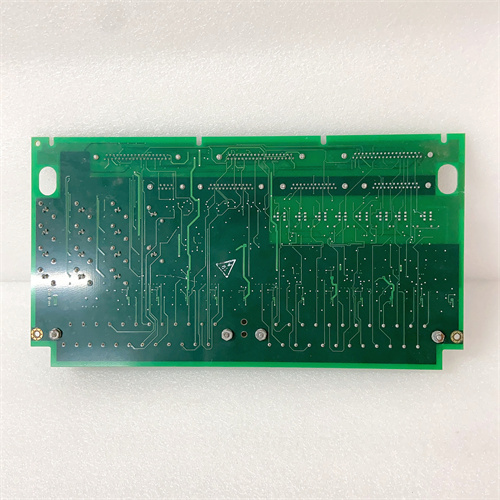
Description
Key Specifications
| Parameter | Specification |
|---|---|
| Vibration Inputs | 16 IEPE/accelerometer inputs, 8 proximity probe inputs |
| Vibration Measurement | Displacement (µm), velocity (mm/s), acceleration (g) |
| Frequency Range | DC to 40 kHz |
| Sampling Rate | Up to 100 kHz per channel (simultaneous) |
| FFT Analysis | On-board FFT, spectrum analysis, order analysis, cascade plots |
| Condition Health Monitoring | Bearing health, gear health, rotor health, alignment, imbalance, looseness |
| Machine Learning | On-board anomaly detection, trend prediction, diagnostic classification |
| Balancing Functions | Single-plane, dual-plane, multi-plane, hybrid balancing |
| Analog Outputs | 8 analog outputs (4–20 mA, ±10 V) |
| Digital I/O | 16 digital inputs, 16 digital outputs (24 VDC) |
| Communication | 2 Ethernet ports (10/100/1000Base-T) |
| Protocol Support | I/O Net, Modbus TCP, EtherNet/IP, DNP3, OPC UA, MQTT, REST API |
| Diagnostics | 2000-event fault log with timestamps and vibration/spectrum snapshots |
| Isolation | 1500 VDC (I/O-to-backplane) |
| Form Factor | 6U VME64x (160 × 233 mm), single-slot width |
| Operating Temp | –25 °C to +70 °C |
| Power Draw | 25 W (+5 V / +3.3 VDC) + external 24 VDC field power |
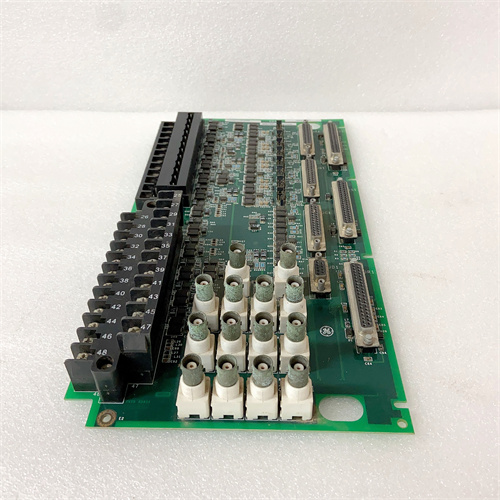
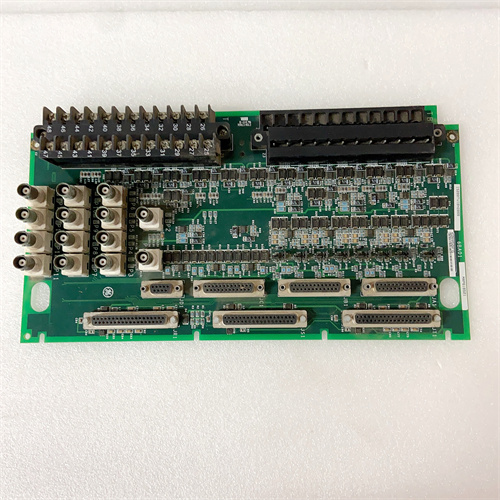
| Connectors | 48-pin terminal block with gold-plated contacts + RJ45 |
Advantages & Distinctive Features
-
Highest Channel Density: 16 IEPE + 8 proximity inputs—maximizes monitoring per slot.
-
Fastest Sampling: 100 kHz per channel for high-frequency fault detection.
-
Condition Health Monitoring: Bearing, gear, rotor, alignment, imbalance, looseness diagnostics.
-
On-Board Machine Learning: Anomaly detection, trend prediction, diagnostic classification.
-
Comprehensive Balancing: Single, dual, multi-plane, and hybrid balancing.
-
Advanced Visualization: Cascade plots, spectrum, order analysis.
-
Modern Integration: MQTT and REST API for IIoT and cloud connectivity.
-
Hot-Swappable: No rack power-down for replacement.
-
Direct Retrofit: Replaces older UCV series boards.
Application Fields
-
Gas Turbines: Comprehensive vibration monitoring, rotor balancing, condition health
-
Steam Turbines: Vibration monitoring, rotor balancing, condition health
-
Compressors: Active balancing, condition monitoring, AI-based diagnostics
-
Generators: Rotor balancing, vibration monitoring, bearing health
-
Wind Turbines: Gearbox health, bearing health, vibration monitoring
-
IIoT Integration: Cloud-based condition monitoring and predictive maintenance
Comparison with UCVBG1A and Competitors
| Feature | GE IS215UCVCH5 | GE IS215UCVBG1A | Competitor A | Competitor B |
|---|---|---|---|---|
| IEPE Inputs | 16 | 8 | 8 | 16 |
| Proximity Inputs | 8 | 4 | 4 | 8 |
| Sampling Rate | 100 kHz | 50 kHz | 20 kHz | 100 kHz |
| Condition Health | Bearing/Gear/Rotor/Alignment/Imbalance/Looseness | Basic | Basic | Advanced |
| Machine Learning | Anomaly/Trend/Classification | No | No | Basic |
| Balancing | Single/Dual/Multi/Hybrid | Single/Dual/Multi | Single/Dual | Single/Dual/Multi |
| Cascade Plots | Yes | No | No | Yes |
| IoT Protocols | MQTT, REST API | No | No | MQTT |
| Hot-Swappable | Yes | Yes | No | Yes |
Selection Guidelines
-
When to choose: Largest-scale, most advanced vibration monitoring and condition health applications.
-
Vibration Input Configuration: Configure IEPE or proximity probes per channel.
-
Condition Health Monitoring: Configure bearing, gear, rotor, and alignment diagnostics.
-
Machine Learning: Deploy anomaly detection and trend prediction models.
-
Balancing Mode: Select single, dual, multi-plane, or hybrid balancing.
-
IIoT Integration: Configure MQTT and REST API for cloud connectivity.
-
Compatibility: Fits all Mark VIe VME64x racks. Requires ControlST v8.0 or higher.
Operational Precautions
-
Wiring: Follow GE wiring diagrams—correct polarity for vibration sensors.
-
Vibration Sensor Verification: Verify sensor type and sensitivity during commissioning.
-
FFT/Order Analysis Baseline: Review baseline spectra and cascades.
-
Machine Learning Model Validation: Validate models before deployment.
-
Balancing Testing: Perform trial runs to verify balancing algorithms.
-
Condition Health Testing: Verify diagnostic outputs with known fault conditions.
-
LED Diagnostics: Green = normal; Amber = fault; Red = module fault.
-
Fault Log: Access 2000-event log via Toolbox ST—review vibration/spectrum snapshots.
-
Hot-Swap: Remove/insert slowly under power.
-
Spare Stock: Maintain 1 spare per 3–4 racks.
-
Firmware Updates: Ensure the GE IS215UCVCH5 is in “standby” mode.
-
ESD: Handle by edges with grounded wrist strap.
HIMA Z7138
HIMA Z7116
B&R 3IF060.6
SCHNEIDER TSXAEY414


Reviews
There are no reviews yet.