
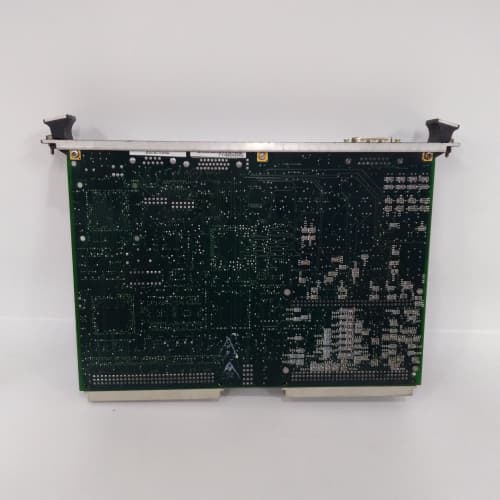
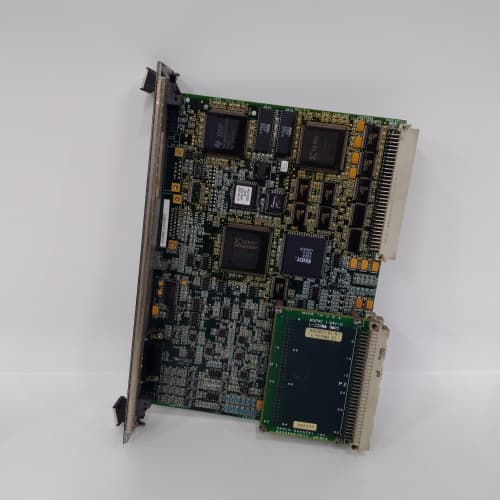
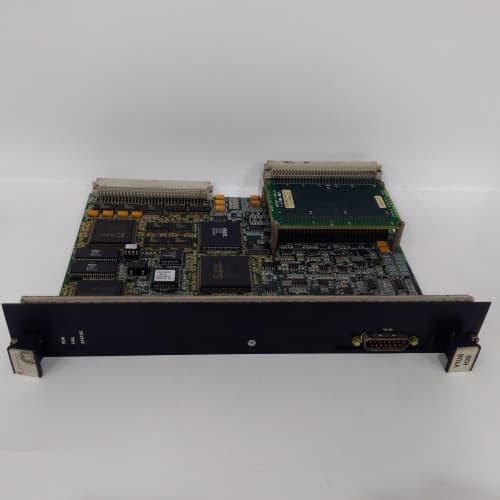
Description
Key Specifications
| Parameter | Specification |
|---|---|
| Input Channels | 16 differential analog input channels |
| Sensor Types Supported | Eddy current proximity probes, accelerometers (IEPE/charge), velocity sensors |
| Input Signal Range | –24 V to +24 V DC (proximity probes); ±10 V AC (accelerometers/velocity) |
| Measurement Parameters | Shaft relative vibration, absolute bearing vibration, shaft position, eccentricity, case expansion, shaft differential expansion |
| Frequency Response | DC to 15 kHz (programmable filters) |
| Resolution | 24-bit ADC |
| Accuracy | ±0.25% of full scale |
| Sample Rate | Up to 40 kHz per channel (simultaneous sampling) |
| Protection Functions | Over-vibration trip, shaft position deviation, rate-of-change detection, trend-based early warning, spectral band alarms |
| Input Protection | Overvoltage (±40 VDC), ESD (IEC Level 4) |
| Isolation | 1500 VDC (channel-to-backplane) |
| Diagnostics | 1000-event fault log with timestamps, waveform snapshots, and FFT snapshots |
| Operating Temp | –25 °C to +70 °C (extended range) |
| Humidity | 5–100% condensing (with conformal coating) |
| Coating | Conformal coating (standard) — UV-traceable |
| Manufacturing | 120-hour burn-in, 100% X-Ray/AOI, military-grade components |
| Power | 15 W (+5 V / +3.3 VDC) |
| Connectors | 48-pin terminal block with gold-plated contacts and captive washer screws |
| Built-in Test | Sensor bias voltage monitoring, open/short detection, signal quality analysis, FFT spectral analysis |
Advantages & Distinctive Features
-
16 High-Density Channels: Maximizes vibration inputs per slot—reduces rack space.
-
Superior Accuracy: ±0.25% full scale ensures precise vibration measurements for critical protection.
-
High Sample Rate: 40 kHz captures high-frequency vibration components (bearing wear, gear mesh, blade pass).
-
Extended Frequency Response: 15 kHz provides wider bandwidth for high-speed machinery.
-
24-Bit Resolution: Improved signal-to-noise ratio for better measurement fidelity.
-
FFT Spectral Analysis: On-board Fast Fourier Transform enables spectral band alarming—alarm on specific frequency bands (1X, 2X, gear mesh) for advanced fault diagnosis.
-
Shaft Differential Expansion: Additional parameter for steam turbine casing expansion monitoring.
-
Trend-Based Early Warning: Monitors long-term vibration trends—alerts before alert/danger levels.
-
Spectral Band Alarms: Configure alarms on specific frequency components for precise fault detection.
-
Conformal Coating Standard: Protects against humidity, salt spray, and chemical vapors—suitable for coastal, offshore, and industrial environments.
-
Extended Temperature Range: –25 °C to +70 °C operation—suitable for unheated cabinets and harsh environments.
-
1000-Event Fault Log with waveform and FFT snapshots—enables comprehensive post-event analysis.
-
Gold-Plated Captive Washer Terminals: Corrosion-resistant and vibration-proof connections.
-
Hot-Swappable: No rack power-down for replacement.
-
Direct Retrofit: Replaces all VVIBH1A, H1B, and H1C series boards.
Application Fields
-
Gas turbines: Bearing vibration, shaft displacement, eccentricity, spectral analysis for blade pass and combustion dynamics
-
Steam turbines: Bearing and casing vibration, thrust position, differential expansion
-
Compressors: Centrifugal and axial compressor vibration, surge protection, spectral alarming
-
Generators: Stator end-winding, bearing vibration, torsional vibration
-
Pumps: Critical feedwater and boiler circulation pump vibration
-
Wind turbines: Main bearing and gearbox vibration, spectral analysis for gear mesh
-
Offshore platforms: Salt-spray environments requiring conformal coating
-
Nuclear power plants: Safety-critical vibration monitoring
Comparison with Competitors
| Feature | GE IS200VVIBH1CAA | Bently Nevada 3500 | Rockwell XM-120 |
|---|---|---|---|
| Channels | 16 | 4 | 4 |
| Accuracy | ±0.25% | ±1% | ±1% |
| Sample Rate | 40 kHz | 10 kHz | 5 kHz |
| Frequency Response | 15 kHz | 5 kHz | 2 kHz |
| ADC Resolution | 24-bit | 16-bit | 16-bit |
| FFT/Spectral Alarming | Yes | Yes (external) | No |
| Differential Expansion | Yes | No | No |
| Coating | Standard | Optional | Optional |
| Temp Range | –25 to +70 °C | 0 to +60 °C | 0 to +55 °C |
| Fault Logging | 1000 events + waveforms/FFT | 100 events | No |
The GE IS200VVIBH1CAA offers superior channel density, accuracy, sampling, spectral analysis, and environmental protection compared to competitors—making it the definitive choice for comprehensive vibration monitoring in harsh environments.
Selection Guidelines
-
When to choose:
-
Critical vibration monitoring requiring ±0.25% accuracy, 40 kHz sampling, and 16 channels
-
Harsh environments (coastal, offshore, chemical, extreme temps)
-
Applications needing FFT spectral alarming and differential expansion monitoring
-
Maximum reliability (nuclear, critical infrastructure)
-
-
Sensor Selection: Proximity probes require ±24 VDC; accelerometers may need IEPE excitation (2–10 mA, programmable).
-
Filtering: Program low-pass filters per channel—1–5 kHz for bearings, up to 15 kHz for gear mesh and blade pass.
-
Spectral Alarms: Configure on 1X, 2X, sidebands, and gear mesh frequencies for advanced fault diagnosis.
-
Alarm/Trip Levels: Per API 670—alert at 50% range, danger at 80%. Use spectral band alarms for frequency-specific protection.
-
Coating Verification: Inspect under UV (365 nm) upon receipt—uniform fluorescence indicates proper coating.
-
Compatibility: Fits all Mark VIe VME64x racks. Requires ControlST v7.0 or higher for full features.
Operational Precautions
-
Wiring: Follow GEH-6860 diagrams—correct polarity and shield grounding essential. Use shielded twisted-pair cables; ground shield at terminal board only.
-
Sensor Bias Voltage Check: For proximity probes, verify bias voltage within –24 V to –4 V via Toolbox ST.
-
Calibration: Factory calibrated—verify against known vibration reference during commissioning.
-
Alarm/Trip Testing: Simulate vibration tests to verify alarm, trip, and spectral band alarm logic.
-
Spectral Alarm Testing: Simulate vibration at specific frequencies to verify spectral band alarming functionality.
-
FFT Baseline: Review FFT data during commissioning to establish baseline spectral signature for each machine.
-
LED Diagnostics: Green = normal; Amber = alert or quality warning; Red = danger/trip. Refer to GEH-6860 for H1C-specific blink codes.
-
Fault Log: Access 1000-event log via Toolbox ST—waveform and FFT snapshots included.
-
Coating Care: Use GE-approved cleaner; inspect annually under UV—rework voids per GE FSB.
-
Hot-Swap: Remove/insert slowly under power—processor auto-recognizes new module.
-
Spare Stock: Maintain 1 spare per 3–4 racks; “CAA” backward-compatible with all VVIB sockets.
-
Annual Verification: Verify channels against known reference; compare baseline spectral signatures.
-
Filter Review: Review filter and spectral alarm settings annually—adjust if machinery conditions change.
-
Firmware Updates: Ensure the GE IS200VVIBH1CAA is in “standby” mode during updates. Use ControlST v7.0 or higher.
-
ESD: Handle by edges only with grounded wrist strap—coating does not protect connectors.
-
Storage: Anti-static bag with desiccant at –40 to +85 °C; rotate every 3 years for coating inspection.
A-B 1756-PA72
A-B 1756-ENBT
A-B 1756-PA72
REXROTH BGR DKC03.3 LK PBK02


Reviews
There are no reviews yet.