
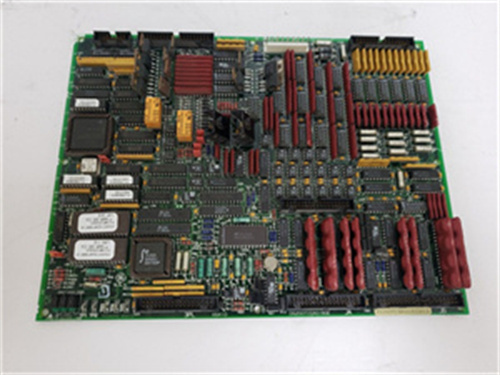
.jpg "IS200WETBH1ABA(4)")
Description
Product Parameters
The following table summarizes the key technical specifications for IS200VCRCH1BBB (based on GE Mark VIe platform standards):
| Parameter | Specification |
|---|---|
| Product Type | VME Bus Communication/Controller Interface Board |
| Series | GE Speedtronic Mark VIe |
| Bus Interface | VME 64x Backplane |
| Communication Protocols | Dual-redundant Ethernet (10/100/1000Base-T), PROFINET, or EGD (Ethernet Global Data) |
| Embedded Processor | High-performance RISC processor (≥300 MHz) with dedicated communication coprocessor |
| Operating Voltage | +5V DC (supplied via VME backplane), typical power consumption: 15–25W |
| Operating Temperature | –30°C to +65°C (industrial wide-temperature range) |
| Storage Temperature | –40°C to +85°C |
| Relative Humidity | 5% to 95% (non-condensing) |
| Redundancy Support | CPU redundancy and bumpless network failover (auto-switch < 50ms) |
| Firmware Upgrade | Online upgrade via ToolboxST software package |
| MTBF (Mean Time Between Failures) | > 200,000 hours (calculated per MIL-HDBK-217F) |
Advantages and Key Features
High-Availability Redundant Architecture
Supports dual-redundant Ethernet ports and redundant VME backplane communication paths. In case of a single-point failure (cable, switch, or port), IS200VCRCH1BBB enables automatic bumpless transfer, ensuring continuous turbine operation with near-zero downtime—critical for base-load power plants.
Superior Data Processing Throughput
The onboard dedicated communication coprocessor independently handles protocol conversion, data mapping, and cyclic I/O updates. This significantly offloads the main CPU (e.g., the primary controller in the same rack as IS200VCRCH1BBB), improving overall system scan cycle time to as low as 5–10 ms for time-critical loops.
Seamless Compatibility and Scalability
Fully compatible with all Mark VIe series I/O modules (analog, digital, thermocouple, RTD, etc.) and supports up to 16 expansion chassis via the VME backplane. This makes IS200VCRCH1BBB ideal for large-scale, multi-turbine or combined-cycle control systems.
Ruggedized for Harsh Environments
Features conformal coating (acrylic/silicone) on PCB, wide-temperature components, and Class A EMC/EMI immunity. It reliably operates in high-vibration (5–200 Hz, 2G), high-dust, and high-humidity environments typical of turbine decks and outdoor skid-mounted packages.
Intelligent Onboard Diagnostics
Equipped with multi-color LED status indicators (PWR, RUN, ERR, NET A/B) and built-in self-test (BIST) routines that allow real-time health monitoring. Fault logs are stored in non-volatile memory, enabling rapid root-cause analysis without shutting down the turbine.
Application Cases
In combined-cycle power plants, IS200VCRCH1BBB is deployed as the primary communication interface between the Mark VIe turbine controller and the plant DCS (e.g., Ovation or third-party systems). For example, a 600MW gas turbine facility in the Middle East uses IS200VCRCH1BBB to synchronize speed and load setpoints across four VME racks, achieving synchronization accuracy within ±2 rpm. In offshore oil platforms, this board connects emergency shutdown (ESD) sensors to the main control room, where IS200VCRCH1BBB handles 500+ digital I/O points with a deterministic response time under 15 ms. Another case involves a steam turbine retrofit project in Europe, where two redundant IS200VCRCH1BBB units replaced older proprietary communication cards, reducing network jitter from 120 ms to under 8 ms and improving valve position control stability by 40%.
Comparison with Competing Products
Compared to the Siemens 6ES7450-1AP00-0AE0 (PROFIBUS master interface) or the ABB HIEE451116R0001 (CI854 communication interface), IS200VCRCH1BBB offers three distinct advantages. First, it natively supports dual-redundant Ethernet without requiring additional gateway modules, whereas Siemens and ABB alternatives often need external media converters. Second, the VME 64x backplane bandwidth of 400 MB/s is significantly higher than the 12 MB/s PROFIBUS DP or 100 MB/s PROFINET IRT typical of competitors, making IS200VCRCH1BBB better suited for high-density I/O scanning (over 2000 points per rack). Third, GE’s ToolboxST environment provides integrated diagnostic views for IS200VCRCH1BBB that display packet loss, retry counts, and link quality in real time—a feature often requiring third-party analyzers in competitive systems. However, the Siemens offering has a lower entry cost (approximately 30% cheaper) and broader third-party device support, while the ABB unit provides more flexible configuration of cyclic/acyclic data exchange. For new Mark VIe installations, IS200VCRCH1BBB is the only native choice, while retrofitting existing non-GE plants may require additional protocol adaptation engineering.
Selection Recommendations
Choose IS200VCRCH1BBB when you are building or expanding a GE Mark VIe-based turbine control system that demands high-speed VME backplane communication and dual-redundant network connectivity. This board is mandatory for applications requiring deterministic cyclic data exchange below 10 ms and for systems with more than 8 expansion racks. If your plant already runs Mark VIe but only needs basic serial communication (Modbus RTU), consider the IS200SPROG1A instead. For new projects with less than 4 racks and non-redundant networks, the lower-cost IS200VCRCH1AAB (single Ethernet port, no coprocessor) may suffice, but note that it lacks the advanced diagnostic features of IS200VCRCH1BBB. Always verify firmware revision compatibility with your existing CPU (e.g., IS200VCRCH1BBB requires firmware v7.2 or higher to work with IS200TBCIH1C analog input boards). Consult GE’s product lifecycle status—IS200VCRCH1BBB remains active but verify lead times (typically 8–12 weeks) as some Mark VIe components are transitioning to Emerson branding.
Precautions
Handle IS200VCRCH1BBB with proper ESD protection (grounded wrist strap and anti-static packaging) as the board contains sensitive CMOS components. Before inserting into the VME rack, confirm that the backplane power supply (+5V DC) is stable within ±5% tolerance—voltage spikes above 5.5V can permanently damage the onboard processor. Do not hot-swap IS200VCRCH1BBB unless the Mark VIe cabinet explicitly supports live insertion; most standard racks require complete power-down. During firmware updates via ToolboxST, ensure both redundant Ethernet links are active and the backup controller is in standby mode; interrupting the update process may corrupt the bootloader, requiring factory reflash. For installations in high-condensation environments (e.g., coastal or tropical sites), apply additional silicone sealant around the RJ45 connectors to prevent corrosion. Finally, periodically (every 6 months) check the onboard supercapacitor (used for real-time clock backup) for swelling or leakage, as replacement requires desoldering and is not field-serviceable—contact GE/Emerson support for RMA exchange if the capacitor fails. Always retain a spare IS200VCRCH1BBB in inventory for critical turbines, as lead times for repair can exceed 4 weeks.
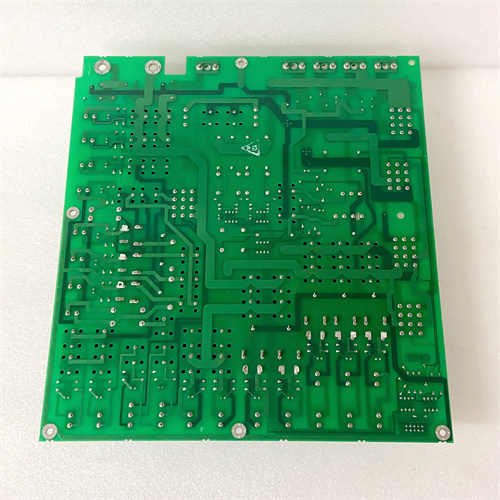
.jpg)
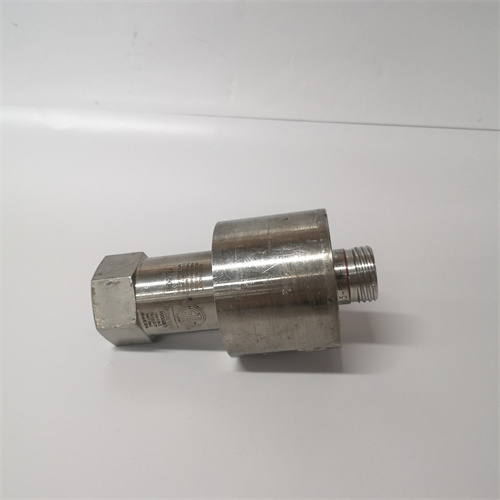
.jpg)
SCHNDIDER 140CPS12420
LEM LC1000-S/SP7
LEM LC1000-S/SP7

.jpg)

Reviews
There are no reviews yet.