
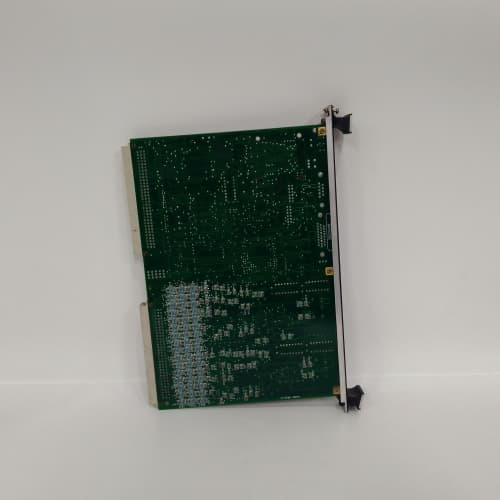
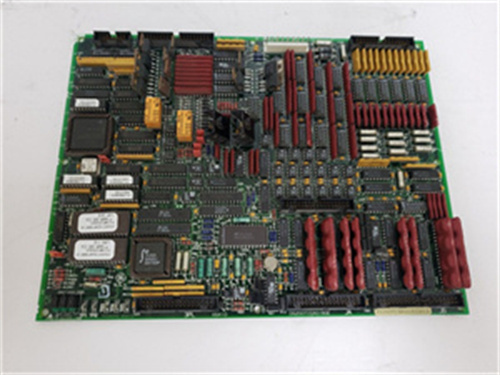
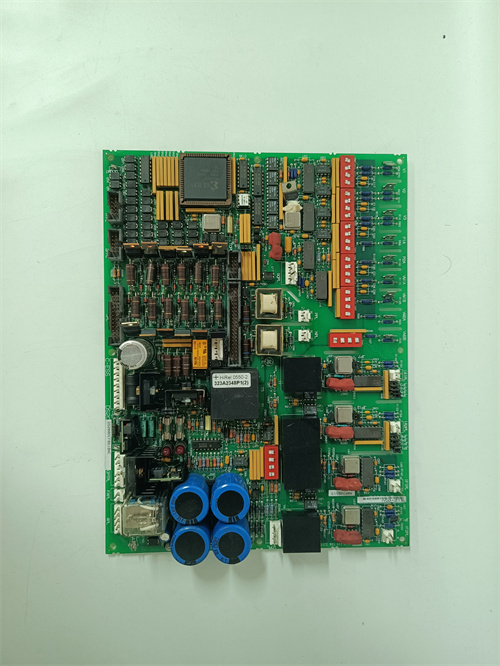
Description
Technical Specifications
| Parameter | Specification |
|---|---|
| Manufacturer | General Electric |
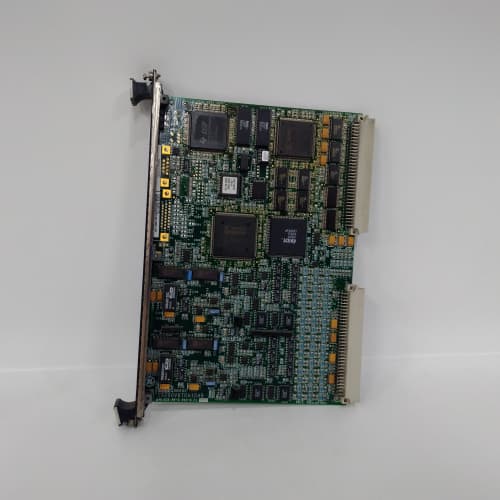
| Model | IS200EPSMG2AED |
| Communication Interfaces | 2× configurable ports (RS-485 / fieldbus) – enhanced performance |
| Supported Protocols | Modbus RTU, DNP3, IEC 61850, GE proprietary protocols (variant-specific) |
| Power Supply Functions | UPS monitoring, battery charger control, advanced battery health algorithms |
| Motor Control Functions | Start/stop, status monitoring, protection coordination, load shedding |
| Supported Equipment | UPS systems, battery chargers, motor control centers, starters (specific families) |
| Processing | Enhanced processor (“2” series) with larger buffer memory |
| Power | +5V DC / 2.5A, ±15V DC / 0.5A (higher than “1” series) |
| Temp Range | -30°C to +65°C |
| MTBF | > 100,000 hours |
| Suffix Meaning | “AED” = enhanced “2” series with specific firmware/configuration |
Advantages and Key Features
Enhanced Processing Power: The “2” series IS200EPSMG2AED provides faster data processing and larger buffer memory compared to the “1” series, enabling more complex power management and coordination algorithms.
Integrated Power Supply and Motor Gateway: Combines UPS/battery monitoring with motor control in a single enhanced-performance board.
Advanced Battery Health Monitoring: The “AED” firmware may include sophisticated battery health algorithms, predictive maintenance indicators, and detailed charge/discharge analytics.
Coordinated Load Shedding: Enables automatic shedding of non-critical motors during UPS/battery faults or power quality events.
Multi-Protocol Support: Supports Modbus RTU, DNP3, and IEC 61850 with variant-specific optimizations.
Application Fields and Case Studies
Used in large turbine installations requiring enhanced power management and motor coordination, facilities with advanced battery monitoring requirements, and systems requiring fast load shedding during power events. In a 600 MW plant, the IS200EPSMG2AED managed UPS monitoring and motor control for auxiliary systems, automatically shedding non-critical loads within 50 ms during a UPS fault, preventing critical control system power loss.
Comparison with Competing Products
| Dimension | IS200EPSMG2AED | IS200EPSMG1ABB | IS200EPSDG1AAB |
|---|---|---|---|
| Primary Function | Power supply + motor | Power supply + motor | Power supply only |
| Series | 2 (Enhanced) | 1 (Standard) | 1 (Standard) |
| Processing Power | Higher | Standard | Standard |
| Protocol Support | + IEC 61850 | Modbus RTU, DNP3 | Modbus RTU, DNP3 |
| Power Draw | 2.5A | 2.0A | 2.0A |
| Advanced Battery Monitoring | Yes (AED) | No | Limited |
Selection Recommendations
Choose IS200EPSMG2AED for large plants requiring enhanced processing, advanced battery monitoring, or IEC 61850 support. Select over “1” series boards when faster response, more complex coordination, or higher equipment capacity is needed. Verify “AED” firmware matches your UPS and motor equipment. Deploy redundant boards for critical power/motor coordination paths.
Precautions and Important Notes
Use ESD-safe handling. Verify communication wiring and settings. The IS200EPSMG2AED draws 2.5A (+5V) – verify rack power supply capacity before installation. Confirm “AED” firmware supports your specific equipment. Never interrupt firmware updates. Document all configurations. Store spares in anti-static packaging. Do not mix IS200EPSMG2AED with “1” series boards in redundant pairs without verifying identical firmware. Allow 30 seconds boot time. Test both power monitoring and motor control functions during commissioning. If replacing a “1” series board with the IS200EPSMG2AED, verify power supply capacity and equipment compatibility before installation. The higher performance of the “2” series may require firmware updates to other system components.
A-B 1747-SN
FANUC A860-0301-T004 4000P
GE DS3800HPIB
SCHNEIDER 140ACO13000

.jpg)

Reviews
There are no reviews yet.