
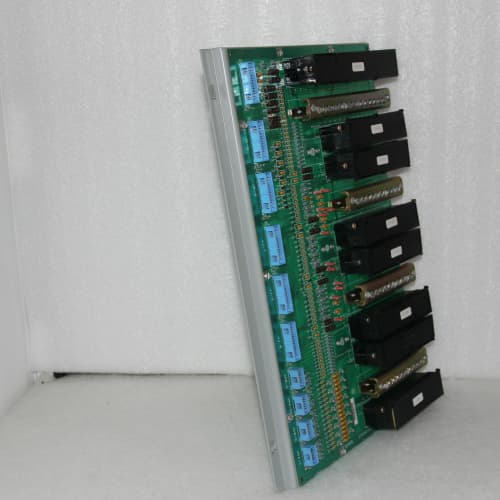
Description
Key Parameters
-
Channels: 4 isolated analog inputs – each configurable for thermocouple OR RTD
-
Sensor Types:
-
Thermocouple: J, K, T, E, R, S, B, N
-
RTD: Pt100, Pt1000, Ni100 (2‑wire, 3‑wire, or 4‑wire – software‑configurable)
-
-
Resolution: 24‑bit ADC
-
Accuracy:
-
Thermocouple: ±0.04% of reading + ±0.3°C (K‑type, 25°C); ±0.6°C over –40°C to +85°C
-
RTD: ±0.05°C (Pt100, 25°C); ±0.2°C over –40°C to +85°C
-
-
Cold‑Junction Compensation: Built‑in per channel for thermocouple mode
-
Lead Resistance Compensation: Automatic for 3‑wire/4‑wire RTDs
-
Input Impedance: >10 MΩ (thermocouple mode)
-
Sampling Rate: Up to 100 Hz per channel (thermocouple mode); up to 50 Hz (RTD mode) – high‑speed mode; filtering disabled
-
EMC/Noise Rejection: Enhanced CMRR > 120 dB, built‑in 50/60 Hz digital filtering (reduces speed when enabled)
-
Diagnostics: Open‑circuit detection, short‑circuit detection, over‑range/under‑range, CJC sensor fault, signal‑loss detection, per‑channel LED status
-
Isolation: 1500 V RMS (field‑to‑backplane); 500 V RMS between channels (per‑channel isolation)
-
Operating Temperature: –40°C to +85°C (extended range)
-
Terminal Type: Spring‑clamp (tool‑free, vibration‑resistant) – per suffix “IJ”
-
Power: 24 V DC backplane power, ≤5 W
-
Dimensions: Standard single‑width Eurocard form factor
Advantages
-
Universal mixed‑sensor support – each channel independently configurable for thermocouple or RTD; single module covers both sensor types.
-
Pre‑configured – fixed terminal configuration; reduces setup time and engineering effort.
-
Spring‑clamp terminals – tool‑free push‑in wiring; reduces installation time; highly resistant to vibration loosening – critical for transportation, marine, and heavy industrial applications.
-
Per‑channel isolation – 500 V between channels; prevents ground loops, cross‑channel interference, and channel‑to‑channel faults.
-
Extended temperature range – operates reliably in extreme ambient conditions (up to +85°C); ideal for outdoor, desert, or unheated enclosures.
-
Enhanced EMI protection – CMRR > 120 dB; ideal for installations near VFDs, inverters, and high‑power switching equipment.
-
High‑speed 100 Hz sampling (TC mode) – captures fast‑changing temperature transients.
-
Per‑channel CJC – independent cold‑junction compensation for thermocouple channels.
-
Automatic RTD lead compensation – for 3‑wire/4‑wire RTDs.
-
24‑bit resolution – provides superior measurement fidelity.
-
Direct sensor connection – eliminates external transmitters.
-
Open‑circuit/short‑circuit detection – detects broken wires or sensor faults instantly.
-
Hot‑swappable – replace without rack power‑down.
-
Reduced spare parts – one module covers multiple sensor types.
Applications
-
Transportation & rail – mixed exhaust (TC) and bearing (RTD) temperature monitoring with vibration‑resistant wiring
-
Marine & offshore – engine room temperature monitoring with spring‑clamp terminals and mixed sensor types
-
Oil & gas – pipeline (RTD) and compressor (TC) temperature monitoring in desert or arctic locations
-
Outdoor power substations – transformer (RTD) and busbar (TC) temperature monitoring
-
Steel mills & foundries – furnace (TC) and cooling water (RTD) temperature monitoring
-
Wind turbines – gearbox (RTD) and nacelle (TC) temperature monitoring
-
Engine testing – exhaust (TC) and coolant (RTD) temperature monitoring
-
Pharmaceutical manufacturing – reactor (RTD) and sterilization (TC) temperature control
Competitor Comparison
| Feature | DS3820TMIJ | DS3820TIMCRF (TC‑only Spring) | DS3820PSLB1A (RTD‑only Spring) |
|---|---|---|---|
| Channels | 4 | 4 | 4 |
| TC Support | Yes (J, K, T, E, R, S, B, N) | Yes | No |
| RTD Support | Yes (Pt100, Pt1000, Ni100) | No | Yes (Pt100 only) |
| Resolution | 24‑bit | 24‑bit | 24‑bit |
| Sampling Rate (TC) | 100 Hz | 100 Hz | N/A |
| Operating Temp | –40°C to +85°C | –40°C to +85°C | –40°C to +70°C |
| Per‑channel Isolation | Yes (500 V) | Yes (500 V) | Yes (500 V) |
| Terminal Type | Spring‑clamp | Spring‑clamp | Spring‑clamp |
| Configuration | Fixed (suffix) | Fixed (suffix) | Software‑configurable |
| Setup Time | Instant | Instant | Moderate |
| Inventory | One module for all | One module type | One module type |
| Cost per channel | Mid‑high | Mid | Mid |
The DS3820TMIJ is the universal, spring‑clamp, fixed‑configuration temperature input module – supporting both thermocouples and RTDs in a single slot with 24‑bit resolution, per‑channel isolation, extended temperature range, enhanced EMI protection, vibration‑resistant wiring, and plug‑and‑play simplicity. Compared to dedicated TC‑only or RTD‑only modules, it offers maximum flexibility and reduces spare parts inventory (one module replaces two), with zero configuration effort. For demanding mixed‑sensor temperature monitoring applications in harsh, high‑vibration environments requiring minimal engineering effort, the DS3820TMIJ delivers the most versatile, rugged, and deployment‑ready solution.
Selection Tips
-
Choose DS3820TMIJ when you need mixed thermocouple and RTD temperature measurement with per‑channel isolation, enhanced EMI protection, extended temperature operation (–40°C to +85°C), vibration‑resistant spring‑clamp wiring, and plug‑and‑play simplicity.
-
Ideal for transportation, marine, oil & gas, outdoor substations, steel mills, wind turbines, and engine testing applications with mixed sensor types.
-
Verify the sensor type for each channel – software‑configurable per channel.
-
For RTDs, use 3‑wire or 4‑wire for accurate measurements (2‑wire adds lead resistance error).
-
For thermocouples, use the correct extension wire type – standard copper wire introduces errors.
-
Confirm spring‑clamp terminals accept your wire gauge (typically 0.2–2.5 mm² / 24–14 AWG) and consider using ferrules for stranded wire.
-
Confirm the terminal configuration (IJ) matches your panel wiring requirements.
-
For maximum speed (100 Hz) in TC mode, disable input filtering – enabling 50/60 Hz rejection reduces sampling rate.
-
Ensure your PLC/DCS can handle the data format from DS3820TMIJ.
Precautions
-
Wire preparation: Use only solid or stranded wire with proper ferrule termination – bare stranded wire may not make reliable contact in spring‑clamp terminals.
-
Wire insertion: Insert wire fully into the spring‑clamp opening until it stops; pull gently to verify secure connection.
-
Sensor selection: Each channel must be configured for either TC or RTD mode – ensure correct selection before operation.
-
Sampling rate vs. filtering: Maximum 100 Hz (TC mode) achieved with filtering disabled. Enable filtering only if noise rejection is required – it will reduce the sampling rate.
-
Isolated grounds: Do not tie the isolated commons of different channels together – this defeats the isolation and can create ground loops. The DS3820TMIJ maintains 500 V isolation between channels only when commons are kept separate.
-
RTD lead resistance: For 2‑wire RTDs, lead resistance directly adds error – use 3‑wire or 4‑wire for accurate measurements. The DS3820TMIJ compensates for 3‑wire/4‑wire automatically.
-
Thermocouple CJC: Position the DS3820TMIJ away from drafts and heat sources – CJC errors affect TC accuracy.
-
Thermocouple extension wires: Use the correct thermocouple extension wire (same type as sensor) from field to module. Standard copper wire introduces measurement errors.
-
Wiring: Use shielded twisted‑pair cables; ground shield at module end only. Enhanced EMI protection requires proper grounding to achieve >120 dB CMRR.
-
Grounding: For grounded thermocouples, maintain single‑point grounding to avoid ground loops – per‑channel isolation provides additional protection.
-
Temperature derating: At sustained +85°C ambient, ensure adequate airflow – the DS3820TMIJ dissipates up to 5 W and may require forced cooling in dense racks.
-
Calibration: Perform periodic calibration using precision sources – extended temperature operation may accelerate drift.
-
Spare: Keep one spare DS3820TMIJ for critical mixed‑sensor loops – the spring‑clamp, universal variant may have longer lead times. Also stock replacement ferrules for spring‑clamp terminals.
CREMERS EKNSB-24
A-B 1769-BA
A-B 1756-BA2

Reviews
There are no reviews yet.