
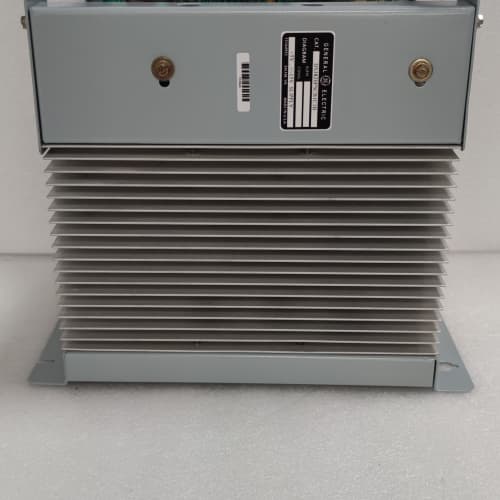
Description
Key Parameters
-
Channels: 4 redundant pairs (8 total analog inputs) – two sensors per measurement point
-
Sensor Type: Pt100 (2-wire, 3-wire, or 4-wire – software-configurable per channel)
-
Resolution: 24-bit ADC
-
Accuracy: ±0.05°C (Pt100, 25°C); ±0.2°C over –40°C to +70°C
-
Excitation Current: Software-selectable 0.1 mA, 0.5 mA, 1 mA (per channel)
-
Lead Resistance Compensation: Automatic for 3-wire and 4-wire configurations
-
Measurement Range: –200°C to +850°C
-
Redundancy Mode: Active/Standby with automatic fail-over (switchover time < 10 ms)
-
Communication: Dual backplane paths for redundant data transmission
-
EMC/Noise Rejection: Enhanced CMRR > 120 dB, built-in 50/60 Hz digital filtering
-
Diagnostics: Open-circuit detection, short-circuit detection, signal-loss detection, redundancy health monitoring, channel mismatch alert, per-channel LED status
-
Isolation: 1500 V RMS (field-to-backplane); 500 V RMS between channels (per-channel isolation)
-
Sampling Rate: Up to 50 Hz per channel (with 50/60 Hz noise rejection)
-
Terminal Type: Spring-clamp (tool-free, vibration-resistant) – per suffix “A”
-
Power: 24 V DC backplane power, ≤5.5 W (plus external field supply)
-
Operating Temperature: –40°C to +70°C
Advantages
-
Spring-clamp terminals – tool-free push-in wiring; reduces installation time; highly resistant to vibration loosening – critical for transportation, marine, and heavy industrial applications.
-
Enhanced EMI protection – CMRR > 120 dB and advanced digital filtering; ideal for installations near VFDs, inverters, and high-power switching equipment.
-
Dual-channel redundancy – two sensors per measurement point with automatic fail-over; ensures uninterrupted temperature monitoring.
-
Fast fail-over (< 10 ms) – minimal interruption to critical control loops.
-
Redundant communication paths – dual backplane links for fail-safe data transmission.
-
24-bit resolution – provides superior measurement fidelity.
-
Per-channel isolation – 500 V between channels; prevents ground loops and cross-channel interference.
-
Automatic lead compensation – for 3-wire/4-wire RTDs, cancels lead resistance errors.
-
Redundancy health monitoring – continuously verifies both sensor channels and alerts on mismatch or degradation.
-
Enhanced diagnostics – includes signal-loss and channel mismatch detection.
-
Hot-swappable – replace without rack power-down.
-
Wide measurement range – –200°C to +850°C covers most industrial applications.
Applications
-
Nuclear power plants – redundant temperature monitoring in safety-critical reactor cooling systems
-
Oil & gas – pipeline temperature monitoring in critical transport lines with fail-safe requirements
-
Chemical processing – reactor temperature control in exothermic processes requiring redundancy
-
Pharmaceutical manufacturing – critical fermenter and storage temperature control with regulatory compliance
-
Aerospace – engine and component thermal monitoring with dual-sensor redundancy
-
Power generation – turbine bearing and generator temperature monitoring with high-availability requirements
-
Data centers – cooling system temperature monitoring with redundant sensors
-
Food processing – critical oven and sterilization temperature control
Competitor Comparison
| Feature | DS3820RDNA | DS3820RDMA1A1A (Screw, Standard EMI) | Competitor Redundant Pt100 Module |
|---|---|---|---|
| Channels | 8 (4 redundant pairs) | 8 (4 redundant pairs) | 8 (4 redundant pairs) |
| Resolution | 24-bit | 24-bit | 24-bit |
| Accuracy | ±0.05°C | ±0.05°C | ±0.05°C |
| Fail-over Time | < 10 ms | < 10 ms | < 20 ms |
| EMC Protection | Enhanced (CMRR > 120 dB) | Standard | Basic |
| Terminal Type | Spring-clamp | Screw-type | Screw-type |
| Vibration Resistance | High | Medium | Medium |
| Redundant Communication | Yes | Yes | Optional |
| Health Monitoring | Yes (channel mismatch) | Yes | Basic |
| Cost | High | Mid-high | Very High |
The DS3820RDNA is the spring-clamp, EMI-hardened redundant analog input module – offering four fully redundant Pt100 channels in a single slot with enhanced noise immunity and vibration-resistant wiring. Compared to the screw-terminal DS3820RDMA1A1A, it adds superior EMI protection (CMRR > 120 dB) and vibration-resistant wiring – critical for harsh industrial environments. Against competitor redundant modules, it offers faster fail-over (< 10 ms vs. < 20 ms) and superior diagnostics (channel mismatch alert) at a lower cost. For mission-critical temperature monitoring in high-EMI, high-vibration environments, the DS3820RDNA delivers the most reliable and robust solution.
Selection Tips
-
Choose DS3820RDNA when your application requires redundant temperature monitoring with automatic fail-over, enhanced EMI protection, and vibration-resistant spring-clamp wiring – ideal for safety-critical systems in harsh environments.
-
Ideal for nuclear, oil & gas, chemical, pharmaceutical, aerospace, and power generation applications near VFDs and high-power equipment.
-
Plan for two sensors per measurement point (primary + secondary) – provides 4 redundant pairs.
-
Verify the wire configuration (2-wire, 3-wire, or 4-wire) – software-configurable per channel.
-
Confirm spring-clamp terminals accept your wire gauge (typically 0.2–2.5 mm² / 24–14 AWG) and consider using ferrules for stranded wire.
-
For 2-wire sensors, lead resistance adds error – use 3-wire or 4-wire for accurate measurements.
-
Not suitable for Pt1000, Ni RTDs, or thermocouples – use dedicated modules.
-
Ensure your PLC/DCS can handle redundant data processing and fail-over logic from the DS3820RDNA.
Precautions
-
Wire preparation: Use only solid or stranded wire with proper ferrule termination – bare stranded wire may not make reliable contact in spring-clamp terminals.
-
Wire insertion: Insert wire fully into the spring-clamp opening until it stops; pull gently to verify secure connection.
-
Dual sensor placement: For effective redundancy, install primary and secondary sensors at the same measurement point with independent wiring paths.
-
Lead resistance: For 2-wire sensors, lead resistance directly adds error – use 3-wire or 4-wire for accurate measurements. The DS3820RDNA compensates for 3-wire/4-wire automatically.
-
Excitation current: Higher currents (1 mA) produce self-heating errors – use 0.1 mA or 0.5 mA for sensitive sensors.
-
Wiring: Use shielded twisted-pair cables; ground shield at module end only. Enhanced EMI protection requires proper grounding to achieve >120 dB CMRR.
-
Redundancy testing: Test fail-over behavior during commissioning – force a primary sensor fault and verify the DS3820RDNA switches to secondary within < 10 ms.
-
Health monitoring: Configure mismatch thresholds – alerts when primary and secondary readings differ beyond a set point.
-
Power sequencing: Apply backplane power before field power.
-
Calibration: Perform periodic calibration using precision resistors to maintain accuracy – calibrate both sensor pairs.
-
Spare: Keep one spare DS3820RDNA for critical redundant loops – the spring-clamp, EMI-hardened variant may have longer lead times. Also stock replacement ferrules for spring-clamp terminals.
A-B 1756-BA2
A-B 1747-BA
A-B 1747-BA
GE IC698ACC701

.jpg)


Reviews
There are no reviews yet.