
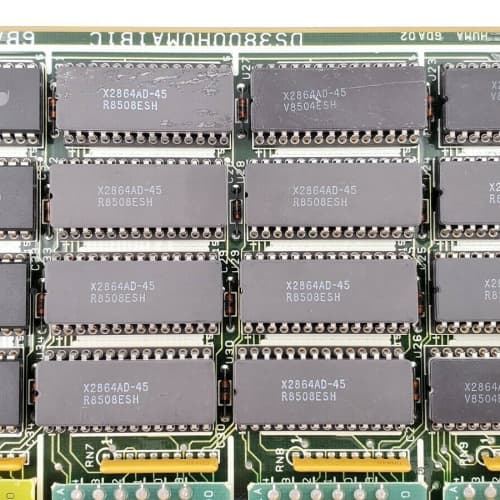
Description
Key Parameters
-
Channels: 8 differential, individually configurable
-
Sensor Types: J, K, T, E, R, S, B, N thermocouples; also supports active 4–20 mA transmitters with external power
-
Excitation Output: Isolated per-channel – 24 V DC, up to 30 mA per channel (software enable/disable)
-
Cold-Junction Compensation: Built-in per channel with automatic compensation
-
Resolution: 16-bit ADC
-
Accuracy: ±0.05% of reading + ±0.5°C (K-type, 25°C); ±1.0°C over –40°C to +70°C
-
Input Impedance: >10 MΩ (TC mode); 250 Ω (current mode with external supply)
-
Isolation: 1500 V RMS field-to-logic; 500 V RMS between excitation outputs
-
Power: 24 V DC, ≤8 W (including excitation load)
-
Diagnostics: Open-circuit detection (burnout), over/under-range, CJC sensor fault, excitation output short-circuit protection, watchdog timer
-
CMRR: >100 dB
Advantages
-
Integrated isolated excitation – eliminates separate power supplies for active sensors; saves panel space and reduces wiring.
-
Per-channel excitation enable/disable – individually turn on/off excitation for each channel via software.
-
Short-circuit protection – excitation outputs protected against overload and short circuits.
-
Direct thermocouple connection – built-in CJC for accurate temperature readings.
-
Software configurable per channel – each channel independently set for TC type, mV, or active transmitter input.
-
Hot-swappable – replace without rack power-down.
-
Full diagnostics – detects broken TC wires, excitation faults, and output short circuits.
Applications
-
Industrial furnaces & kilns – TC temperature monitoring with powered transmitters for backup
-
Chemical processing – temperature sensing with active 4–20 mA transmitters requiring local power
-
Pharmaceutical manufacturing – fermenter and reactor monitoring with powered sensors
-
Oil & gas pipelines – remote temperature monitoring where sensor power is not available locally
-
Power generation – boiler and turbine monitoring with active temperature transmitters
-
Environmental monitoring – weather stations with powered temperature and humidity sensors
Competitor Comparison
| Feature | DS3820ATEA | DS3820ATAD (Standard TC) | Competitor TC + External Power Module |
|---|---|---|---|
| TC Direct Input | Yes | Yes | Yes |
| Built-in CJC | Yes | Yes | Yes |
| Built-in Excitation | Yes (isolated per-channel) | No | No (requires external PS) |
| Short-Circuit Protection | Yes | N/A | External only |
| Per-channel Enable | Yes | N/A | N/A |
| Field Wiring Simplicity | High (one module) | Medium (needs external PS) | Low (separate power) |
| Cost (per channel) | Medium | Low | High (module + power supply) |
The DS3820ATEA is the all-in-one TC/active sensor solution. Compared to the standard DS3820ATAD, the DS3820ATEA adds integrated isolated excitation – a critical advantage when sensors are located far from power sources or when separate power supplies would be costly. Against competitor setups using external power supplies, the DS3820ATEA significantly reduces installation cost, panel space, and wiring complexity. The isolated per-channel excitation also ensures that a short on one sensor does not affect others – a feature often missing in external power distribution. For plants with mixed passive TC and active transmitter requirements, the DS3820ATEA is the most flexible and cost-effective choice.
Selection Tips
-
Choose DS3820ATEA when you need to power active temperature transmitters (e.g., 4–20 mA with external supply) AND also connect passive TCs – all in one module.
-
Ideal for distributed sensor networks where separate 24 V power is unavailable near the sensors.
-
Verify the excitation current requirement of your transmitters does not exceed 30 mA per channel.
-
Not suitable if you only need passive TC inputs – the DS3820ATAD or DS3820ATAE offers more cost-effective options.
-
If your application requires per-channel isolation on the signal path as well, consider the DS3820AIQA family for active transmitters and separate TC modules.
Precautions
-
Excitation capacity: Total excitation current across all channels must not exceed 240 mA (8 × 30 mA) – ensure the DS3820ATEA power budget is within rack capability.
-
Short-circuit protection: While the outputs are protected, repeated short circuits may degrade the module – check wiring before enabling excitation.
-
Wiring: Use shielded cables for TC signals; separate excitation wiring from sensitive TC leads to avoid crosstalk.
-
CJC placement: Position the DS3820ATEA away from heat sources – the CJC sensor is located on the terminal block and measures local temperature.
-
Extension wires: Use the correct thermocouple extension wire – do not use standard copper wire.
-
Polarity: Double-check thermocouple polarity and excitation output polarity to avoid damage.
-
Power sequencing: Apply backplane power before field power to prevent transient spikes.
-
Spare: Keep one spare DS3820ATEA for critical loops – the integrated excitation feature makes it a unique module with potentially longer lead times.
SIEMENS 3SB34030B
SCHNEIDER RXM4LB2P7
Schneider RXM4LB2P7


Reviews
There are no reviews yet.