
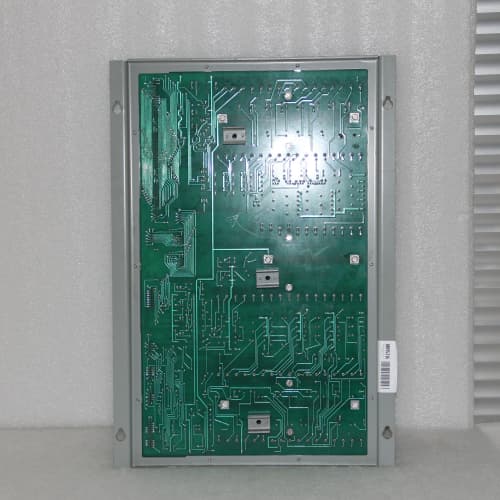
Description
Key Parameters
Power Supply Section:
-
Power Outputs: Multiple regulated DC outputs (+5V, ±15V, +24V, and configurable auxiliary outputs)
-
Excitation Outputs: Adjustable excitation for transducers (e.g., 3V, 5V, 10V DC, or 4–20mA loop power)
-
Output Accuracy: ±0.05% regulation
-
Ripple/Noise: <5 mV peak-to-peak
-
Diagnostics: LED status indicators for each output, over-voltage/over-current protection, thermal shutdown, output voltage monitoring
Analog Input Section:
-
Input Channels: 16 differential or 32 single-ended (software-configurable)
-
Input Types: 0–10V, ±10V, 4–20mA (jumper-selectable per channel)
-
Resolution: 16-bit ADC with ±0.05% accuracy
-
Diagnostics: Per-channel LED status, over-range/under-range detection, open-circuit detection
Analog Output Section:
-
Output Channels: 8 independent analog output channels
-
Output Types: 4–20mA or 0–10V (software-selectable per channel)
-
Resolution: 12-bit DAC with ±0.1% accuracy
-
Diagnostics: Output short-circuit detection, over-range detection, LED status per channel
Serial Communication Section:
-
Communication Ports: 1 or 2 independent serial ports
-
Protocols Supported: Modbus RTU (Master/Slave), GE Mark IV proprietary protocol, ASCII
-
Physical Interfaces: RS-232, RS-422, RS-485 (jumper-selectable per port)
-
Baud Rates: 300 to 115200 bps (software-selectable)
-
Diagnostics: Per-port LED status (TX/RX/error), communication error counters
Memory Section:
-
Memory Type: Battery-backed SRAM (non-volatile)
-
Memory Capacity: 1MB or 2MB (depending on configuration)
-
Data Retention: >10 years with battery (battery-backed)
-
Battery: Field-replaceable lithium 3.6V (life ~5 years)
-
Battery Monitoring: On-board voltage monitoring and low-battery alarm
-
Storage Content: Turbine parameters, setpoints, tuning constants, calibration data, fault logs, event history
Common Section:
-
Isolation: 2500V RMS channel-to-backplane
-
Temp Range: –40°C to +85°C (extended)
-
Power Supply: +5V (logic), +24V/48V (field power) from backplane or external supply
-
Physical: 6U VME single-slot board
-
Key Features: Integrated power supply + analog inputs + analog outputs + serial communication + memory, 16-bit ADC, adjustable excitation, extended temp range, high isolation
Advantages
-
Ultimate all-in-one solution – the DS3815PCMA integrates five critical functions (power, analog input, analog output, serial communication, and battery-backed memory) in a single module, providing the most comprehensive single-slot solution in the Mark IV lineup.
-
Space-saving – replaces up to five separate boards (power supply, analog input, analog output, serial communication, memory) with one module, ideal for the most space-constrained turbine control cabinets.
-
Stable sensor excitation – provides clean, regulated power for speed pickups, proximity probes, LVDTs, pressure transmitters, and other transducers.
-
Adjustable excitation – allows matching excitation levels to specific sensor requirements.
-
High-accuracy measurement – 16-bit ADC with ±0.05% accuracy ensures precise analog measurement.
-
Flexible analog outputs – 8 independent outputs for control of actuators, valves, or retransmission to external systems.
-
Serial connectivity – the General Electric DS3815PCMA provides Modbus RTU and other serial protocols for communication with DCS, SCADA, and HMIs.
-
Non-volatile storage – battery-backed memory preserves critical turbine parameters, setpoints, and event logs through power cycles.
-
Low-battery alarm – provides early warning of battery depletion, allowing proactive replacement.
-
Extended temperature range – operates from –40°C to +85°C for harsh environments.
-
Comprehensive protection – over-voltage, over-current, and thermal protection safeguard the board and connected field devices.
-
High isolation – 2500V RMS isolation protects the backplane from field-side faults.
-
Drop-in compatible – works with all Mark IV backplanes and processor configurations.
Applications
-
Ultimate compact turbine control systems – the DS3815PCMA provides complete analog I/O, communication, and memory in a single slot for gas and steam turbines with extremely limited rack space.
-
Sensor excitation, measurement, control, remote monitoring, and data logging – powers sensors, acquires measurements, generates analog control signals, communicates with DCS/SCADA, and stores critical data.
-
Distributed control integration with memory – the General Electric DS3815PCMA enables Mark IV systems to transmit analog data, receive setpoints, and store configuration data locally.
-
Valve position control with setpoint storage – reads LVDT or potentiometer feedback, drives analog outputs for valve positioners, and stores tuning parameters in non-volatile memory.
-
Fault logging and event recording – stores turbine fault logs and event histories in battery-backed memory.
-
Offshore and harsh environments – extended temperature range makes it suitable for demanding applications.
-
Retrofits – replaces up to five separate boards with a single, integrated solution.
vs Competitors & Separate Boards
| Feature | DS3815PCMA | DS3815PCLA (No Memory) | DS3815PACA + DS3800XJBA + DS3810MMAB | DS3800XPEN + DS3800XAID + DS3800XJBA + DS3800NVMB |
|---|---|---|---|---|
| Power outputs | Yes | Yes | Yes + No + No | Yes + No + No + No |
| Analog inputs | 16–32 | 16–32 | 16–32 + 0 + 0 | 0 + 32 + 0 + 0 |
| Analog outputs | 8 | 8 | 8 + 0 + 0 | 0 + 16 + 0 + 0 |
| Serial communication | Yes | Yes | Yes | Yes |
| Battery-backed memory | Yes | No | Yes | Yes |
| Board count | 1 | 1 | 3 | 4 |
| Extended temp range | –40°C to +85°C | –40°C to +85°C | –40°C to +85°C | –40°C to +85°C |
| Isolation | 2500V | 2500V | 2500V | 2500V |
Selection Tips
-
Ultimate all-in-one solution – choose the DS3815PCMA when you need sensor excitation, analog measurement, analog output control, serial communication, and battery-backed memory in a single module.
-
Extremely slot-limited installations – the General Electric DS3815PCMA replaces up to five separate boards, making it ideal for the most space-constrained cabinets.
-
DCS/SCADA integration with local data storage – if you need to transmit analog data, receive setpoints, and store configuration data locally, the DS3815PCMA provides all functions.
-
Sensor compatibility – verify that the excitation voltage and current requirements of your sensors match the DS3815PCMA outputs.
-
Output type selection – the 8 analog outputs support 4–20mA or 0–10V per channel; verify the input requirements of your field devices.
-
Protocol requirements – confirm that your external systems support Modbus RTU or GE proprietary protocols.
-
Memory capacity – select the appropriate memory capacity (1MB or 2MB) based on your storage requirements for parameters and event logs.
-
Harsh environments – the extended temperature range makes it suitable for offshore, desert, or unheated cabinet installations.
-
Power loading – calculate the total current draw of all connected sensors and ensure it does not exceed the DS3815PCMA total power rating.
-
Spare strategy – keep one DS3815PCMA per 5–8 installed units, especially in systems where it serves multiple critical functions.
-
Calibration – periodically verify output voltages, analog input accuracy, analog output accuracy, communication integrity, and memory battery health using precision instruments.
Critical Precautions
-
Battery handling – replace the battery on the DS3815PCMA only with the specified lithium 3.6V type. Use correct polarity; reversed installation can damage the board.
-
Battery replacement procedure – when replacing the battery, ensure the board is powered (or data is backed up) to prevent data loss.
-
Data backup – before any maintenance, export all critical configuration data using the Mark IV system tools.
-
Output voltage selection – verify that the DS3815PCMA output voltages are correctly configured before connecting sensors. Incorrect voltage can damage sensors.
-
Overloading – do not exceed the General Electric DS3815PCMA current rating for any output. Overloading can cause voltage drop, overheating, or shutdown.
-
Input over-voltage – never apply voltage above ±30V to any analog input; this can damage the ADC front-end.
-
Output short circuit – do not short the analog outputs to ground or positive supply; the board has current protection but repeated shorts can degrade output accuracy.
-
Output load limits – do not exceed the maximum load resistance for 4–20mA outputs (typically 600Ω) or the minimum load resistance for 0–10V outputs (typically 2kΩ).
-
Serial interface selection – ensure the serial port jumpers are correctly set for RS-232, RS-422, or RS-485 before connecting field devices.
-
Cable length limits – RS-232: <15 m; RS-422/485: <1200 m.
-
Grounding – for RS-485 multi-drop networks, ensure proper termination resistors (120Ω) are installed at each end of the bus.
-
Shielded cabling – use shielded cables for all analog and serial connections. Ground the shield only at the DS3815PCMA end to prevent ground loops.
-
Ground loops – use single-point grounding for all sensors and actuators connected to the DS3815PCMA to avoid ground-loop noise.
-
Thermal considerations – ensure adequate cabinet cooling (>200 CFM); the DS3815PCMA can generate significant heat under full load.
-
Low-battery alarm – if the low-battery alarm is active, replace the battery as soon as possible to prevent data loss.
-
Self-test – allow the DS3815PCMA to complete its power-up self-test (~2 seconds) before relying on outputs or measurements.
-
Calibration intervals – schedule periodic calibration verification (every 6–12 months) to maintain accuracy.
-
Hot-swap – never insert or remove the DS3815PCMA while the rack is powered; this can cause voltage spikes or component damage.
-
ESD handling – always use a grounded wrist strap; power, precision analog, communication, and memory components are ESD-sensitive.
-
Storage – store spare DS3815PCMA boards in anti-static bags in a dry, temperature-controlled environment. Batteries should be stored separately if the board will be in storage for more than 6 months.
-
Battery shelf life – check the battery date code on the DS3815PCMA before installation; batteries have a limited shelf life (typically 5 years from manufacture).
A-B 1734-TOP3
3UA50 40-1H/5-8A
3UA50 40-1A/1-106A

Reviews
There are no reviews yet.