
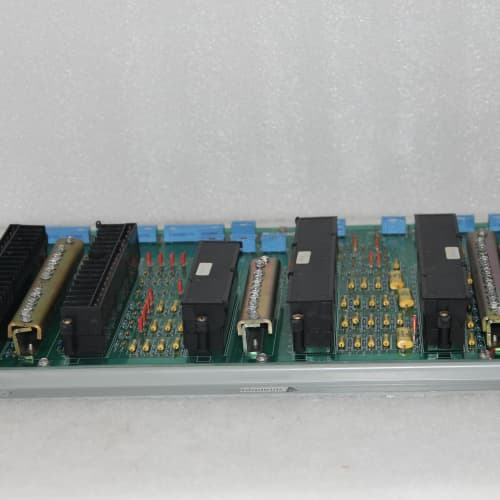
Description
Key Parameters
-
Output Channels: 32 or 48 Form-C (SPDT) relay outputs (high density)
-
Contact Rating: 5A at 250V AC / 30V DC (resistive load)
-
Alarm Logic: Integrated alarm grouping and latching logic (software-configurable)
-
Output Coil: 24V DC (from backplane or external supply)
-
Isolation: 2500V RMS output-to-backplane
-
Diagnostics: Per-channel LED status, coil fault detection, fuse status indication, self-test on power-up
-
Field Wiring: Integrated terminal blocks for direct field wiring
-
Response Time: 10–15ms (relay operate time)
-
Temp Range: –30°C to +70°C
-
Power Supply: +5V (logic), +24V (relay coils) from backplane or external supply (higher current draw)
-
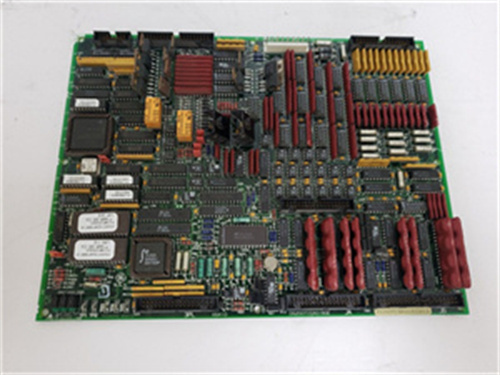
Physical: 6U VME single-slot board
-
Key Features: 32–48 relay outputs, Form-C contacts, integrated alarm logic, coil fault detection, self-test, high isolation
Advantages
-
High-density alarm outputs – the DS3810RAMA provides 32–48 relay outputs, significantly reducing the number of boards required for alarm annunciation and status signaling.
-
Integrated alarm logic – supports alarm grouping, latching, and acknowledgment functions, reducing the need for external alarm logic hardware.
-
Form-C contacts – provides both NO and NC outputs for flexible wiring (fail-safe or non-fail-safe configurations).
-
Coil fault detection – the General Electric DS3810RAMA monitors relay coil health, enabling predictive maintenance and fault isolation.
-
Visual diagnostics – per-channel LEDs and fuse status indicators simplify troubleshooting of alarm wiring and channel faults.
-
High isolation – 2500V RMS isolation protects the backplane from field-side noise and transients.
-
Self-test on power-up – verifies relay and coil functionality at system startup.
-
Drop-in compatible – works with all Mark IV backplanes and processor configurations.
Applications
-
Turbine alarm annunciation – the DS3810RAMA drives panel lamps, horns, and DCS alarm inputs for turbine alarms (high temperature, low pressure, overspeed, etc.).
-
Trip indication – provides relay outputs for trip status indicators and remote trip notification.
-
Status signaling – the General Electric DS3810RAMA sends turbine status signals (running, stopped, starting, tripped) to plant-wide control systems.
-
Alarm grouping – groups alarms by severity (critical, warning, advisory) using integrated alarm logic.
-
Centralized alarm management – the DS3810RAMA serves as a central alarm interface for large turbine control systems.
-
Retrofits – replaces multiple discrete alarm relays with a single, integrated solution.
vs Competitors & Previous Variants
| Feature | DS3810RAMA | DS3810DDDB (Relay I/O) | DS3800NVRC (Relay Outputs) | Generic VME Relay Board |
|---|---|---|---|---|
| Output channels | 32–48 | 24–32 | 16 | 8–32 |
| Form-C contacts | Yes | Yes | Yes | Varies |
| Integrated alarm logic | Yes | No | No | No |
| Coil fault detection | Yes | Standard | No | Rarely |
| Self-test on power-up | Yes | Yes (1B1A variant) | No | No |
| Isolation | 2500V | 2500V | 2500V | 500–1500V |
| Field wiring termination | Integrated | Integrated | External required | External required |
| Temp range | –30°C to +70°C | –30°C to +70°C | –30°C to +70°C | 0°C to +60°C |
Selection Tips
-
Alarm annunciation required – choose the DS3810RAMA when you need a large number of relay outputs specifically for alarm annunciation and status signaling.
-
Integrated alarm logic – the General Electric DS3810RAMA integrated alarm grouping and latching logic reduces the need for external alarm hardware.
-
Form-C contacts – provides both NO and NC outputs, enabling fail-safe wiring for critical alarms.
-
Coil fault detection – the coil fault detection capability supports proactive maintenance of alarm circuits.
-
Power budget verification – the DS3810RAMA draws significant current due to the large number of relay coils. Verify your backplane power capacity.
-
Spare strategy – keep one DS3810RAMA per 5–8 installed units, especially in systems where alarm annunciation is critical.
-
Wiring planning – plan field wiring terminations carefully to leverage the integrated terminal blocks efficiently.
-
Alarm logic configuration – configure alarm grouping, latching, and acknowledgment logic before commissioning.
Critical Precautions
-
Output over-current – do not exceed the DS3810RAMA relay contact rating (5A). Overloading can weld contacts or cause overheating.
-
Inductive loads – for DC solenoid and relay coil loads, install a flyback diode across the load to prevent voltage spikes from damaging the General Electric DS3810RAMA relay contacts or control circuitry.
-
Field wiring – use appropriate wire gauge for field connections to the DS3810RAMA terminal blocks. Loose connections can cause intermittent faults or overheating.
-
Fuse replacement – if a fuse status indicator shows a fault, verify the field wiring and load before replacing the fuse. Use only the specified fuse rating.
-
Relay contact wear – for high-cycle alarm applications, consider derating the DS3810RAMA relay contacts or using an external interposing relay to extend contact life.
-
Alarm logic testing – test the integrated alarm logic (grouping, latching, acknowledgment) of the DS3810RAMA thoroughly during commissioning.
-
Cable shielding – use shielded cables for alarm wiring in electrically noisy environments. Ground the shield only at the DS3810RAMA end.
-
Grounding – use a common return for field outputs connected to the DS3810RAMA to avoid floating grounds.
-
Heat dissipation – ensure adequate cabinet cooling; the DS3810RAMA can generate significant heat under full output load.
-
Self-test – allow the DS3810RAMA to complete its power-up self-test (~2 seconds) before relying on alarm outputs.
-
Hot-swap – never insert or remove the DS3810RAMA while the rack is powered; this can cause bus errors or damage.
-
ESD handling – always use a grounded wrist strap; CMOS and relay driver components are ESD-sensitive.
-
Storage – store spare DS3810RAMA boards in anti-static bags in a dry, temperature-controlled environment.
FANUC A98L-0031-0026
Panasonic BR-2/3AGCT4A
Panasonic BR-2/3AGCT4A 6V

Reviews
There are no reviews yet.