
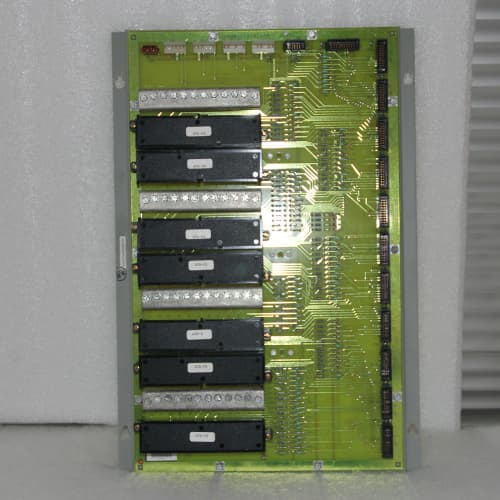
Description
Key Parameters
-
Memory Type: Battery-backed SRAM (non-volatile)
-
Memory Capacity: 4MB or 8MB (depending on configuration – significantly higher than standard boards)
-
Data Retention: >10 years with battery (battery-backed)
-
Battery: Field-replaceable lithium 3.6V (life ~5 years)
-
Battery Monitoring: On-board voltage monitoring and low-battery alarm
-
Storage Content: Turbine control parameters, setpoints, tuning constants, calibration data, fault logs, event history, performance data
-
Access Time: <100ns (high-speed access for processor)
-
Diagnostics: LED status (power, battery, activity), self-test on power-up, battery health indication
-
Error Detection: Basic parity checking for data integrity
-
Isolation: 1500V RMS memory-to-backplane
-
Temp Range: –30°C to +70°C
-
Power Supply: +5V (logic) from backplane; battery backup for data retention
-
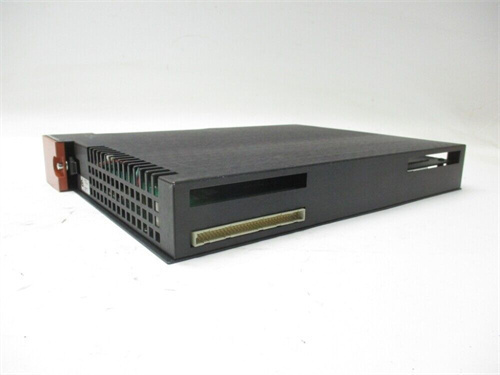
Physical: 6U VME single-slot board
-
Key Features: High-capacity battery-backed SRAM (4–8MB), low-battery alarm, self-test, parity checking
Advantages
-
Large storage capacity – the DS3810MMBA provides 4–8MB of non-volatile memory, significantly more than standard boards, enabling extensive fault logging, detailed event histories, and large configuration datasets.
-
Data persistence – preserves critical turbine control parameters through power cycles, ensuring reliable startup and operation without manual re-entry.
-
Battery-backed reliability – the field-replaceable lithium battery provides >10 years of data retention, with on-board monitoring for proactive replacement.
-
High-speed access – <100ns access time ensures the General Electric DS3810MMBA does not become a bottleneck for processor performance.
-
Parity checking – basic error detection helps identify data corruption, enhancing system reliability.
-
Low-battery alarm – provides early warning of battery depletion, allowing proactive replacement before data loss.
-
Self-test on power-up – verifies memory integrity and battery health at system startup.
-
Drop-in compatible – works with all Mark IV backplanes and processor configurations.
Applications
-
Extensive fault and event logging – the DS3810MMBA provides ample storage for detailed trip event logs, alarm histories, and operator action records for root-cause analysis.
-
Large turbine configuration storage – stores comprehensive configuration data, including multiple fuel maps, IGV calibration curves, and performance tables.
-
Data acquisition and trending – the General Electric DS3810MMBA enables storage of historical performance data for predictive maintenance and efficiency analysis.
-
Multi-unit configurations – ideal for combined-cycle plants with multiple turbines, storing configuration and log data for several units.
-
Retrofits – replaces older memory modules with significantly higher capacity for enhanced data logging.
vs Competitors & Previous Variants
| Feature | DS3810MMBA | DS3810MMAB1A1A (2–4MB) | DS3800NVMB (512KB) | Generic VME Memory Board |
|---|---|---|---|---|
| Memory capacity | 4–8MB | 2–4MB | 512KB | 128KB–1MB |
| Error detection | Parity checking | ECC (1A1A) | None | Rarely |
| Data retention | >10 years | >10 years | >10 years | 5–10 years |
| Battery monitoring | Yes (voltage + alarm) | Enhanced (1A1A) | Limited | None |
| Self-test on power-up | Yes | Yes | No | No |
| Isolation | 1500V | 2500V | 1500V | 500–1500V |
| Extended temp range | –30°C to +70°C | –40°C to +85°C | –30°C to +70°C | 0°C to +60°C |
Selection Tips
-
Extensive data logging – choose the DS3810MMBA when your application requires large-scale fault logging, event histories, or performance data storage (4–8MB capacity).
-
Large configuration datasets – the General Electric DS3810MMBA is ideal for systems with comprehensive configuration data, such as combined-cycle plants with multiple turbines.
-
Data integrity – if ECC capability is required, consider the DS3810MMAB1A1A instead; the DS3810MMBA provides basic parity checking only.
-
Harsh environments – if extended temperature range is required, the DS3810MMAB1A1A offers –40°C to +85°C compared to –30°C to +70°C for the DS3810MMBA.
-
Battery replacement – the battery on the DS3810MMBA is field-replaceable. Plan for replacement every 5 years or when the low-battery alarm indicates.
-
Spare strategy – keep one DS3810MMBA per 5–8 installed units, especially in systems with extensive data logging requirements.
-
Pre-installation verification – verify battery voltage before installation to ensure data retention capability.
Critical Precautions
-
Battery handling – replace the battery on the DS3810MMBA only with the specified lithium 3.6V type. Use correct polarity; reversed installation can damage the board.
-
Battery replacement procedure – when replacing the battery on the General Electric DS3810MMBA, ensure the board is powered (or data is backed up) to prevent data loss.
-
Data backup – before performing any maintenance, export all critical configuration data using the Mark IV system tools.
-
Parity errors – if the DS3810MMBA reports a parity error, verify data integrity and consider restoring from backup.
-
ESD handling – always use a grounded wrist strap when handling the DS3810MMBA; CMOS memory components are ESD-sensitive.
-
Battery disposal – dispose of the DS3810MMBA lithium battery according to local environmental regulations.
-
Hot-swap – never insert or remove the DS3810MMBA while the rack is powered; this can cause data corruption or bus errors.
-
Low-battery alarm – if the low-battery alarm is active, replace the battery as soon as possible to prevent data loss.
-
Storage – store spare DS3810MMBA boards in anti-static bags in a dry, temperature-controlled environment. Batteries should be stored separately if the board will be in storage for more than 6 months.
-
Battery shelf life – check the battery date code on the DS3810MMBA before installation; batteries have a limited shelf life (typically 5 years from manufacture).
Panasonic BR-AGCF2W 6V
Panasonic BR-2/3AGCT 4A 6V
PANASONIC BR-2/3AGCT4A 6V


Reviews
There are no reviews yet.