
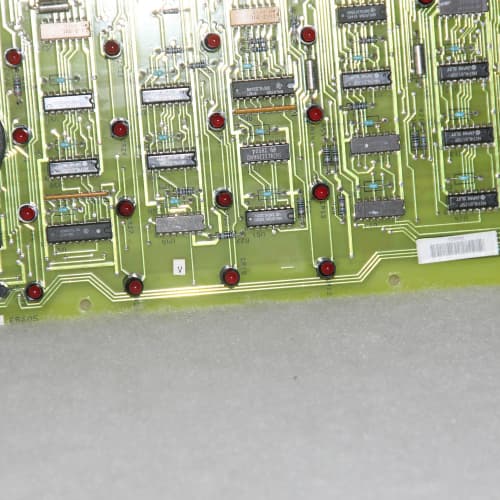
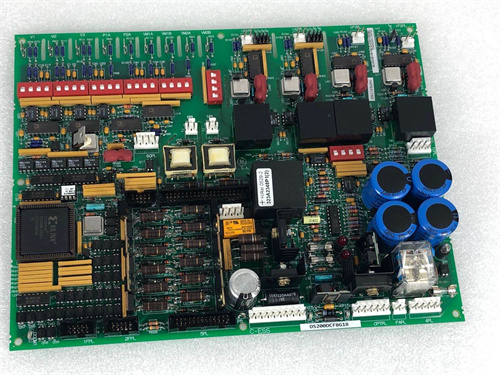
Description
Key Parameters
-
Function: Thermocouple and RTD signal simulation for testing and calibration
-
Simulated Thermocouple Types: J, K, T, E, R, S, B, N (software-selectable)
-
RTD Simulation: Pt100, Ni100 (resistance values programmable)
-
Output Channels: 8 independent simulator channels
-
Signal Accuracy: ±0.02% of simulated value
-
Output Resolution: 16-bit DAC
-
Cold-Junction Compensation Simulation: Programmable reference temperature
-
Communication Interface: VMEbus or serial (for control from Mark IV system or external test equipment)
-
Diagnostics: LED status per channel, output monitoring, self-test on power-up
-
Isolation: 1500V RMS output-to-backplane
-
Temp Range: –30°C to +70°C
-
Physical: 6U VME single-slot board
-
Key Features: 8 independent simulator channels, TC/RTD simulation, high accuracy, programmable CJC, isolation, self-test
Advantages
-
Integrated calibration tool – the DS3800XTES provides a complete, built-in solution for testing temperature input channels without requiring external calibrators.
-
Multi-type simulation – supports all common thermocouple types (J, K, T, E, R, S, B, N) and RTDs (Pt100, Ni100), making it versatile for different sensor applications.
-
High accuracy – ±0.02% simulation accuracy ensures reliable verification of temperature measurement accuracy.
-
Programmable reference – the General Electric DS3800XTES allows programming of cold-junction reference temperatures to simulate various ambient conditions.
-
Multiple channels – 8 independent simulator channels allow simultaneous testing of multiple temperature input boards or channels.
-
Diagnostic visibility – LED status and self-test on power-up simplify troubleshooting of the simulator itself.
-
Isolation – 1500V RMS isolation protects the backplane from test equipment or accidental faults.
-
Drop-in compatible – works with all Mark IV backplanes and processor configurations.
Applications
-
Temperature channel validation – verifies that thermocouple and RTD input channels (e.g., on DS3800XTBA boards) are reading accurately.
-
Loop testing – simulates sensor signals to test the entire measurement loop from the input board to the turbine control logic.
-
Commissioning – the DS3800XTES is used during turbine commissioning to verify proper temperature sensor wiring and scaling.
-
Periodic calibration – provides a repeatable, documented method for verifying temperature measurement accuracy during scheduled maintenance.
-
Troubleshooting – isolates temperature measurement issues by ruling out sensor or wiring problems.
-
Retrofits – the General Electric DS3800XTES facilitates testing when replacing or upgrading temperature input boards.
vs Competitors & Related Products
| Feature | DS3800XTES | External Calibrator | DS3800XTBA (Input Board) |
|---|---|---|---|
| Primary function | Simulation/testing | Simulation only | Measurement only |
| Integration | VME-mounted | External (handheld) | VME-mounted |
| Channels | 8 | 1–2 | 16–32 |
| TC types supported | J/K/T/E/R/S/B/N | Varies | J/K/T/E/R/S/B/N |
| RTD support | Yes | Yes | Yes |
| Accuracy | ±0.02% | ±0.01–0.05% | ±0.05% |
| Remote/programmable | Yes | Usually manual | N/A |
| Isolation | 1500V | Limited | 1500V |
| Temp range | –30°C to +70°C | 0°C to +50°C | –30°C to +70°C |
Selection Tips
-
Calibration and testing needs – choose the DS3800XTES if your facility regularly performs temperature channel validation, commissioning, or troubleshooting and wants a built-in, repeatable test solution.
-
Time savings – the General Electric DS3800XTES can significantly reduce testing time compared to using external calibrators on a channel-by-channel basis.
-
Integration – the VME-mounted design allows test signals to be applied under software control, enabling automated test sequences.
-
Channel count – 8 simulator channels are sufficient for testing multiple temperature input boards simultaneously.
-
Sensor compatibility – verify that the thermocouple or RTD types used in your facility are supported by the DS3800XTES.
-
Spare strategy – keep one DS3800XTES per facility (or per 5–8 installed temperature input boards) for maintenance and troubleshooting.
-
Calibration – the DS3800XTES itself should be periodically verified against a traceable reference.
Critical Precautions
-
Simulation output connection – disconnect the field sensor before connecting the DS3800XTES output to an input channel to avoid damaging the sensor or simulator.
-
Voltage limits – do not apply external voltages to the General Electric DS3800XTES outputs; this can damage the output stage.
-
Wiring polarity – observe correct polarity when connecting the DS3800XTES simulator outputs to input boards; reversed polarity produces inverted readings.
-
Cold-junction simulation – when simulating thermocouple signals, ensure the programmed reference temperature matches the actual terminal block temperature of the input board, or use the input board’s CJC.
-
Shielded cabling – use shielded cables for simulation connections to minimize noise pickup. Ground the shield only at the DS3800XTES end to prevent ground loops.
-
Ground loops – ensure proper grounding when connecting the DS3800XTES to multiple input channels to avoid ground-loop currents that can affect accuracy.
-
Self-test – allow the DS3800XTES to complete its power-up self-test (~2 seconds) before relying on simulation outputs.
-
Calibration intervals – schedule periodic calibration verification of the DS3800XTES itself (every 12–18 months) against a traceable reference.
-
Hot-swap – never insert or remove the DS3800XTES while the rack is powered; this can cause signal glitches or damage.
-
ESD handling – always use a grounded wrist strap when handling the DS3800XTES; precision DACs and signal conditioning components are ESD-sensitive.
-
Storage – store spare DS3800XTES boards in anti-static bags in a dry, temperature-controlled environment.
A-B 1756-TBCH
A-B 1756-BA2
A-B 1756-BA2
п DB25

.jpg)



Reviews
There are no reviews yet.