
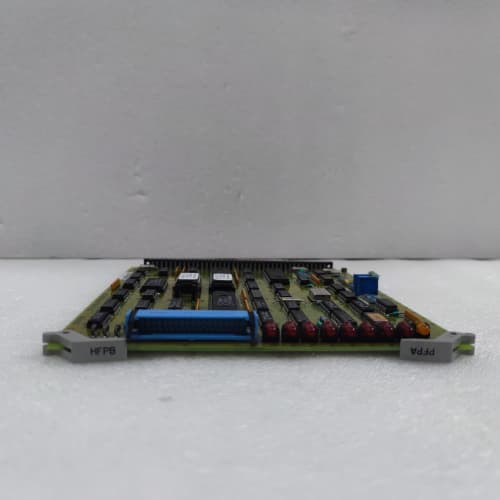
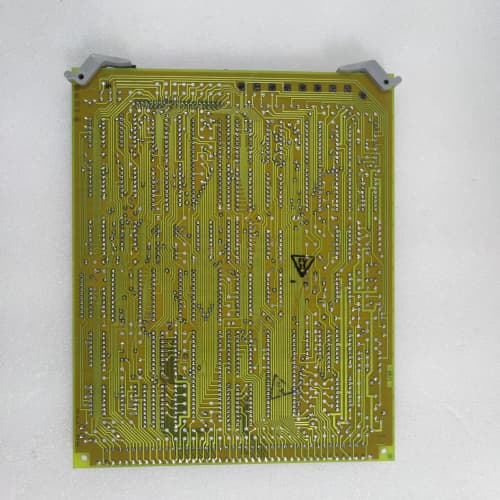
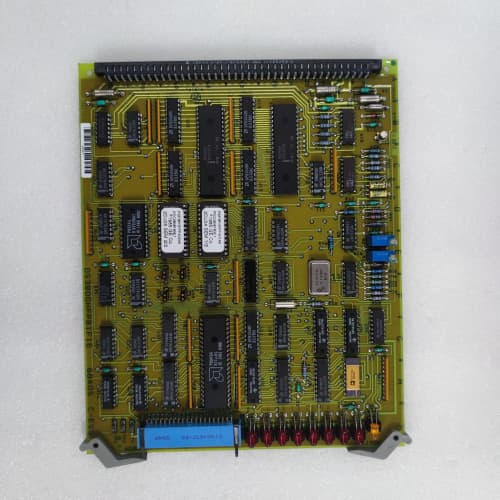
Description
Key Parameters
-
Power Outputs: Multiple regulated DC outputs (+5V, ±15V, +24V, and configurable auxiliary outputs)
-
Excitation Outputs: Adjustable excitation for transducers (e.g., 3V, 5V, 10V DC, or 4–20mA loop power)
-
Input Voltage: 120/240V AC or 125/250V DC (depending on system configuration)
-
Output Accuracy: ±0.05% regulation
-
Ripple/Noise: <3 mV peak-to-peak
-
Current Capacity: Higher than standard boards (per output, consult board marking)
-
Isolation: 2500V RMS input-to-output
-
Diagnostics: LED status indicators for each output, over-voltage/over-current protection, thermal shutdown, output voltage monitoring, enhanced fault logging (firmware 1B1D) , self-test on power-up, improved diagnostic detail (1B1D)
-
Temp Range: –40°C to +85°C (extended)
-
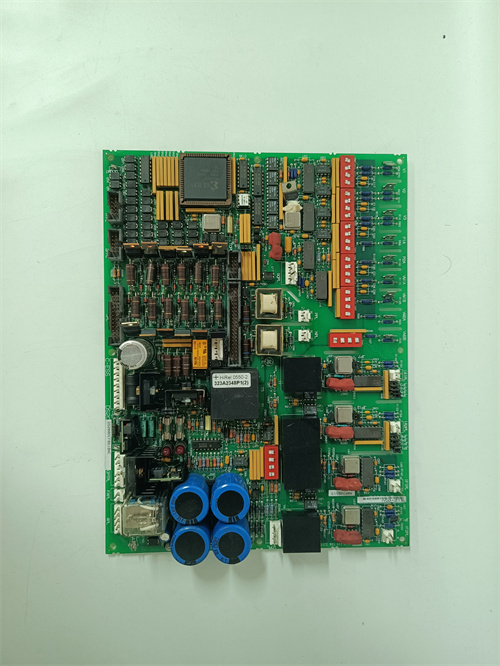
Physical: 6U VME single-slot board
-
Key Features: Enhanced regulation, ultra-low noise, higher current capacity, adjustable excitation, extended temp range, enhanced diagnostics, firmware rev 1B1D
Advantages
-
Superior regulation – ±0.05% output regulation ensures stable excitation even under varying load conditions, critical for high-precision sensors.
-
Ultra-low noise – <3 mV ripple provides exceptionally clean power for sensitive analog measurements, improving signal-to-noise ratio.
-
Higher current capacity – the DS3800XPEN1B1D can supply more current than standard boards, supporting multiple sensors or long cable runs.
-
Extended temperature range – operates from –40°C to +85°C for harsh environments.
-
Enhanced diagnostics – the 1B1D firmware provides improved fault logging, self-test on power-up, and detailed diagnostic reporting, with refined diagnostic detail over the 1B1C variant.
-
Output voltage monitoring – the General Electric DS3800XPEN1B1D includes monitoring circuits that alert the system to output voltage deviations.
-
Comprehensive protection – over-voltage, over-current, and thermal protection safeguard the board and connected field devices.
-
Drop-in compatible – works with all Mark IV backplanes and processor configurations.
Applications
-
High-precision sensor excitation – provides stable, low-noise power for vibration monitoring, precision speed control, and critical temperature measurements.
-
Speed pickup excitation – powers magnetic pickups for turbine speed measurement and overspeed protection.
-
Proximity probe excitation – supplies low-noise power to eddy-current probes for shaft vibration and position monitoring.
-
LVDT excitation – powers LVDTs for precise valve position feedback (IGVs, fuel valves, steam valves).
-
Long cable runs – the higher current capacity of the DS3800XPEN1B1D compensates for voltage drop in long sensor cables.
-
Offshore and harsh environments – extended temperature range makes it suitable for demanding applications.
-
Retrofits – the DS3800XPEN1B1D replaces aging power supply modules in legacy Mark IV systems with improved performance.
vs Competitors & Previous Variants
| Feature | DS3800XPEN1B1D | DS3800XPEN1B1C | DS3800XPEN | Generic VME Board |
|---|---|---|---|---|
| Output regulation | ±0.05% | ±0.05% | ±0.05% | ±0.1–0.5% |
| Ripple/noise | <3 mV | <3 mV | <3 mV | 10–50 mV |
| Current capacity | Higher | Higher | Higher | Limited |
| Extended temp range | –40°C to +85°C | –40°C to +85°C | –30°C to +70°C | 0°C to +60°C |
| Self-test on power-up | Yes (1B1D) | Yes (1B1C) | No | No |
| Diagnostic detail | Enhanced (1B1D) | Enhanced | Limited | No |
| Fault logging | Refined (1B1D) | Standard | Limited | No |
| Firmware revision | 1B1D | 1B1C | Varies | N/A |
Selection Tips
-
High-precision sensors in harsh environments – choose the DS3800XPEN1B1D for applications requiring the lowest noise and tightest regulation, combined with extended temperature range (e.g., offshore vibration monitoring).
-
Latest diagnostics – the 1B1D firmware provides refined diagnostic reporting over the 1B1C variant, making it ideal for facilities with proactive maintenance programs.
-
Multiple sensors / long cables – the higher current capacity makes the General Electric DS3800XPEN1B1D suitable for powering multiple sensors or installations with long cable runs.
-
Sensor compatibility – verify that the excitation voltage and current requirements of your sensors match the DS3800XPEN1B1D outputs.
-
Output configuration – ensure that the jumpers or DIP switches on the DS3800XPEN1B1D are set correctly for your required output voltages.
-
Power loading – calculate the total current draw of all connected sensors and ensure it does not exceed the DS3800XPEN1B1D total power rating.
-
Firmware compatibility – confirm your Mark IV main processor firmware supports the enhanced diagnostic features of the DS3800XPEN1B1D.
-
Spare strategy – keep one DS3800XPEN1B1D per 5–8 installed units, especially in critical measurement applications.
Critical Precautions
-
Output voltage selection – verify that the DS3800XPEN1B1D output voltages are correctly configured before connecting sensors. Incorrect voltage can damage sensors.
-
Overloading – do not exceed the DS3800XPEN1B1D current rating for any output. Overloading can cause voltage drop, overheating, or shutdown.
-
Wiring polarity – ensure correct polarity when connecting sensors to the General Electric DS3800XPEN1B1D outputs; reversed polarity can damage sensitive transducers.
-
Shielded cabling – use shielded cables for sensor connections to minimize noise pickup. Ground the shield only at the DS3800XPEN1B1D end to prevent ground loops.
-
Ground loops – use single-point grounding for all sensors connected to the DS3800XPEN1B1D to avoid ground-loop noise that can affect measurements.
-
Output monitoring – if the DS3800XPEN1B1D includes monitoring outputs, connect them to the appropriate analog inputs for continuous voltage verification.
-
Thermal considerations – ensure adequate cabinet cooling (>200 CFM); the DS3800XPEN1B1D can generate significant heat under load, especially at higher current outputs.
-
Self-test – allow the DS3800XPEN1B1D to complete its power-up self-test (~2 seconds) before relying on outputs.
-
Hot-swap – never insert or remove the DS3800XPEN1B1D while the rack is powered; this can cause voltage spikes and damage connected sensors.
-
ESD handling – always use a grounded wrist strap when handling the DS3800XPEN1B1D; power components are ESD-sensitive.
-
Ripple check – if measurement noise issues arise, check the DS3800XPEN1B1D output ripple with an oscilloscope; excessive ripple may indicate failing capacitors.
-
Storage – store spare DS3800XPEN1B1D boards in anti-static bags in a dry, temperature-controlled environment.
SIEMENS 3NE4120
Schneider A9F19306
ʩ ͵ REXL2TM



Reviews
There are no reviews yet.