
Description
Product Overview
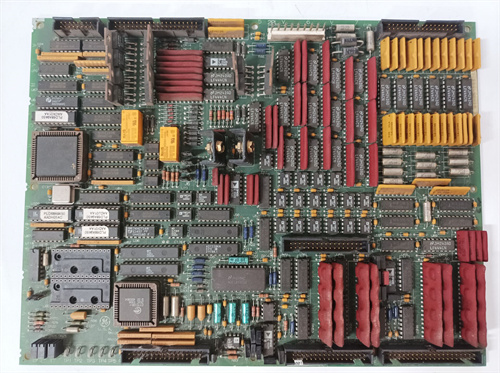
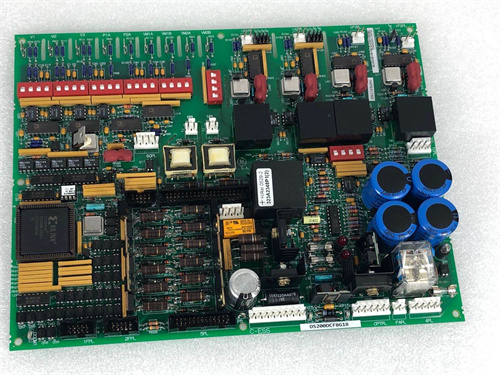
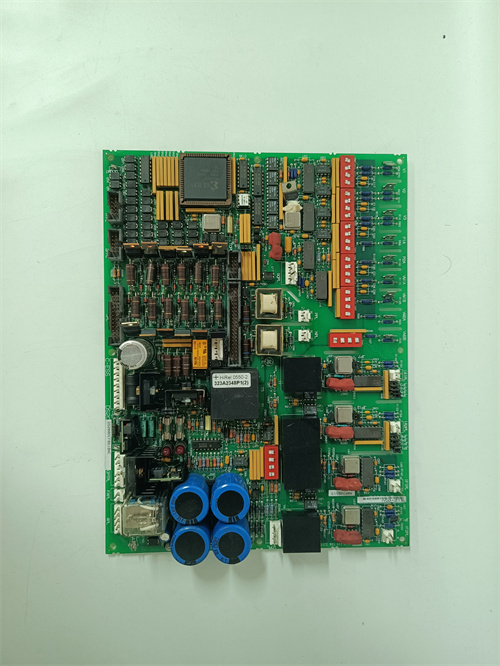
First, let’s introduce GE DS215TCQAG1BZZ01A—a temperature input module specifically designed for the GE Mark V automation system, focused on accurately collecting and processing temperature signals from thermocouples (TC) and resistance temperature detectors (RTD). It is widely used in turbomachinery control (e.g., gas turbines, steam turbines) and high-temperature industrial processes. This module transmits temperature data to the Mark V controller in real time, providing critical support for stable equipment operation and overheating prevention, making it an indispensable core component in turbomachinery temperature monitoring systems. For detailed technical parameters, supported sensor types, and compatibility with the Mark V system of GE DS215TCQAG1BZZ01A, you can refer to the official link: [Product Link for GE DS215TCQAG1BZZ01A].
In practical applications, GE DS215TCQAG1BZZ01A demonstrates strong adaptability due to its multi-sensor compatibility. For example, in a thermal power plant, it can simultaneously process signals from 8 thermocouples (monitoring turbine exhaust temperature) and 4 RTDs (monitoring bearing lubricating oil temperature), synchronizing data to the controller at an update rate of 50ms. Additionally, the built-in diagnostic function of GE DS215TCQAG1BZZ01A can quickly identify sensor faults (such as RTD line short circuits) and send alarm signals, avoiding control errors caused by abnormal temperature data. Meanwhile, this module is fully compatible with other modules in the Mark V system (e.g., analog output module GE DS215AOGP1B, discrete input module GE DS215DIAH1A), greatly simplifying the upgrade and maintenance processes of existing systems.
Product Parameters
The technical parameters of GE DS215TCQAG1BZZ01A are optimized to meet high-precision and high-stability requirements in industrial scenarios, as detailed below:
-
Supported Sensor Types and Measurement Ranges:
- Thermocouples (TC): Compatible with types J, K, T, E, R, S, covering different temperature ranges—Type K (-270°C to +1372°C, suitable for turbine exhaust temperature monitoring, commonly used range: +200°C to +1200°C); Type R (0°C to +1768°C, suitable for ultra-high-temperature scenarios such as combustion chambers);
- Resistance Temperature Detectors (RTD): Only supports 3-wire Pt100, measurement range: -200°C to +850°C, with an accuracy of ±0.15°C in the range of 0°C to +100°C (suitable for medium-low temperature monitoring of lubricating oil and cooling water);
- Number of Channels: 12 independent channels (8 main channels + 4 backup channels), each channel can be individually configured for sensor type via Mark V software to meet simultaneous monitoring needs of multiple measurement points.
-
Signal Processing and Protection Performance:
- Signal Filtering: Digital filtering function with an adjustable filter coefficient (0.1–10s), effectively suppressing the impact of vibration and electromagnetic interference on data;
- Optical Isolation: Isolation voltage between input channels and power bus reaches 2500V AC, preventing damage to the Mark V controller caused by high-voltage breakdown in sensor lines;
- Overload Protection: Maximum input voltage of ±30V DC, preventing module damage caused by sudden sensor failures;
- Electromagnetic Compatibility (EMC): Complies with EN 61000-6-2 (Class 3) and MIL-STD-461F standards, resistant to electrostatic discharge (±25kV) and radio frequency radiation (50V/m), suitable for strong electromagnetic environments around turbomachinery.
-
System Integration and Operating Parameters:
- Communication Bus: Communicates with the controller via the Mark V backplane bus, with a data transmission delay of ≤10ms, meeting the real-time requirements of turbine control;
- Power Supply Requirement: DC 5V ±10% (powered by the Mark V chassis), maximum current consumption of 1.5A;
- Operating Temperature: 0°C to +65°C, suitable for cabinet environments with forced ventilation in scenarios such as power plants;
- Vibration Resistance: Vibration resistance rating of 10g at 10–2000Hz, can be directly installed on the turbine casing;
- Protection Rating: IP20, must be installed in a sealed Mark V control cabinet to prevent dust and water droplet intrusion.
Advantages and Features
GE DS215TCQAG1BZZ01A has significant advantages among temperature input modules of the same type, with core features as follows:
- Turbomachinery-Specific Optimization and High-Precision Measurement: Designed for high-temperature, high-vibration environments of turbomachinery, it is compatible with R/K-type thermocouples (covering ultra-high-temperature monitoring) and Pt100 RTDs (ensuring medium-low temperature measurement accuracy). For example, in gas turbine control, GE DS215TCQAG1BZZ01A can accurately monitor exhaust temperature (error ±0.5°C), helping the controller adjust fuel supply and cooling air flow to improve turbine efficiency while preventing blade overheating damage. The 12-channel design (including 4 backup channels) allows access to redundant sensors, further enhancing system reliability.
- Strong Environmental Adaptability: With a 10g vibration resistance rating and MIL-STD-461F EMC compliance, GE DS215TCQAG1BZZ01A can operate stably in harsh environments. For instance, in marine gas turbine systems, the module can withstand high-frequency vibrations (8g) caused by hull and electromagnetic interference from shipborne electronic equipment. At the same time, the filtering function ensures no distortion of temperature data, safeguarding navigation safety.
- Convenient Diagnostics and System Compatibility: The built-in channel-level diagnostic function allows real-time viewing of channel status (e.g., “TC Channel 5 Short Circuit,” “RTD Channel 2 Open Circuit”) via Mark V software. Maintenance personnel can locate faults without disassembling the chassis. In addition, GE DS215TCQAG1BZZ01A is deeply compatible with the hardware and software of the Mark V system; after connection, it can be automatically recognized by the controller without additional driver development, significantly shortening the system commissioning cycle.
- High Reliability and Long Lifespan: Adopting industrial-grade high-temperature-resistant components, its Mean Time Between Failures (MTBF) is ≥300,000 hours, meeting the “24/7” continuous operation needs in scenarios such as power plants, reducing module replacement frequency and lowering long-term maintenance costs.
Application Fields and Cases
GE DS215TCQAG1BZZ01A is mainly adapted to the Mark V system and widely used in turbomachinery control and high-temperature industrial scenarios. Typical cases are as follows:
- Gas Turbine Control in Thermal Power Plants: A 400MW gas turbine power plant uses GE DS215TCQAG1BZZ01A for temperature monitoring—6 K-type thermocouples monitor the temperature of 6 points at the turbine exhaust end (+300°C to +1100°C), and 4 Pt100s monitor the lubricating oil temperature of high/low-pressure bearings (+40°C to +90°C). The module transmits data to the Mark V controller at a frequency of 50ms. When the exhaust temperature approaches the critical value of 1100°C, the controller automatically increases cooling air supply; if the lubricating oil temperature exceeds 90°C, the system triggers an early warning, and if it exceeds 100°C, an emergency shutdown is initiated to prevent bearing burnout.
- Marine Gas Turbine Systems: The propulsion system of an ocean-going cargo ship uses GE DS215TCQAG1BZZ01A—2 R-type thermocouples monitor the combustion chamber temperature (+800°C to +1600°C), and 3 Pt100s monitor the cooling water temperature (+25°C to +60°C). The module is installed on the turbine casing, withstanding 6–8g vibrations during ship navigation and electromagnetic interference from shipborne radar and communication equipment, ensuring stable transmission of temperature data and providing an accurate basis for fuel adjustment and cooling control of the propulsion system.
- Electric Furnace Control in the Metallurgical Industry: In the electrode electric furnace system of a steel plant, GE DS215TCQAG1BZZ01A monitors the molten steel temperature in the furnace (+1200°C to +1700°C) via 2 R-type thermocouples and the furnace cooling water temperature (+30°C to +50°C) via 3 Pt100s. The high-precision measurement of the module (molten steel temperature error ±1°C) ensures accurate adjustment of electric furnace power, avoiding overburning or incomplete melting of molten steel; if the cooling water temperature exceeds 50°C, the system automatically increases water supply flow to prevent damage to the furnace refractory material due to overheating.
Comparison with Competitors
A comparison between GE DS215TCQAG1BZZ01A and two commonly used competitors in the turbomachinery field (Siemens S7-1500 TM Temperature, Rockwell 1756-TC-OW) is shown in the table below:
| Comparison Dimension | GE DS215TCQAG1BZZ01A | Siemens S7-1500 TM Temperature | Rockwell 1756-TC-OW |
|---|---|---|---|
| Number of Channels | 12 (8 main + 4 backup) | 8 (no backup) | 8 (no backup) |
| Supported TC Types | J/K/T/E/R/S | J/K/T/E (no R/S types) | J/K/T/E/R/S |
| Vibration Resistance Rating | 10g (10–2000Hz) | 5g (10–500Hz) | 5g (10–500Hz) |
| Isolation Voltage | 2500V AC | 1500V AC | 2000V AC |
| Compatible System | GE Mark V (seamless adaptation) | Siemens S7-1500 (separate driver required) | Rockwell ControlLogix (adaptation required) |
| MTBF | ≥300,000 hours | ≥200,000 hours | ≥220,000 hours |
| Reference Market Price | Medium | High | High |
As shown in the table, GE DS215TCQAG1BZZ01A has significant advantages in channel redundancy, vibration resistance, and isolation protection. Especially its feature of being adapted to the GE Mark V system makes it the best choice for Mark V users—no additional adaptation programs are required. In contrast, when Siemens and Rockwell modules are connected to the Mark V system, customized drivers are needed, which not only increases costs but also may reduce the real-time performance of data transmission.
Selection Suggestions and Precautions
-
Selection Suggestions:
- Prioritize Matching the Automation System: If you currently use a GE Mark V controller, GE DS215TCQAG1BZZ01A is the only temperature module that can be directly connected without adaptation, avoiding compatibility issues. If the system is Siemens S7-1500 or Rockwell ControlLogix, you can consider modules of the corresponding brand, but you need to evaluate whether they meet the vibration and high-temperature requirements of turbomachinery.
- Select Based on the Number of Measurement Points and Redundancy Needs: If you need to monitor more than 8 temperature points (including backup sensors), the 12-channel GE DS215TCQAG1BZZ01A can meet the demand at one time without additional modules. If the number of measurement points is small and no redundancy is required, you can choose competitors based on budget, but it is necessary to supplement vibration and interference resistance accessories.
- Refer to Official Information to Confirm Details: For information about the compatibility of GE DS215TCQAG1BZZ01A with specific sensors (e.g., high-temperature R-type thermocouples) and software configuration tutorials, you can query via the product link: [Product Link for GE DS215TCQAG1BZZ01A].
-
Precautions:
- Strictly Follow Sensor Wiring Specifications: During installation, pay attention to the polarity of thermocouples (the positive and negative poles correspond to the module markings); reverse connection will cause measurement errors or channel damage. Pt100 must use 3-wire wiring to eliminate the impact of wire resistance on accuracy, and 2-wire wiring should be avoided.
- Set Filter Parameters Reasonably: In high-vibration scenarios (e.g., installation on turbine casings), it is recommended to set the filter coefficient of GE DS215TCQAG1BZZ01A to 1–2s to balance data stability and real-time performance. If the filter coefficient is too large (e.g., exceeding 5s), it may cause controller response delay and affect equipment safety.
- Conduct Regular Maintenance and Calibration: Check the module’s LED indicators quarterly (green for normal, red for channel failure) and calibrate sensors annually (especially thermocouples) to ensure the measurement accuracy of GE DS215TCQAG1BZZ01A. Calibration must be performed by qualified institutions to avoid module damage caused by improper operation.
- Ensure Cable Protection: Sensor cables should use high-temperature-resistant, interference-resistant shielded wires, and be routed separately from power cables (with a spacing of ≥30cm) to reduce electromagnetic interference. Cable joints should be sealed properly to prevent dust and moisture intrusion and extend service life.
DS215TCQAG1BZZ01A




Reviews
There are no reviews yet.