
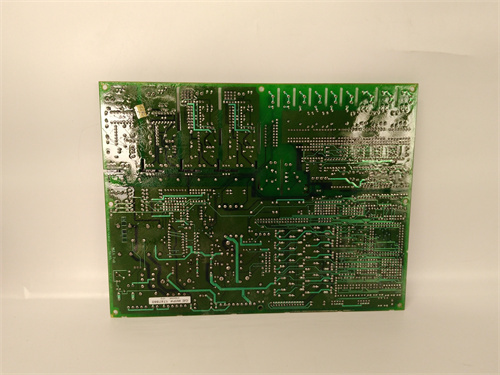
Description
Technical Parameters & Specifications
Manufacturer: General Electric (GE)
Series: Speedtronic Mark V / Mark VIe
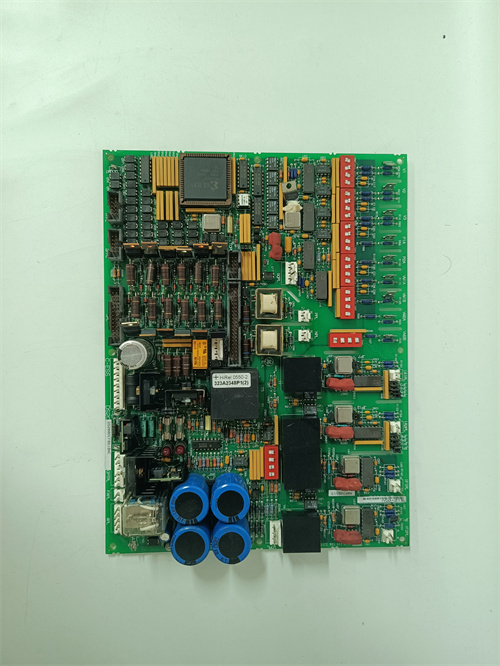
Board Type: Thermocouple Input Terminal Board with 4-Wire Configuration
Number of Channels: 16 differential analog input channels (utilizing 4-wire termination per channel)
Input Signal Range: -10 mV to +100 mV (typical for thermocouple types J, K, T, E)
Cold Junction Compensation: Single onboard precision temperature sensor for automatic CJ compensation, with 4-wire sensing for improved accuracy over long cable distances
Isolation: 1500V AC optical isolation between field inputs and logic circuitry
Power Supply: +5V DC and ±15V DC derived from the main backplane (via the DS200TCDAH1B connector)
Resolution: 16-bit analog-to-digital conversion
Accuracy: ±0.12% of full scale (at 25°C ambient) with 4-wire compensation active
Sampling Rate: 5 Hz per channel (sequential scanning)
Operating Temperature: -25°C to +60°C
Storage Temperature: -40°C to +85°C
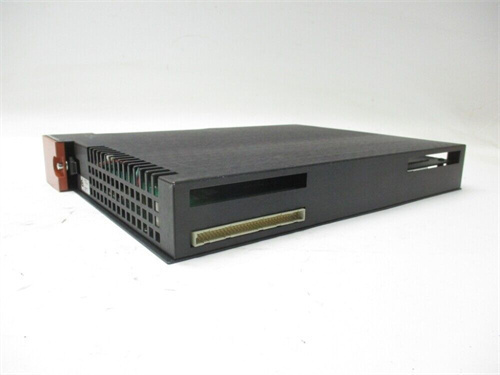
Mounting: Rack-mounted within the VME-based turbine cabinet
Suffix Breakdown: The “H1B” designation on the DS200TCDAH1B indicates:
-
H: 4-wire thermocouple input configuration (separate sense and compensation leads)
-
1: Standard G1-series terminal mapping
-
B: Basic configuration (single cold-junction, open/short diagnostics only, fixed firmware)
Revision Difference from DS200TCDAG1B: The DS200TCDAH1B shares the same electrical specifications, firmware, and basic feature set as the DS200TCDAG1B, but with a different input configuration that supports 4-wire thermocouple connections. This allows for remote cold-junction compensation or extended cable runs without significant signal degradation. The “H” variant is used when sensors are located far from the cabinet or when greater measurement stability is required over long distances.
Advantages & Key Features
The DS200TCDAH1B stands out due to its 4-wire sensing capability, which provides superior measurement accuracy over long cable runs while maintaining the proven reliability of the basic GE Speedtronic design. Key advantages include:
Extended Cable Run Capability: The 4-wire configuration of the DS200TCDAH1B allows thermocouple sensors to be placed up to 300 meters (approximately 1000 feet) from the control cabinet without significant signal degradation. This is particularly valuable in large power plants or industrial facilities where sensors are located far from the central control room, reducing the need for remote I/O cabinets.
Improved Measurement Stability: By separating the sense and compensation leads, the DS200TCDAH1B effectively cancels out lead resistance effects that can introduce errors in standard 2-wire configurations. This results in more stable readings over time and under varying ambient temperatures, especially in installations with long cable runs where lead resistance can be significant.
Field-Proven Reliability: Like the DS200TCDAG1B, the DS200TCDAH1B has been deployed in thousands of turbines worldwide, with a well-documented failure rate of less than 0.5% per year in properly maintained cabinets. Its mature design means most failure modes are well understood and easily troubleshooted.
Basic Self-Diagnostics: Built-in open-circuit and short-circuit detection for each thermocouple channel alerts the control system immediately upon sensor failure. While it lacks the advanced drift detection of the DS200TCDAG1ADA, the DS200TCDAH1B provides adequate protection for standard operational needs, and the 4-wire configuration adds an additional layer of diagnostic visibility by allowing separate monitoring of the sense and compensation leads.
Simple Replacement Process: Because the DS200TCDAH1B has no field-upgradeable firmware or complex configuration parameters, replacement is straightforward—simply swap the board and verify channel readings. No software reconfiguration is typically required in Mark V systems, making it ideal for quick field replacements.
Cost-Effective for Distributed Sensor Installations: For plants with sensors spread across large areas, the DS200TCDAH1B eliminates the need for remote I/O cabinets or signal conditioners, reducing overall system complexity and cost. The 4-wire capability provides the accuracy benefits of remote sensing without requiring additional hardware.
LED Status Indicators: 16 individual channel LEDs (green for normal, red for open/short fault) plus a single board health LED for rapid troubleshooting without external tools. Additional indicators for compensation lead integrity provide enhanced diagnostics for the 4-wire configuration.
Conformal Coating: All PCBs are coated with a standard acrylic conformal coating to resist moisture, dust, and mild corrosive environments, suitable for most indoor turbine control rooms.
Backward Compatibility: The DS200TCDAH1B is fully compatible with all Mark V cabinets and can also function in Mark VIe backplanes (though without hot-swap capability on older backplane revisions). Its pinout is designed to match standard G1-series terminal mapping, making it a direct replacement for many existing installations.
Application Cases in Industrial Fields
This board is predominantly deployed in the power generation, oil & gas, large industrial facilities, and distributed sensor network installations, particularly where thermocouples are located far from the control cabinet. Specific use cases include:
Large Combined-Cycle Power Plants: In plants where the gas turbine, steam turbine, and HRSG are spread across a wide area, the DS200TCDAH1B monitors temperatures at remote locations such as the HRSG inlet and outlet, duct burners, and stack thermocouples. The 4-wire capability allows these sensors to be located hundreds of meters from the control cabinet without sacrificing accuracy, reducing the need for multiple control panels.
Pipeline Compressor Stations with Distributed Sensors: In natural gas transmission systems, compressor stations often have thermocouples at various points along the pipeline, including suction and discharge temperatures at multiple compressor stages. The DS200TCDAH1B enables these sensors to be wired directly to the central control cabinet even when they are physically spread across the station, eliminating the cost and complexity of remote I/O.
Steam Turbine Bearing Temperature Monitoring in Large Power Blocks: In conventional thermal power plants with multiple turbine-generator sets, the DS200TCDAH1B tracks journal and thrust bearing temperatures on steam turbines that may be physically separated from the control cabinet by large distances. The 4-wire compensation ensures accurate readings despite long cable runs through high-EMI environments.
Industrial Cogeneration Plants with Remote Boilers: In CHP installations where the boiler or heat recovery system is located in a separate building from the turbine control room, the DS200TCDAH1B monitors temperatures at the remote location with confidence. The extended cable run capability avoids the need to install a separate remote I/O cabinet in an area that may be hazardous or difficult to access.
Mining and Heavy Industrial Applications: In large mining operations or heavy industrial facilities where turbine or compressor installations are spread over large sites, the DS200TCDAH1B provides accurate temperature monitoring without the need for additional signal conditioning equipment, simplifying installation and maintenance.
Emergency Backup for Long-Run Installations: Many plants with existing long thermocouple runs maintain a stock of DS200TCDAH1B boards specifically for these applications. Standard 2-wire boards would not provide the same accuracy over long distances, making the DS200TCDAH1B the only viable replacement in many cases.
Comparison with Competing Products
| Feature | DS200TCDAH1B (GE) |
Competitor A (e.g., ABB TTH300) | Competitor B (e.g., Siemens 7KG7750) |
|---|---|---|---|
| Channel Count | 16 differential | 8 differential | 12 differential |
| Isolation Voltage | 1500V AC | 1000V AC | 1500V AC |
| Cold Junction Comp. | Single with 4-wire sensing | Single, configurable | Single, external reference |
| Max Cable Distance | Up to 300 meters with 4-wire | Standard 50 meters | Standard 100 meters |
| Lead Resistance Cancel. | Yes (4-wire configuration) | No (standard) | Limited (3-wire) |
| Hot-Swap Support | No (Mark V) / Yes (Mark VIe with backplane rev) | No | Yes (with specific firmware) |
| Diagnostics | Open/short plus sense-lead check | Group-level only | Per-channel with HART |
| Firmware Upgradeable | No (fixed firmware) | No | Limited (factory only) |
| Accuracy | ±0.12% | ±0.10% | ±0.12% |
| Wiring Configuration | 4-wire H-series (unique) | 2-wire or 3-wire | 2-wire or 3-wire |
| Legacy Backward Compat. | Fully compatible with Mark V and VIe | Limited | Not compatible with GE racks |
| Relative Cost | Moderate (specialized wiring) | Higher | Higher |
While competitors offer simultaneous sampling and slightly better accuracy, the DS200TCDAH1B is the only board in this comparison that provides native 4-wire thermocouple support with GE Speedtronic systems. Its ability to handle long cable runs without external signal conditioning, combined with its native VME backplane integration, makes it uniquely suited for large, distributed installations where sensor placement is driven by process requirements rather than cabinet location.
Selection Guidelines & Suggestions
When specifying or replacing a DS200TCDAH1B, consider the following:
Assess Cable Distance Requirements: The primary advantage of the DS200TCDAH1B is its ability to handle long thermocouple runs. If your sensors are located more than 50 meters from the cabinet (the practical limit for 2-wire connections), the DS200TCDAH1B is the recommended choice. For shorter distances, a standard DS200TCDAG1B may be sufficient and more economical.
Verify 4-Wire Sensor Compatibility: The DS200TCDAH1B requires 4-wire thermocouple cables (two for the thermocouple signal and two for compensation). If your existing thermocouple wiring is only 2-wire, you will need to pull new 4-wire cables or use a 2-wire-to-4-wire converter (which adds cost and complexity). Confirm your sensor cable type before ordering.
Assess Plant Layout and EMI Environment: The DS200TCDAH1B is particularly beneficial in environments with long cable runs through high-EMI areas (e.g., near large motors, variable frequency drives, or high-voltage switchgear). The 4-wire compensation helps reject common-mode noise that can corrupt 2-wire signals over long distances.
Cable Termination: Use the correct GE-supplied terminal blocks designed for the DS200TCDAH1B (these include separate terminals for sense and compensation leads). Ensure the terminal block part number matches the board. The pinout for the H-series differs from both G1 and G2 series—consult the wiring diagram carefully.
Spare Parts Strategy: Given that GE has discontinued new production of the DS200TCDAH1B , only refurbished or surplus units are available. Purchase from reputable suppliers who provide:
-
Full functional testing with 4-wire accuracy verification
-
Pinout verification to ensure H-series configuration
-
1-year minimum warranty
-
30-day return policy
-
Clear documentation of the board’s revision and tested pin assignments
Documentation Review: Before installation, obtain the GE wiring diagram specific to the DS200TCDAH1B . The 4-wire terminal assignments are different from standard G-series boards. Mistakenly wiring a 4-wire sensor to a 2-wire terminal will result in inaccurate readings. Use a multimeter to verify continuity from the thermocouple sensor to the correct terminal pins before powering up.
Consider Upgrade Path: If your plant plans to upgrade to Mark VIe within the next 3–5 years, evaluate whether the new system will continue to support 4-wire thermocouple connections. If the upgrade includes new remote I/O cabinets closer to the sensors, the DS200TCDAH1B may become obsolete. In that case, consider stocking only a minimal number of DS200TCDAH1B boards for the transition period.
Important Precautions
ESD Sensitivity: The DS200TCDAH1B is sensitive to electrostatic discharge. Always wear a grounded wrist strap with a 1MΩ resistor, handle the board by its edges, and place it on an anti-static mat during servicing. Store spare boards in original anti-static bags.
Mandatory Power Down for Mark V: The DS200TCDAH1B does not support hot-swap in Mark V systems. You must de-energize the entire rack before removing or inserting this board. Failure to do so can cause backplane damage, corrupt the main processor’s I/O scan, and potentially trip the turbine. For Mark VIe, hot-swap is supported only if the backplane revision is D or later.
Avoid Over-Torquing Terminals: The screw terminals for thermocouple wiring (including sense and compensation leads) are rated for 0.5 N·m (4.4 in-lb) maximum. Over-tightening can crack the PCB traces or strip the terminal threads. Use a torque-controlled screwdriver. The 4-wire connections mean more terminals per channel—be systematic to avoid cross-wiring.
Lead Resistance and Cable Quality: The DS200TCDAH1B compensates for lead resistance, but this compensation is effective only within specified limits. Use high-quality 4-wire thermocouple cables with consistent resistance per unit length. Mismatched sense and compensation leads can introduce errors. Verify cable specifications (conductor material, gauge, and resistance) before installation.
Calibration Interval: GE recommends recalibration every 24 months using a precision millivolt source (accuracy ±0.01%) and a certified reference thermometer. For the DS200TCDAH1B , perform calibration with the same cable lengths and configuration that will be used in operation—the 4-wire compensation is calibrated as a complete system.
Environmental Limits: Do not expose the DS200TCDAH1B to ambient temperatures above 60°C or below -25°C. Maintain cabinet relative humidity between 5% and 95% non-condensing.
Proper Grounding: The DS200TCDAH1B requires a solid, low-impedance earth ground connection through the backplane. Verify that the cabinet ground bus is connected to the plant grounding grid with a resistance of less than 1Ω. Floating grounds can cause erratic readings and intermittent faults. The 4-wire sensing is more sensitive to ground potential differences—ensure all sensor shields are grounded only at the board end.
Disposal Compliance: When decommissioning, follow local WEEE directives. This board contains lead-based solder and flame-retardant materials that require specialized recycling. Do not incinerate or landfill.
Do Not Mix H-Series with G-Series Without Verification: While the DS200TCDAH1B is electrically compatible with G-series boards, the wiring in the cabinet must be consistent. Mixing H-series and G-series boards in the same rack requires careful terminal block matching. Clearly label each board slot with its configuration to prevent future confusion.
Cable Management for 4-Wire Systems: The DS200TCDAH1B uses twice as many terminals per channel as 2-wire boards (4 vs 2). Ensure the cabinet has adequate space for the increased wire count and that cable trays can accommodate the additional cabling. Use labeled cable ties to keep sense and compensation leads paired correctly.
Labeling for Future Maintenance: Clearly label the DS200TCDAH1B board, its slot, and all related cables with “H-SERIES 4-WIRE CONFIGURATION” to alert future technicians that the wiring differs from standard G-series. This simple precaution can prevent costly miswiring errors during later maintenance or emergency replacements.
Final Recommendation
For GE Mark V turbine control systems with thermocouple sensors located more than 50 meters from the control cabinet, or where long cable runs through high-EMI environments would degrade 2-wire signal accuracy, the DS200TCDAH1B is the superior choice. Its 4-wire sensing capability provides stable, accurate measurements over extended distances, eliminating the need for remote I/O cabinets or external signal conditioners. While it lacks the advanced diagnostics of newer boards, its proven reliability, simplicity, and specialized 4-wire capability make it the practical and cost-effective choice for large, distributed installations.
Always source the DS200TCDAH1B from reputable distributors who can verify the 4-wire configuration through functional testing and provide calibration documentation specific to extended cable runs. Beware of untested “pulls” that may have been miswired or have damaged sense-lead connections—these can lead to incorrect channel readings and potential turbine misoperation.
If you need further assistance with 4-wire termination diagrams for the DS200TCDAH1B , step-by-step cable pulling guidelines, distance derating calculations, or guidance on converting a G-series installation to H-series, feel free to ask—I can provide detailed wiring comparison tables, cable specification checklists, commissioning procedures, and troubleshooting guides to ensure a smooth and error-free installation.
A-B 22C-D030N103
ABB SDCS-POW-4
GE IC693CPU363


Reviews
There are no reviews yet.