
Description
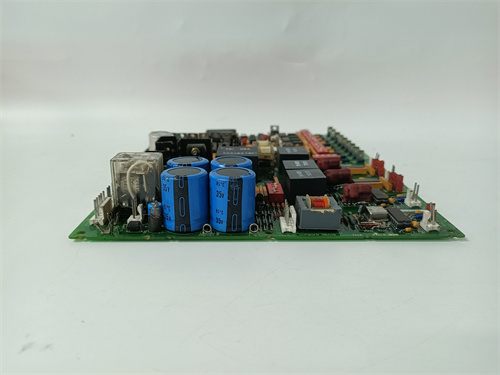
Product Parameters
-
Manufacturer & Series: General Electric (GE), Speedtronic Mark VIe series.
-
Part Number: GE Mark VIe DS200ACLEH1B (the “B” suffix denotes second-generation hardware with improved EMC filtering and enhanced CJC accuracy).
-
Power Supply: +5 VDC (logic) and +24 VDC (field loop power) drawn from the Mark VIe VME64x backplane; maximum current consumption: 1.2 A (+5V) and 0.5 A (+24V).
-
Channel Configuration: 12 channels total, independently software-configurable (via ToolboxST) as either:
-
Analog Input (AI): 4-20 mA, 0-20 mA, 0-10 V, ±10 V, or thermocouple (Types J, K, T, E, R, S) with enhanced cold-junction compensation (CJC) accuracy of ±0.5°C.
-
Analog Output (AO): 4-20 mA or 0-10 V (sink/source capability) with increased drive capability.
-
-
Resolution: 16-bit ADC for inputs (effective resolution: 15.5 bits); 14-bit DAC for outputs.
-
Input Impedance: >10 MΩ (voltage mode); 250 Ω (current mode with precision integrated shunt resistor, ±0.01% tolerance).
-
Output Drive Capability: Up to 1000 Ω load for 4-20 mA outputs (improved from H1’s 750 Ω); up to 10 mA for voltage outputs (minimum load 2 kΩ).
-
Accuracy: ±0.08% of full scale (at 25°C); ±0.15% across full temperature range (-30°C to +65°C), representing a 25% improvement over the H1 variant.
-
Temperature Drift: ±25 ppm/°C (gain) and ±5 µV/°C (offset)—significantly lower than the H1’s ±50 ppm/°C and ±10 µV/°C.
-
Isolation: 1500 Vrms galvanic isolation between field channels and backplane logic; channel-to-channel isolation is non-isolated (common reference), requiring external isolators for critical loops.
-
Sampling Rate: Up to 15 Hz per channel (for AI)—50% faster than the H1 variant; outputs updated at 150 Hz (improved from 100 Hz).
-
Diagnostics: Enhanced diagnostics including:
-
Over-range/under-range detection with configurable thresholds.
-
Open-loop detection for 4-20 mA inputs (flags when loop current drops below 1.5 mA, lower than H1’s 2 mA threshold).
-
Output short-circuit protection with auto-recovery.
-
Output load impedance measurement (reports actual load value for predictive maintenance).
-
Internal reference voltage monitoring and periodic self-calibration.
-
-
EMC Compliance: Meets IEC 61000-6-2 (industrial immunity) and IEC 61000-6-4 (emission) standards with enhanced margin.
-
Operating Temperature: -30°C to +65°C (standard range).
-
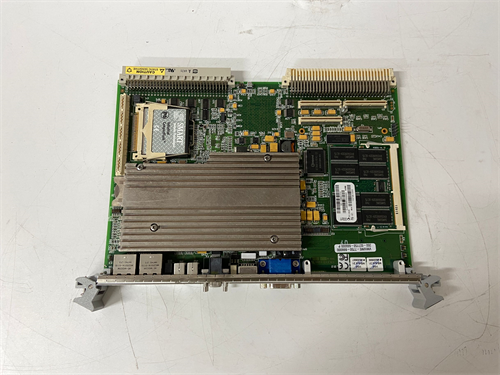
Mounting & Connectivity: Direct VME backplane insertion; front panel features a 68-pin high-density SCSI-style connector with enhanced grounding for improved EMI shielding.
Advantages & Features
-
Superior Temperature Stability: The GE Mark VIe DS200ACLEH1B employs precision low-drift resistors and a chopper-stabilized amplifier front-end, resulting in a temperature drift of only ±25 ppm/°C—half that of the H1 variant. This ensures that turbine control loops maintain tight regulation even when cabinet temperatures fluctuate significantly due to ambient weather changes or varying heat loads from adjacent power electronics.
-
Enhanced Cold-Junction Compensation: For thermocouple inputs, the GE Mark VIe DS200ACLEH1B incorporates a high-accuracy CJC sensor (with ±0.5°C absolute accuracy) and advanced linearization algorithms. This reduces thermocouple measurement error by 30% compared to the H1 variant, making it particularly suitable for turbine exhaust gas temperature (EGT) monitoring—a critical parameter for combustion efficiency and emissions control.
-
Improved Output Drive Capability: The output drivers on the GE Mark VIe DS200ACLEH1B can drive loads up to 1000 Ω for 4-20 mA loops, compared to 750 Ω on the H1. This allows direct connection to long-distance valve positioners or multiple devices in series without needing external booster amplifiers, simplifying field wiring and reducing components.
-
Faster Scan Rates: With a 15 Hz sampling rate per channel (a 50% improvement over the H1), the GE Mark VIe DS200ACLEH1B captures process dynamics more accurately—essential for fast-responding control loops such as liquid fuel flow during startup transients or steam extraction pressure during load shedding events.
-
Expanded Diagnostic Intelligence: The board’s ability to measure output load impedance provides early warning of degrading wiring connections or deteriorating actuator coils. The GE Mark VIe DS200ACLEH1B reports this data to the main controller via ToolboxST, enabling predictive maintenance strategies that reduce unplanned outages.
-
Enhanced EMC Filtering: Second-generation filtering on the GE Mark VIe DS200ACLEH1B includes upgraded common-mode chokes and ferrite beads, providing improved rejection of high-frequency noise from VFDs and ignition systems. This is particularly beneficial in combined-cycle plants where multiple VFDs operate in close proximity to turbine control cabinets.
-
Periodic Self-Calibration: Unlike the H1 variant, which requires factory recalibration for drift compensation, the GE Mark VIe DS200ACLEH1B features an onboard precision voltage reference that enables automatic periodic self-calibration. This maintains accuracy over the board’s operational lifetime, reducing maintenance costs and eliminating manual calibration drift.
-
Backward Compatibility: The GE Mark VIe DS200ACLEH1B is pin-for-pin compatible with the H1 variant, as well as older Mark V analog boards, allowing for easy field upgrades without modifying existing termination panels or rewiring field cables.
Application Cases
-
Gas Turbine – Exhaust Gas Temperature (EGT) Monitoring with Thermocouples: In a 7FA gas turbine installation, sixteen thermocouples were connected to two GE Mark VIe DS200ACLEH1B boards (12 channels each, with 8 channels used on the second board). The enhanced CJC accuracy (±0.5°C) and low temperature drift (±25 ppm/°C) allowed the turbine control system to maintain EGT measurement accuracy within ±1.5°C over the full operating range. This precision enabled the combustion control system to optimize fuel-air ratios, reducing NOx emissions by 8% and improving thermal efficiency by 0.5%—a significant financial benefit for a 500 MW combined-cycle plant.
-
Steam Turbine – HP/IP/LP Extraction Pressure Control: A nuclear power plant’s steam turbine employed three GE Mark VIe DS200ACLEH1B boards to manage high-pressure (HP), intermediate-pressure (IP), and low-pressure (LP) extraction pressure control loops. Each board was configured with 4 analog inputs (pressure transmitters) and 4 analog outputs (control valves). The board’s improved output drive capability (1000 Ω) allowed direct connection to long-cable-mounted valve positioners located 150 meters from the control cabinet, eliminating the need for intermediate signal conditioners. The faster 150 Hz output update rate ensured rapid valve response during grid frequency fluctuations, keeping turbine speed within ±2 RPM of nominal.
-
Compressor – Anti-Surge Control with Temperature and Flow: An LNG export facility installed the GE Mark VIe DS200ACLEH1B on a large centrifugal compressor train. Six channels were configured as 4-20 mA inputs for suction/discharge pressure, differential pressure (flow), and process temperature. Two channels were configured as thermocouple inputs for bearing temperature monitoring (Type K), and the remaining four as 4-20 mA outputs driving the anti-surge valve. During a commissioning test, the board’s open-loop detection (1.5 mA threshold) immediately flagged a pressure transmitter that had loosened wiring, allowing engineers to tighten the connection before the compressor was started—preventing a potential surge event.
-
Hydroelectric – Generator Bearing Temperature and Cooling Control: A hydroelectric plant used the GE Mark VIe DS200ACLEH1B to monitor bearing temperatures via thermocouples (Type T, with enhanced CJC) and to control cooling water flow via 4-20 mA outputs to motorized control valves. The board’s periodic self-calibration maintained measurement stability over the plant’s six-month operating season, eliminating the seasonal recalibration previously required with the older Mark V boards. The plant reported a 60% reduction in maintenance man-hours related to I/O system verification.
Comparison with Competitors
-
vs. Siemens Simatic ET 200SP HA Mixed AI/AO Module with Enhanced HART Support: Siemens offers mixed modules with HART communication capability, which is beneficial for smart transmitters. However, the GE Mark VIe DS200ACLEH1B prioritizes analog precision over digital HART, providing lower temperature drift (±25 ppm/°C vs. Siemens’ typical ±50 ppm/°C) and higher output drive (1000 Ω vs. 750 Ω). For applications where HART is not required, the GE board offers superior analog performance. If HART is mandatory, Siemens may be preferred.
-
vs. ABB S800 I/O Analog Module with Enhanced Diagnostics (AI845/AO845): ABB’s enhanced modules offer excellent per-channel isolation (which the GE board lacks) and similar diagnostic features. However, ABB’s modules are separate AI and AO cards, requiring two slots for mixed I/O configurations. The GE Mark VIe DS200ACLEH1B consolidates 12 channels of mixed AI/AO into a single slot—a critical advantage for Mark VIe racks where slot availability is constrained. The GE board also supports direct thermocouple input, whereas ABB requires separate thermocouple modules.
-
vs. Rockwell Automation ControlLogix 1756-IF16/AO16 Series with Enhanced Environmental Specifications: Rockwell’s ControlLogix modules offer excellent resolution and diagnostics, but they require an intermediate communication adapter (EtherNet/IP or ControlNet) to interface with the Mark VIe system. This introduces communication latency (typically 5-20 ms) that is unacceptable for turbine control loops requiring deterministic 1 ms cycle times. The GE Mark VIe DS200ACLEH1B plugs directly into the VME backplane, providing zero-latency data access to the main processor.
-
vs. GE Mark V Equivalent (DS200ACLEH1A – older generation): Comparing within the GE lineage, the GE Mark VIe DS200ACLEH1B offers substantial improvements over the Mark V version: 16-bit ADC vs. 14-bit, ±0.08% accuracy vs. ±0.15%, enhanced CJC accuracy (±0.5°C vs. ±1.0°C), higher output drive (1000 Ω vs. 600 Ω), faster scan rates (15 Hz vs. 8 Hz), and automatic self-calibration vs. manual adjustment. The “B” revision also adds the load impedance measurement feature, which is completely absent in the Mark V series.
Selection Suggestions
-
Evaluate Precision Requirements: If your application demands high accuracy for critical control loops (e.g., fuel flow, steam temperature, combustion control), the GE Mark VIe DS200ACLEH1B is strongly recommended due to its ±0.08% accuracy, ±25 ppm/°C drift, and enhanced CJC. For less critical monitoring applications (e.g., general pressure indication, water level), the base H1 variant may be more cost-effective.
-
Consider Thermocouple Usage: If your application involves thermocouple inputs, prioritize the GE Mark VIe DS200ACLEH1B because of its enhanced CJC accuracy (±0.5°C vs. ±1.0°C on H1) and improved linearization tables. This is particularly important for EGT monitoring, where measurement errors of ±2°C can translate to significant NOx and efficiency penalties.
-
Assess Output Load Requirements: If your field actuators (valve positioners, servos) have high coil resistance or are located at long distances (cable length > 100 meters), the GE Mark VIe DS200ACLEH1B with its 1000 Ω drive capability is the preferred choice. For short-distance (under 50 meters) and low-impedance loads, the H1 variant’s 750 Ω capability may suffice.
-
Evaluate EMI Environment: If your turbine cabinet is located near high-power VFDs, generator exciters, or ignition transformers, the GE Mark VIe DS200ACLEH1B with its enhanced EMC filtering will provide superior signal integrity. In relatively clean electromagnetic environments, the H1 variant may be adequate.
-
Check System Compatibility: The GE Mark VIe DS200ACLEH1B requires ToolboxST software version v5.5 or later to access its full feature set (including enhanced diagnostics, load impedance measurement, and self-calibration features). If you are running an older Mark VIe firmware (v5.0 or earlier), consult GE for a compatibility matrix. The board is physically compatible with all Mark VIe racks, but advanced features may be unavailable without a software upgrade.
-
Consider Channel Mix Flexibility: With 12 independently configurable channels on the GE Mark VIe DS200ACLEH1B, carefully plan your I/O count. For typical applications requiring 8 inputs and 4 outputs, the board fits perfectly. If your mix is unbalanced (e.g., 10 inputs and 2 outputs), consider using multiple boards to optimize channel utilization, but note that each board consumes one VME slot.
-
Spare Parts Strategy: The GE Mark VIe DS200ACLEH1B remains in active production and is available from GE and authorized distributors. However, lead times may vary (typically 6-10 weeks). For critical turbine units, maintain at least one spare board per train to minimize downtime in the event of a field failure. Given that the “B” revision is the current standard, prioritize stocking “B” variants over older H1 boards for future compatibility.
-
Retrofit from Older Boards: If you are replacing a Mark V or Mark VIe H1 board with the GE Mark VIe DS200ACLEH1B, verify that your field termination panel wiring matches the 68-pin SCSI connector pinout—it remains unchanged. However, note that the “B” variant has slightly different diagnostic parameter names in ToolboxST, so you may need to update control logic tags or graphic displays to reflect the new diagnostic bit mappings.
Precautions
-
ESD Protection: The GE Mark VIe DS200ACLEH1B contains highly sensitive precision ADC/DAC components, chopper-stabilized amplifiers, and EEPROM devices. Always wear a grounded ESD wrist strap and work on a static-dissipative mat when handling the board. Avoid contact with the gold-plated edge connectors, the 68-pin front connector, and exposed component pins. Skin oils can introduce resistive leakage paths that degrade the board’s exceptional ±0.08% accuracy.
-
No Hot-Swapping: This board is strictly non-hot-swappable. Always de-energize the entire Mark VIe rack before inserting or removing the GE Mark VIe DS200ACLEH1B. Hot insertion can cause backplane voltage spikes (due to parasitic capacitance and inductance) that may damage the sensitive analog front-end, the main processor, and adjacent modules. Wait at least 30 seconds after power-down before handling to allow all capacitors to discharge.
-
Wiring Polarity and Shielding: When connecting field transmitters to the 68-pin front connector, pay meticulous attention to polarity. Reverse-polarity connections on current inputs can damage the precision ±0.01% shunt resistors and may cause erroneous over-range alarms. For thermocouple connections, ensure correct polarity (positive wire to + terminal, negative wire to – terminal). Use shielded twisted-pair cables for all field connections, and ground cable shields at the sensor end only (single-point grounding). Grounding at both ends creates ground loops that can inject common-mode noise, degrading the specified CMRR performance.
-
Loop Power Supply Isolation: The GE Mark VIe DS200ACLEH1B does not provide loop power (24 VDC) for external transmitters—this must be supplied externally. Ensure that the external 24 VDC power supply is isolated from the backplane ground and has sufficient isolation voltage rating (minimum 1500 Vrms). Using a non-isolated power supply can defeat the board’s built-in galvanic isolation, creating hazardous ground loops that may damage the board and cause erratic readings. Always use a dedicated, fused, isolated power supply for each I/O group.
-
Thermocouple Extension Wire: When using the GE Mark VIe DS200ACLEH1B for thermocouple inputs, always use thermocouple-grade extension wire matching the thermocouple type (J, K, T, E, R, S). Never use standard copper wire for extension, as this introduces additional thermocouple junctions at each connector, causing significant measurement errors (up to several degrees). Also, ensure the CJC sensor on the board is at thermal equilibrium with the terminal block—avoid mounting the board near heat sources (e.g., large power resistors, transformers, or adjacent high-power output modules) that could create a thermal gradient across the CJC sensor. For best results, allow at least 50 mm of open space around the board for airflow.
-
Output Load Impedance Check: Before connecting analog output channels (4-20 mA or 0-10 V) to field devices, verify that the load impedance is within specifications: maximum 1000 Ω for current outputs; minimum 2 kΩ for voltage outputs. Exceeding these limits can cause output saturation, inaccurate control, and overheating of the output drivers. For inductive loads (e.g., solenoid-operated valves, electropneumatic transducers), install a freewheeling diode or transient voltage suppressor (TVS) across the load to protect the output stage from inductive voltage spikes during turn-off. The GE Mark VIe DS200ACLEH1B includes short-circuit protection, but repetitive overloads can reduce long-term reliability.
-
Configuration Backup Before Replacement: Before removing a faulty unit and installing a new GE Mark VIe DS200ACLEH1B, always use ToolboxST to export the complete channel configuration (gain, filter settings, input/output type, thermocouple type, diagnostic thresholds) to a backup file. The new board ships with factory-default settings, which will not match your application. After installation, restore the saved configuration and perform a channel validation test using a calibrated signal source (e.g., Fluke 754 Documenting Process Calibrator) before returning the turbine to service. This is especially important for the “B” variant, as its enhanced diagnostic parameters (load impedance measurement, self-calibration settings) are not active by default and must be configured.
-
Grounding and Earthing: Follow GE’s recommended grounding practices for the Mark VIe system. The GE Mark VIe DS200ACLEH1B backplane ground is connected to the system earth through the rack’s grounding stud. Ensure that the control cabinet has a low-impedance earth connection (<1 Ω) and that all field cable shields are terminated at a common ground bus bar. Avoid “daisy-chaining” grounds, as this can create ground potential differences that affect measurement accuracy.
-
Storage and Environmental Conditions: If the board is not installed immediately, store it in its original anti-static bag within a temperature-controlled environment (10°C to 35°C) with relative humidity below 50%. Prolonged exposure to high humidity (>80% RH), corrosive gases (H₂S, chlorine, ammonia), or ultraviolet light can degrade the conformal coating and solder joints, reducing long-term reliability. The GE Mark VIe DS200ACLEH1B has a shelf life of 24 months when stored under recommended conditions.
-
Firmware and Software Version Alignment: When procuring a new GE Mark VIe DS200ACLEH1B, verify that its onboard firmware revision is compatible with your Mark VIe main processor software version. The “B” variant may require specific firmware versions (typically v5.5 or later) to support the self-calibration and load impedance measurement features. Mismatched firmware can cause communication errors, diagnostic misreporting, or inoperability of advanced features. Coordinate with GE field service or your authorized distributor to ensure firmware alignment prior to installation.
-
Periodic Calibration: Although the GE Mark VIe DS200ACLEH1B features periodic self-calibration, GE still recommends an external calibration check every 24 months for applications requiring full rated accuracy (±0.08%). For critical safety-related applications (e.g., fuel flow measurement for combustion control, steam temperature for turbine protection), consider an annual calibration cycle using a traceable calibration source. Follow GE’s published calibration procedure (available in the Mark VIe Maintenance Manual) to verify gain, offset, and linearity across the full input/output range. Do not attempt to calibrate using physical potentiometers—all calibration adjustments on the GE Mark VIe DS200ACLEH1B are performed via software through ToolboxST’s calibration utility.
-
Chemical Compatibility: If the GE Mark VIe DS200ACLEH1B is installed in environments with airborne chemical contaminants (e.g., sulfur compounds in geothermal plants, chlorine in pulp mills, or ammonia in fertilizer facilities), ensure that the conformal coating is rated for such exposure. Standard conformal coating is effective against humidity and mild contaminants but may degrade in highly aggressive atmospheres. For such applications, consult GE for optional heavy-duty coating variants or consider mounting the control cabinet in a pressurized, clean-air enclosure.
SCHNEIDER AS-B875-111
WESTINGHOUSE 1C31161G02
ABB RLM01/3BDZ000398R1



Reviews
There are no reviews yet.