
Description
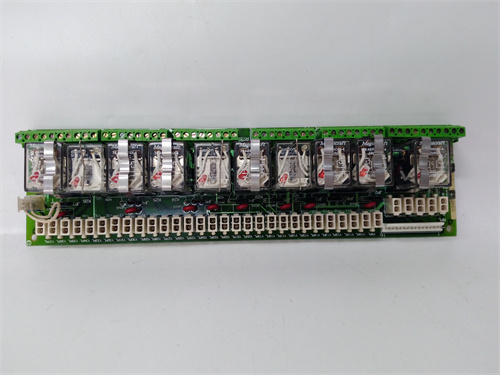
Product Parameters
-
Manufacturer & Series: General Electric (GE), Speedtronic Mark VIe series.
-
Part Number: GE Mark VIe DS200ACLEH1 (the “H1” suffix denotes the base variant with standard accuracy and temperature range).
-
Power Supply: +5 VDC (logic) and +24 VDC (field loop power) drawn from the Mark VIe VME64x backplane.
-
Channel Configuration: 12 channels total, software-configurable as either:
-
Analog Input (AI): 4-20 mA, 0-20 mA, 0-10 V, ±10 V, or thermocouple (Types J, K, T, E, R, S) with built-in cold-junction compensation (CJC).
-
Analog Output (AO): 4-20 mA or 0-10 V (sink/source capability).
-
-
Resolution: 16-bit ADC for inputs; 14-bit DAC for outputs.
-
Input Impedance: >10 MΩ (voltage mode); 250 Ω (current mode with integrated shunt resistor).
-
Output Drive Capability: Up to 750 Ω load for 4-20 mA outputs; up to 10 mA for voltage outputs.
-
Accuracy: ±0.1% of full scale (at 25°C); ±0.2% across full temperature range (-30°C to +65°C).
-
Isolation: 1500 Vrms galvanic isolation between field channels and backplane logic; channel-to-channel isolation is non-isolated (common reference), so external isolators may be required for critical loops.
-
Sampling Rate: Up to 10 Hz per channel (for AI); outputs updated at 100 Hz.
-
Diagnostics: Over-range/under-range detection, open-loop detection (for 4-20 mA inputs), and output short-circuit protection.
-
Operating Temperature: -30°C to +65°C (standard range).
-
Mounting & Connectivity: Direct VME backplane insertion; front panel features a 68-pin high-density SCSI-style connector for field signal cables.
Advantages & Features
-
Unmatched Channel Configuration Flexibility: The GE Mark VIe DS200ACLEH1 stands out because each of its 12 channels can be independently configured via software (ToolboxST) as an input or output, without requiring hardware jumper changes. This allows system integrators to optimize I/O count for specific turbine skid configurations, eliminating unused channels and reducing overall system cost.
-
Built-In Signal Conditioning for Temperature Sensors: Unlike many generic PLC analog modules that require external transmitters for thermocouples, the GE Mark VIe DS200ACLEH1 integrates cold-junction compensation (CJC) circuitry and linearization tables for multiple thermocouple types (J, K, T, E, R, S). This simplifies wiring and improves measurement accuracy for turbine exhaust gas temperature (EGT) monitoring systems.
-
High Accuracy Across Wide Temperature Range: With a guaranteed accuracy of ±0.2% across -30°C to +65°C, the GE Mark VIe DS200ACLEH1 outperforms many standard industrial I/O modules that often derate significantly outside of room temperature conditions. This is critical for turbine cabinets that experience wide thermal cycling due to ambient weather changes and internal heat dissipation.
-
Comprehensive Online Diagnostics: The board features real-time diagnostic capabilities, including:
-
Open-loop detection for 4-20 mA input channels (flags when loop current drops below 2 mA).
-
Short-circuit protection and over-temperature shutdown for output channels.
-
Internal reference voltage monitoring to detect ADC/DAC drift.
These diagnostics are continuously reported to the Mark VIe main controller, enabling predictive maintenance and reducing unnecessary field troubleshooting.
-
-
EMI/RFI Hardened Design: The GE Mark VIe DS200ACLEH1 incorporates robust input filtering and common-mode chokes to suppress high-frequency noise from variable frequency drives (VFDs), switch-mode power supplies, and radio frequency interference (RFI) generated by turbine ignition systems. This ensures stable, noise-free readings even in the most electrically noisy environments.
-
Backward Compatibility: The GE Mark VIe DS200ACLEH1 is pin-compatible with older Mark V analog boards, allowing for easy migration of field wiring during system upgrades from Mark V to Mark VIe without requiring rewiring of termination panels.
Application Cases
-
Gas Turbine Fuel Control Valve Positioning: In a 9FA gas turbine application, a single GE Mark VIe DS200ACLEH1 was configured with 6 analog outputs to control electro-hydraulic servo valves (EHSV) for gas fuel, liquid fuel, and water injection flow control. The remaining 6 channels were set as analog inputs to read back valve position feedback (4-20 mA) and servo current monitoring. The board’s 100 Hz output update rate ensured fast, stable fuel regulation during load ramps, achieving a turbine response time of under 500 ms.
-
Steam Turbine Inlet Pressure and Temperature Monitoring: A combined-cycle power plant utilized multiple GE Mark VIe DS200ACLEH1 boards to monitor main steam pressure (4-20 mA transmitters), reheat steam temperature (thermocouples), and extraction pressure (0-10 V sensors). The board’s built-in CJC and linearization eliminated the need for external temperature transmitters, reducing cabinet footprint by 30% compared to the previous Mark V system. The ±0.2% accuracy over temperature ensured tight control of steam parameters, improving overall plant thermal efficiency.
-
Compressor Anti-Surge Control: In an LNG export facility, a centrifugal compressor’s anti-surge control system employed a GE Mark VIe DS200ACLEH1 with 8 analog inputs reading suction pressure, discharge pressure, flow (differential pressure), and temperature. The remaining 4 channels were configured as analog outputs driving a surge control valve positioner. The board’s fast diagnostic detection enabled immediate alarm when a pressure transmitter loop opened during a storm-induced power dip, allowing operators to switch to a backup transmitter before surge conditions developed.
-
Generator Excitation and Synchronization: A hydroelectric plant used the GE Mark VIe DS200ACLEH1 to interface with the generator excitation system, reading field voltage and current (using isolated transducers) and outputting a 4-20 mA control signal to the automatic voltage regulator (AVR). The board’s short-circuit protected outputs prevented damage to the AVR during commissioning when incorrect wiring was temporarily applied, saving several weeks of repair downtime.
Comparison with Competitors
-
vs. Siemens Simatic ET 200SP HA Mixed AI/AO Module: Siemens offers versatile mixed modules with similar channel densities (8 or 12 channels), but their software-configurable channel functionality is limited to pre-defined groups (e.g., 4 AI + 4 AO). The GE Mark VIe DS200ACLEH1 allows independent configuration of each channel, providing superior flexibility for complex turbine skids where channel counts of each type are not balanced.
-
vs. ABB S800 I/O Analog Module (AI810/AO810): ABB’s S800 series offers robust isolation and diagnostics, but their analog input and output modules are separate (AI and AO are on different cards), requiring more rack space for mixed-signal applications. The GE Mark VIe DS200ACLEH1 consolidates both functions into a single slot, which is advantageous in Mark VIe racks where slot capacity is limited (typically 12-20 slots).
-
vs. Rockwell Automation ControlLogix 1756-IF8/AO8 Series: Rockwell’s ControlLogix analog modules offer excellent resolution and diagnostics but require an intermediate remote I/O rack or EtherNet/IP communication adapter to interface with turbine control systems. The GE Mark VIe DS200ACLEH1 plugs directly into the Mark VIe VME backplane, providing deterministic data transfer with zero protocol latency—a mandatory requirement for turbine overspeed and fuel control loops that operate at 1 ms cycle times.
-
vs. GE Mark V Equivalent (DS200ACLEH1A – older generation): Within the GE lineage, the Mark VIe version of the GE Mark VIe DS200ACLEH1 offers improved ADC accuracy (16-bit vs. 14-bit), higher output update rates (100 Hz vs. 50 Hz), and expanded thermocouple type support (including R and S types for high-temperature exhaust measurements). It also replaces unreliable physical jumpers with EEPROM-based software configuration, significantly improving long-term reliability.
Selection Suggestions
-
Determine Channel Quantity and Mix: The GE Mark VIe DS200ACLEH1 provides 12 configurable channels. For a typical gas turbine application, you might need 8 inputs (pressure, temperature, flow) and 4 outputs (servo valve control). If your requirements exceed 12 channels, plan for multiple boards. Note that each board consumes one VME slot; ensure your rack has adequate space.
-
Evaluate Signal Types: If your field sensors are primarily 4-20 mA transmitters and you have no thermocouple or RTD requirements, the GE Mark VIe DS200ACLEH1 is an excellent choice. However, if you require resistance temperature detectors (RTDs) with three-wire or four-wire configuration, note that this board does not support direct RTD input—you would need external transmitters to convert RTD signals to 4-20 mA. For direct RTD support, consider the GE Mark VIe DS200RTD series instead.
-
Consider Isolation Requirements: The GE Mark VIe DS200ACLEH1 provides isolation between the field side and the backplane but lacks channel-to-channel isolation. If your application requires per-channel isolation (e.g., for loops powered from different utility sources or for intrinsically safe (IS) circuits), you will need to install external isolators between the field transmitters and the board. For IS applications, consult GE’s hazardous area installation guidelines.
-
Check System Compatibility: The GE Mark VIe DS200ACLEH1 requires ToolboxST software version v5.0 or later for full configuration capabilities (including channel type selection and thermocouple linearization). If you are running an older Mark VIe firmware, verify compatibility with GE technical support before procurement. The board is physically compatible with all Mark VIe racks, but software features vary by revision.
-
Assess Accuracy Requirements: If your application demands high precision (e.g., ultra-precise steam temperature control for nuclear plants), the GE Mark VIe DS200ACLEH1 offers ±0.1% accuracy at 25°C. For applications requiring even higher accuracy (±0.05%), consider the GE Mark VIe DS200ACLEH2 (higher-grade variant with factory calibration). For standard industrial applications, the H1 variant is more cost-effective.
-
Spare Parts Strategy: The GE Mark VIe DS200ACLEH1 remains in active production and is available from GE and authorized distributors. However, lead times may vary (typically 4-8 weeks). For critical turbine units, maintain at least one spare board per train to minimize downtime in the event of a field failure.
Precautions
-
ESD Sensitivity: The GE Mark VIe DS200ACLEH1 contains precision ADC/DAC devices and sensitive EEPROM components. Always use a grounded ESD wrist strap and static-dissipative work surface when handling the board. Avoid touching the gold-plated edge connectors or exposed component pins directly, as skin oils can cause corrosion and degrade signal integrity over time.
-
No Hot-Swapping: This board is strictly non-hot-swappable. Always de-energize the entire Mark VIe rack before inserting or removing the GE Mark VIe DS200ACLEH1. Hot insertion can cause backplane voltage spikes that may damage the board, the main processor card, or other adjacent modules.
-
Wiring Polarity and Shielding: When connecting field transmitters to the 68-pin front connector, pay careful attention to polarity. Reverse-polarity connections can damage the internal shunt resistors for current inputs and may cause erroneous readings. Use shielded twisted-pair cables for all field connections, and ensure that cable shields are grounded at the sensor end only (single-point grounding). Grounding at both ends creates ground loops that can inject common-mode noise and degrade accuracy.
-
Loop Power Considerations: The GE Mark VIe DS200ACLEH1 does not provide loop power (24 VDC) for external transmitters directly. You must supply an external 24 VDC power source for loop-powered transmitters. Ensure that the external power supply is isolated and meets the backplane isolation requirements (1500 Vrms). Failure to use an isolated power supply can defeat the board’s built-in isolation and create hazardous ground loops.
-
Thermocouple Wiring Precautions: When using the GE Mark VIe DS200ACLEH1 for thermocouple inputs, use the correct type of extension wire (thermocouple-grade wire) matched to the thermocouple type (J, K, T, E, R, S). Avoid using standard copper wire for extension, as this introduces unwanted thermoelectric voltages at terminal junctions, causing measurement errors. Also, ensure that the cold-junction compensation (CJC) sensor on the board is at thermal equilibrium with the terminal block—avoid mounting the board near heat sources (e.g., power resistors, transformers) that could create a temperature gradient.
-
Configuration Backup: Before replacing a faulty unit with a new GE Mark VIe DS200ACLEH1, export the channel configuration settings (gain, input/output type, thermocouple type, etc.) from the old board via ToolboxST. The new board ships with factory-default settings, which may not match your application. After installation, restore the saved configuration and perform a channel validation test using a calibrated signal generator or loop calibrator before returning the turbine to service.
-
Output Load Impedance Check: When connecting analog output channels (4-20 mA or 0-10 V) to field devices (e.g., valve positioners, servo amplifiers), verify that the load impedance is within the board’s specified limits: maximum 750 Ω for current outputs; minimum 5 kΩ for voltage outputs. Exceeding the load limit can cause output saturation, inaccurate control, and potential overheating of the output drivers. For inductive loads (e.g., electro-hydraulic servos), install a freewheeling diode or transient voltage suppressor (TVS) across the load to protect the output stage from voltage spikes.
-
Storage Conditions: If the board is not installed immediately, store it in its original anti-static bag within a temperature-controlled environment (10°C to 35°C) with relative humidity below 50%. Prolonged exposure to high humidity, corrosive gases (H₂S, chlorine), or ultraviolet light can degrade the conformal coating and reduce long-term reliability.
-
Firmware Version Check: When procuring a new GE Mark VIe DS200ACLEH1, verify that its firmware revision matches the main processor’s software version. Mismatched firmware can cause communication errors, loss of diagnostic features, or incorrect thermocouple linearization tables. Coordinate with GE field service or your distributor to ensure firmware alignment prior to installation.
-
Calibration Cycle: The GE Mark VIe DS200ACLEH1 has a recommended calibration interval of 24 months (2 years) for applications requiring full rated accuracy. For critical safety-related applications (e.g., fuel flow measurement for combustion control), consider an annual calibration cycle. Use a traceable calibration source (e.g., Fluke 754 Documenting Process Calibrator) and follow GE’s published calibration procedure to adjust internal gain and offset trims. Note that calibration is typically performed via software (ToolboxST) rather than physical potentiometers
A-B 1756-EN2T
BECKHOFF AX2003-AS
SCHNEIDER AS-B875-111


Reviews
There are no reviews yet.