
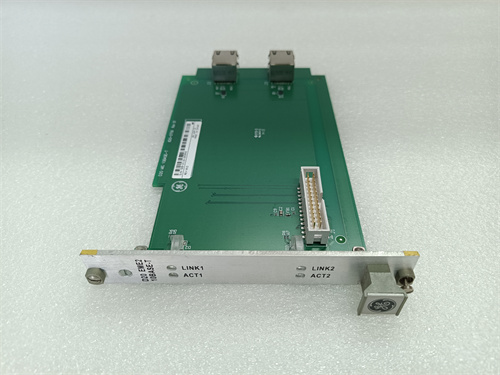
Description
Technical Parameters (Key Specs)
-
Processor: 32-bit RISC, 200 MHz
-
Memory: 16 MB Flash (firmware + application) / 8 MB RAM (data + event buffer)
-
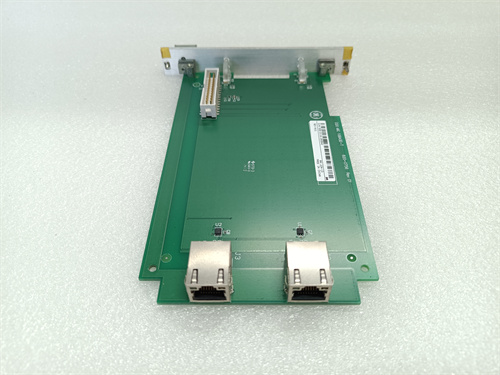
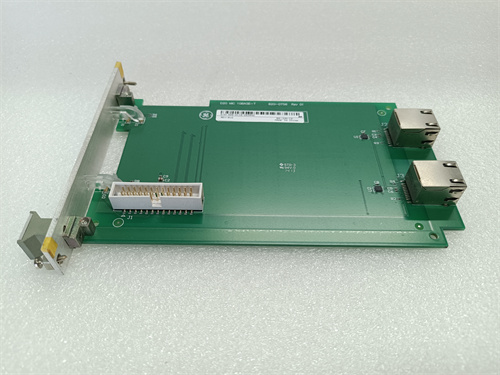
Ethernet Port: 1x 10BASE-T (10 Mbps only, RJ45) – this is the defining feature of the GE D20 MIC 10BASE-T
-
Serial Ports: 2x RS-232/485 (programmable, DNP3 serial, MODBUS RTU, IEC 101)
-
USB Port: 1x (service and firmware updates)
-
I/O Capacity: Supports up to 8 x GE D20 EME or GE D20 EME 10BASE-T expansion modules (up to 128 DI / 64 DO / 32 AI total)
-
Protocol Support: DNP3 (serial/TCP), MODBUS (RTU/TCP), IEC 61850 (GOOSE/MMS), IEC 101/104, and legacy GE protocols
-
Power Supply: 24–48 V DC or 110–250 V DC/AC (field-selectable, wide range)
-
Operating Temp: –40°C to +85°C (substation-hardened)
-
Protection Class: IP40 with conformal-coated PCB
-
Clock: Battery-backed RTC with 1 ms SOE (Sequence of Events) timestamping
-
Compliance: IEC 61850-3, IEEE 1613 (substation), CE, UL, NERC CIP
Advantages & Features
-
Centralized control – the GE D20 MIC 10BASE-T coordinates all I/O, executes logic (e.g., interlocking, breaker control), and formats data for master SCADA
-
Legacy network compatibility – the GE D20 MIC 10BASE-T connects directly to older SCADA masters that only support 10 Mbps Ethernet, eliminating media converters in retrofit projects
-
Multi-protocol gateway – the GE D20 MIC 10BASE-T simultaneously translates between protocols (e.g., DNP3 to master, MODBUS to local IEDs, IEC 61850 to substation devices)
-
Redundant controller support – two GE D20 MIC 10BASE-T units can be paired in hot-standby configuration for high availability (automatic failover < 100 ms)
-
Cybersecurity built-in – role-based access control (RBAC), encrypted communication, and secure firmware authentication per NERC CIP standards
-
Event logging – stores up to 10,000 time-stamped events with 1 ms resolution for fault analysis
-
Firmware upgradeable via USB or Ethernet – no proprietary tools required
-
Dual power input – optional redundant power feed for critical substations
Application Cases
-
Substation automation retrofit – replacing older GE controllers while keeping the existing 10 Mbps Ethernet network infrastructure, the GE D20 MIC 10BASE-T acts as the new central RTU processor
-
Distributed generation (wind/solar) – the GE D20 MIC 10BASE-T aggregates data from multiple GE D20 EME units and reports to the utility control center via DNP3 over 10BASE-T
-
Oil & gas pipeline SCADA – remote valve stations use the GE D20 MIC 10BASE-T to consolidate pressure/temperature data and execute shutdown logic, communicating over legacy 10 Mbps microwave links
-
Railway traction power monitoring – trackside substations use the GE D20 MIC 10BASE-T for catenary monitoring, interfacing with protection relays and sending IEC 61850 GOOSE messages over 10BASE-T
Comparison with Competitors
| Feature | GE D20 MIC 10BASE-T | GE D20 MIC (standard 10/100) | Schweitzer SEL-3355 | Siemens SICAM SCC |
|---|---|---|---|---|
| Ethernet Speed | 10 Mbps (fixed) | 10/100 Mbps | 10/100/1000 Mbps | 10/100 Mbps |
| Max I/O Points | ~128 DI / 64 DO / 32 AI | Same | ~256 DI / 128 DO | ~192 DI / 96 DO |
| Protocols | DNP3, MODBUS, IEC 61850 | Same | DNP3, IEC 61850, MODBUS | IEC 61850, DNP3 |
| Redundancy | Hot-standby (built-in) | Hot-standby | Hot-standby | Requires extra card |
| Temp Range | –40°C to +85°C | –40°C to +85°C | –40°C to +85°C | –40°C to +70°C |
| Cybersecurity (NERC CIP) | Built-in | Built-in | Built-in | Good |
| Conformal Coating | Standard | Standard | Optional | Optional |
| Price | Lower (legacy-specific) | Mid-range | Higher | Comparable |
The GE D20 MIC 10BASE-T is uniquely suited for legacy network integration, offering cost savings over the standard GE D20 MIC when 10/100 capability is unnecessary. Compared to Schweitzer SEL-3355, the GE D20 MIC 10BASE-T provides excellent value for smaller to mid-size substation projects.
Selection Suggestions
-
Network compatibility: Select the GE D20 MIC 10BASE-T only if your SCADA network strictly operates at 10 Mbps – for modern 100 Mbps or Gigabit networks, choose the standard GE D20 MIC or newer models
-
System size: The GE D20 MIC 10BASE-T supports up to 8 expansion modules – if you need more I/O, consider a distributed architecture with multiple GE D20 MIC units
-
Protocol requirements: Verify that your master station and field devices are supported – the GE D20 MIC 10BASE-T covers DNP3, MODBUS, and IEC 61850; confirm firmware version for specific profile needs
-
Redundancy: For critical applications (e.g., transmission substations), order two GE D20 MIC 10BASE-T units with the hot-standby option and redundant power supplies
-
Cable type: Use CAT3 or higher twisted-pair for 10BASE-T operation – the GE D20 MIC 10BASE-T supports cable runs up to 100 meters
-
Configuration tool: Use GE’s D20 Configuration Tool or newer EnerVista software – ensure compatibility with the GE D20 MIC 10BASE-T firmware revision
Precautions
-
Speed mismatch – the GE D20 MIC 10BASE-T cannot auto-negotiate to 100 Mbps – set your switch port manually to 10 Mbps or ensure it auto-negotiates down; otherwise, link will not establish
-
ESD sensitivity – handle the GE D20 MIC 10BASE-T with proper grounding despite conformal coating – use wrist straps during installation
-
Power supply connection – if using 110–250 V AC, ensure line-to-neutral only; the GE D20 MIC 10BASE-T can be damaged by phase-to-phase connection
-
Grounding – require solid earth ground (≤ 1 Ω) using the dedicated ground terminal – not the DIN-rail as primary ground path
-
Firmware compatibility – when replacing a GE D20 MIC 10BASE-T in an existing system, ensure the replacement unit has the same or newer firmware version as the previous unit and all connected GE D20 EME modules
-
Serial port wiring – use shielded twisted-pair cables for RS-485; verify termination resistors if daisy-chaining multiple devices
-
IEC 61850 GOOSE – if using GOOSE messaging, verify switch VLAN and multicast filtering – the GE D20 MIC 10BASE-T can be overwhelmed by broadcast storms on a 10 Mbps link if not properly configured
-
Battery replacement – the RTC battery (CR2032) should be replaced every 4–5 years – replace with power on to retain configuration, or backup configuration before power-down
-
Storage – if stored > 6 months, re-apply power for 24 hours before deployment to reform electrolytic capacitors
-
Ethernet cable shielding – use shielded CAT5e (even though 10BASE-T only requires CAT3) – the GE D20 MIC 10BASE-T operates in high-EMI substation environments; shielding prevents communication errors and transient damage
-
Cybersecurity activation – after installation, enable role-based access control, change default passwords, and activate encryption per NERC CIP requirements – the GE D20 MIC 10BASE-T ships with factory defaults that are not secure
-
Do not use for direct safety functions – the GE D20 MIC 10BASE-T is a standard RTU controller, not SIL-rated – use dedicated safety PLCs for emergency shutdown or protection relay functions
-
Disposal – contains lead-based solder (pre-RoHS revisions) and lithium battery – dispose per local electronic waste regulations
PN/DP;6ES7318-3EL01-0AB0
ABB 086348-001
GE VMIACC-5595-208
.jpg)

Reviews
There are no reviews yet.