
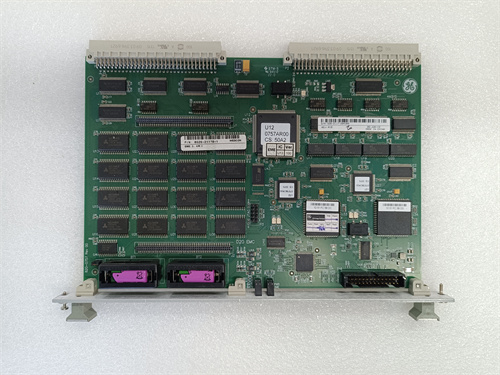
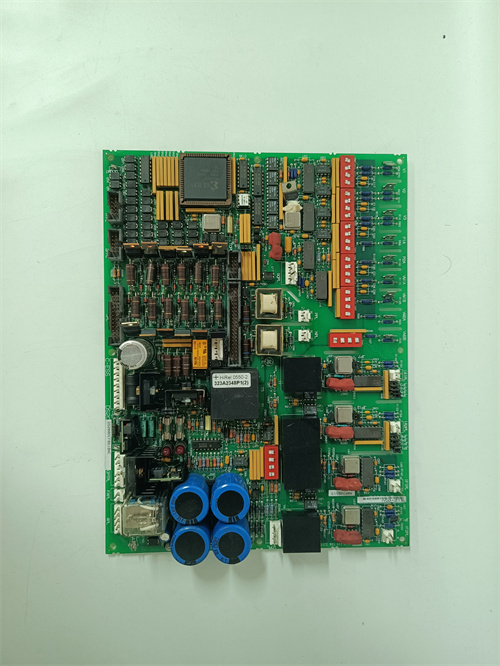
Description
Technical Parameters (Key Specs)
-
I/O Capacity: 16 digital inputs, 8 digital outputs, 4 analog inputs (configurable 0–20 mA / 4–20 mA / ±10 V)
-
Digital Inputs: Wet/dry contacts, 24–125 V DC (wide range)
-
Digital Outputs: Form C relays, 5 A @ 250 V AC / 30 V DC (normally open + normally closed)
-
Analog Input Resolution: 16-bit, accuracy ±0.1% of full scale
-
Communication: 2x Ethernet ports (10/100, MODBUS TCP, DNP3, IEC 61850), 1x RS-232/485 (MODBUS RTU, DNP3 serial)
-
Protocol Support: DNP3 (serial/TCP), MODBUS (RTU/TCP), IEC 61850 (GOOSE/MMS), IEC 101/104
-
Power Supply: 24–48 V DC or 110–250 V DC/AC (wide-range, field-selectable)
-
Operating Temp: –40°C to +85°C (extended, suitable for outdoor cabinets)
-
Protection Class: IP40 (conformal-coated PCB for humidity/condensation resistance)
-
Mounting: DIN-rail or panel mount
-
Compliance: IEC 61850-3, IEEE 1613 (utility substation), CE, UL
Advantages & Features
-
Substation-hardened design – withstands high EMI, transients, and temperature extremes per IEEE 1613, making the GE D20 EME ideal for outdoor switchyards
-
Multi-protocol simultaneous operation – the GE D20 EME can speak DNP3 to the master station and MODBUS to local RTUs on the same unit
-
IEC 61850 Edition 2 support – native GOOSE messaging for fast peer-to-peer communication and MMS for SCADA, eliminating protocol converters
-
Hot-swappable I/O – replace faulty I/O cards without powering down the GE D20 EME, reducing downtime in critical substations
-
Cybersecurity features – secure authentication, role-based access, and encrypted communication (via firmware options)
-
Firmware upgradeable via Ethernet or serial – no proprietary dongle required
-
Built-in data logging – up to 1,000 time-stamped events with sequence-of-events (SOE) resolution of 1 ms
-
Redundant power input – dual feed option for high availability
Application Cases
-
Substation automation – the GE D20 EME collects breaker status, transformer temperature, and feeder currents, sending data via IEC 61850 to the control center while also driving trip/close commands
-
Distributed generation monitoring – wind and solar farms use the GE D20 EME to aggregate inverter status, irradiance sensors, and weather station data, reporting via DNP3 to the utility SCADA
-
Water distribution SCADA – pump station remote monitoring, reading pressure transmitters and controlling valve actuators over MODBUS TCP through the GE D20 EME
-
Railway traction power – trackside substations using the GE D20 EME for catenary voltage monitoring and protection relay interfacing in extreme temperature zones
Comparison with Competitors
| Feature | GE D20 EME | Schweitzer SEL-2241 | Siemens SICAM A8000 |
|---|---|---|---|
| Digital I/O | 16 DI / 8 DO | 16 DI / 8 DO | 16 DI / 8 DO |
| Analog Inputs | 4 (16-bit) | 4 (16-bit) | 8 (14-bit) |
| Protocols | DNP3, MODBUS, IEC 61850 | DNP3, IEC 61850, MODBUS | IEC 61850, DNP3, MODBUS |
| Temp Range | –40°C to +85°C | –40°C to +85°C | –40°C to +70°C |
| Hot-swap I/O | Yes (cards) | Yes (modules) | Limited (rack-level) |
| Conformal Coating | Standard | Standard | Optional (extra cost) |
| Cybersecurity (built-in) | Advanced (RBAC, encryption) | Advanced | Good |
| Price | Mid-range | Higher (premium) | Comparable |
The GE D20 EME offers a strong balance of temperature endurance, protocol versatility, and cybersecurity at a competitive price. Compared to Schweitzer, the GE D20 EME is more cost-effective; versus Siemens, it offers wider temperature range and standard conformal coating for humid environments.
Selection Suggestions
-
Application environment: The GE D20 EME is explicitly designed for utility substations with extreme temperatures (–40°C to +85°C) – choose it over commercial-grade alternatives for outdoor/unconditioned enclosures
-
Protocol requirements: If your master station uses DNP3 and your local IEDs use MODBUS, the GE D20 EME handles both simultaneously – verify firmware version supports your specific protocol profiles
-
I/O count expansion: The GE D20 EME can be daisy-chained with other D20 modules – plan your total I/O count to determine how many GE D20 EME units are needed (max 8 units per D20 controller)
-
Redundancy: For critical substations, order the GE D20 EME with dual power input option and pair it with a redundant D20 main processor
-
Cybersecurity compliance: The GE D20 EME meets NERC CIP requirements – ensure you activate role-based access control and encryption during commissioning
-
Wiring: Use shielded twisted-pair cables for analog inputs and communication ports – the GE D20 EME provides terminal blocks that accept 0.5–2.5 mm² (AWG 20–14) wires
Precautions
-
ESD sensitivity – handle the GE D20 EME with proper grounding; the conformal coating provides humidity protection but not ESD immunity – use wrist straps during installation
-
Power supply isolation – if using the 110–250 V AC option, ensure the neutral is properly bonded; the GE D20 EME uses a switching power supply that can be damaged by phase-to-phase connection (line-to-neutral only)
-
Analog input wiring – use 4-wire connections for transmitters to avoid ground loops; the GE D20 EME analog inputs are differential but the common-mode range is limited to ±10 V – stay within this range
-
Digital output relay life – the relays on the GE D20 EME are rated for 100,000 operations at full load – for frequently cycling outputs (e.g., alarm annunciators), use solid-state external relays to extend the GE D20 EME‘s onboard relay life
-
Firmware compatibility – when replacing a GE D20 EME in an existing system, ensure the replacement unit has the same firmware version as the rest of the D20 network – mismatch can cause protocol misinterpretation
-
Grounding – the GE D20 EME requires a solid earth ground (≤ 1 Ω) for surge protection – use the dedicated ground terminal, not the DIN-rail as the primary ground path
-
IEC 61850 configuration – if using GOOSE messaging, verify network switch settings (VLAN, multicast filtering) – the GE D20 EME can be overwhelmed by broadcast storms without proper switch configuration
-
Storage – if the GE D20 EME is stored for more than 6 months, re-apply power for 24 hours before deployment to reform the electrolytic capacitors
-
Do not exceed I/O ratings – the GE D20 EME analog inputs are not isolated from each other (common reference) – using transmitters with different ground potentials can cause measurement errors; use isolated transmitters if ground differences exceed 0.5 V
-
Disposal – the GE D20 EME contains small amounts of lead-based solder (prior to RoHS revisions) and lithium battery (for RTC) – dispose per local electronic waste regulations
ICS TRIPLEX(ROCKWELL) T8461
SCHNEIDER 140CPU65150
A-B 1756-L73
Reviews
There are no reviews yet.