
Description
Product Description
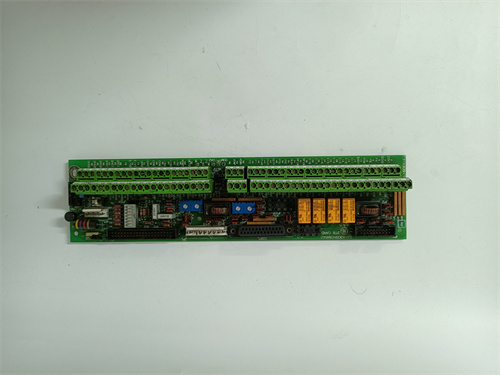
The GE 531X305NTBANG1 is a critical plug-in relay module for General Electric’s (GE) Series 90-30 Programmable Logic Controller (PLC) system. This module is designed to provide isolated, high-current digital outputs, typically used to interface the low-voltage logic of the PLC with field devices such as motor starters, solenoid valves, indicator lamps, and alarms. The GE 531X305NTBANG1 offers a reliable and robust interface, ensuring that control commands from the CPU are accurately executed in the industrial environment. Its plug-in design allows for easy installation and maintenance within the 90-30 rack. When a high-power switching solution is required, the 531X305NTBANG1 is a standard choice for engineers working with this legacy GE platform. The longevity and support for components like the GE 531X305NTBANG1 are key reasons for the enduring use of Series 90-30 systems in operational plants.
Product Parameters
-
PLC Series: GE Fanuc / GE Intelligent Platforms Series 90-30.
-
Module Type: Relay Output Module.
-
Number of Channels: Typically 8 or 16 relay output channels (exact count must be verified for this specific article code).
-
Contact Rating: Relay contacts are rated for a specific voltage and current (e.g., 5A at 250V AC resistive, 2A at 30V DC). This is the critical parameter for load compatibility.
-
Contact Type: Form C (SPDT – Single Pole Double Throw) or Form A (SPST-NO) relays, providing either normally open/normally closed or just normally open contacts.
-
Isolation: Provides galvanic isolation between the PLC logic and the switched load circuit.
-
Indicators: LED status indicator for each channel to show when the relay is energized.
-
Mounting: Plugs directly into a slot in the Series 90-30 PLC rack (5-slot, 10-slot, etc.).
Advantages and Features
-
High Load Capacity: The electromechanical relays can switch significantly higher currents and voltages than transistor-based output modules, making them ideal for direct control of industrial loads.
-
Voltage Flexibility: Relay contacts can switch AC or DC loads, providing excellent application flexibility for various field devices.
-
Electrical Isolation: The physical relay provides excellent noise immunity and protects the sensitive PLC electronics from voltage spikes or faults in the field wiring.
-
Clear Status Indication: Per-channel LEDs allow for quick visual troubleshooting of output commands.
-
Proven Reliability: As a core component of the widely deployed Series 90-30, these modules have a long history of reliable performance.
-
Ease of Replacement: The plug-in design facilitates quick module swap during maintenance.
Application Cases in Various Fields
-
Water Treatment Plants: The GE 531X305NTBANG1 can directly start and stop chemical feed pumps or open/close motor-operated valves via its relay contacts.
-
Packaging Machinery: Controls solenoid valves for pneumatic cylinders, actuators for diverters, and main drive motor contactors on older production lines.
-
Material Handling: Operates relay coils for conveyor motor starters, palletizer controls, and sorting system actuators.
-
Building Automation (Legacy): Used in older HVAC control panels to start fans, pumps, and open damper actuators.
-
Factory Automation: Provides the interface to control machine tools, assembly station clamps, and alarm horns in manufacturing cells.
Comparison with Competing Products
-
Vs. Siemens (SIMATIC S5-115U Relay Output Modules): Both are for legacy PLC systems. The <a href=”https://www.geautomation.com/parts/531X305NTBANG1″ target=”_blank”>GE 531X305NTBANG1</a> is specific to the GE 90-30 ecosystem, while Siemens modules are for the S5 platform. They are not interchangeable. The GE 90-30 was often considered more user-friendly for North American markets.
-
Vs. Allen-Bradley (PLC-5/1771 Relay Modules): The Allen-Bradley PLC-5 is another contemporary legacy system. The choice between GE 90-30 and A-B PLC-5 was often driven by regional or corporate standards. The relay modules serve identical functions but within completely incompatible hardware architectures.
-
Vs. Solid-State/Transistor Outputs: Within the 90-30 system itself, the key comparison is between relay modules like the 531X305NTBANG1 and transistor output modules. Relay modules offer higher load capacity and voltage flexibility but have a limited mechanical lifespan (millions of cycles) and slower switching speed compared to solid-state outputs.
Selection Suggestions and Precautions
-
Verify Load Characteristics: This is the most critical step. Ensure the inrush and steady-state current and voltage of your load (e.g., motor coil, solenoid) are well within the relay’s contact rating. Inductive loads (coils) require special attention and may need snubber circuits.
-
Confirm Exact Module Type: Verify that the GE 531X305NTBANG1 is indeed a relay output module and determine its exact channel count and contact arrangement (Form C or Form A) from the official GE datasheet.
-
Plan for Relay Lifespan: Understand that electromechanical relays have a finite mechanical and electrical life. For applications with very high cycle rates (switching multiple times per minute), a solid-state output module may be more appropriate.
-
Use Proper Protection: Always use external fuses or circuit breakers on the load side of each relay channel to protect the relay contacts from being welded by a short-circuit fault.
-
Check Rack Compatibility and Power Budget: Ensure you have a free slot in your 90-30 rack and that the rack’s power supply has sufficient capacity to power the relay coils inside the 531X305NTBANG1 module.
-
Source from Reputable Suppliers: For legacy parts, sourcing from authorized GE distributors or highly reputable automation surplus specialists is essential to avoid counterfeit or refurbished modules sold as new, which can fail prematurely.
ABB DCS601-0270-61-15000A0 DCS
57160001-AU PLC
NAMM03 ABB PLC
57120001-CV PLC
ABB 3ADT220090R0043 PLC
ABB IMDSI02 PLC


Reviews
There are no reviews yet.