
Description
Technical Parameters & Electrical Specifications
Understanding the raw electrical limits of the 531X133PROAG1 is essential for proper integration:
-
Microcontroller: Custom GE ASIC (Application-Specific Integrated Circuit) running at 16 MHz, dedicated to real-time PID loop calculations with a scan cycle of approximately 2.5 ms.
-
Analog Inputs: 4 differential channels, software-configurable for ±10V DC or 0–20 mA signals. Input impedance is >10 MΩ for voltage mode, ensuring minimal loading on tachometer or LVDT feedback devices.
-
Analog Outputs: 2 isolated channels providing 0–10V DC or 4–20 mA outputs, used to drive the firing control board (e.g., the 531X133PROAG1’s companion power interface).
-
Digital I/O: 8 opto-isolated digital inputs (accepting 24V DC sink/source) and 6 transistor outputs (24V DC, 0.5A max, with built-in flyback diodes).
-
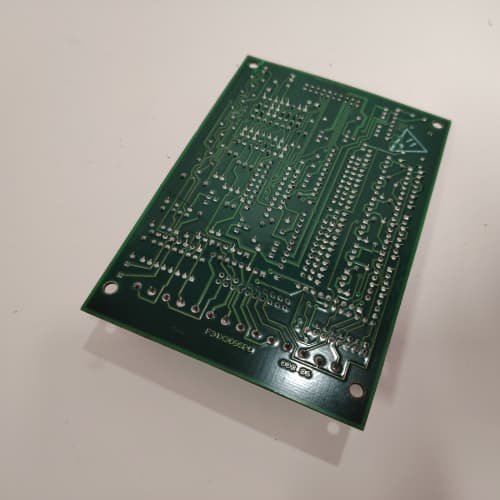
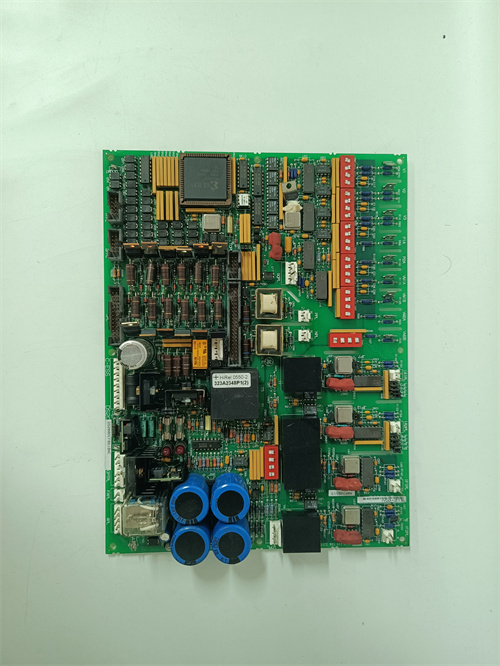
Onboard Potentiometers: 10 trim-pots for manual offset, gain, and zero adjustments—a hallmark of the 531X133PROAG1 that allows fine-tuning without software intervention.
-
Status LEDs: Red/Green bi-color LED array indicating processor health, communication activity, and fault latch status.
-
Operating Temperature: 0°C to +55°C (derated above 45°C).
-
Storage Temperature: -40°C to +85°C.
-
Humidity: 5% to 95% non-condensing, with conformal coating for corrosion resistance.
Advantages & Distinctive Features
The 531X133PROAG1 stands out for several engineering reasons:
-
Legacy Compatibility: It is a direct drop-in replacement for older revisions (e.g., 531X133PR0A series) with backward-compatible firmware, making it invaluable for aging steel mills and paper plants where complete drive upgrades are cost-prohibitive.
-
Hardware Tuning Capability: Unlike modern all-software drives, the 531X133PROAG1 provides physical potentiometers for gain and offset. This allows skilled technicians to recalibrate the board on the fly using an oscilloscope, without needing a proprietary programming laptop—a massive advantage during emergency breakdowns.
-
Rugged Construction: The board uses gold-plated edge connectors and high-temperature electrolytic capacitors rated for 105°C, extending its lifespan in poorly ventilated cabinets. The 531X133PROAG1 also features surge suppression on all analog inputs, protecting against voltage spikes from motor armature feedback.
-
Diagnostic Simplicity: The onboard fault LED matrix on the 531X133PROAG1 provides binary error codes that correspond to overcurrent, overspeed, field loss, or tachometer failure—allowing rapid root-cause analysis without external software.
Application Fields & Real-World Use Cases
The 531X133PROAG1 is predominantly found in heavy industries where DC motors still reign supreme:
-
Steel & Aluminum Rolling Mills: The board controls speed and tension on uncoilers/recoilers, where the 531X133PROAG1 maintains precise torque regulation despite dramatic changes in coil diameter.
-
Paper & Pulp Machinery: In winder drives and calender sections, the 531X133PROAG1 handles rapid acceleration/deceleration cycles with minimal overshoot.
-
Mine Hoists & Elevators: The 531X133PROAG1 is deployed in variable-speed DC hoists, managing regenerative braking and field weakening for energy efficiency.
-
Test Stands & Dynamometers: Laboratories use the 531X133PROAG1 to accurately control DC load motors in endurance testing, relying on its high-resolution analog feedback.
-
Printing Presses: High-end rotogravure presses still utilize the 531X133PROAG1 for synchronizing multiple driven sections, leveraging its low-jitter analog outputs.
Comparison with Competing / Replacement Models
When evaluating alternatives to the 531X133PROAG1, consider these contrasts:
| Aspect | 531X133PROAG1 (GE Fanuc) | Generic Replacement (e.g., Siemens 6RA70 Series) | Modern Universal Drive (e.g., ABB DCS880) |
|---|---|---|---|
| Form Factor | Dedicated processor board for DC300 chassis. | Complete standalone drive cabinet. | Modular rack system. |
| Tuning Method | Hardware potentiometers + limited software. | Fully software-based via PC. | Fully software with autotuning. |
| Availability | Aftermarket / refurbished only (discontinued). | Active production, new units available. | Active production. |
| Cost (Spare) | Moderate to high (due to scarcity). | High (complete drive replacement). | Very high (requires full system redesign). |
| Ease of Upgrade | Low—cannot be expanded for Ethernet/Profibus without extra gateway cards. | Moderate—supports fieldbuses directly. | High—fully networked. |
| Repair Complexity | Board-level repair possible with schematics. | Board-level repair is difficult; usually module swap. | Board-level repair requires factory authorization. |
Key takeaway: If you are maintaining an existing DC300 cabinet, the 531X133PROAG1 is your only direct-fit solution. Retrofitting a modern drive entails re-engineering the entire power stack and control panel, which is 5–10× more expensive. However, for new installations, the 531X133PROAG1 is obsolete, and you should consider ABB or Siemens alternatives.
Selection Guidelines & Sourcing Precautions
When procuring a 531X133PROAG1, observe these critical rules:
-
Firmware Revision Match: The 531X133PROAG1 has multiple firmware variants (e.g., REV A, REV B, REV C). Always verify that the revision matches your existing system; otherwise, the drive may fail to initiate or produce incorrect firing angles.
-
Visual Inspection: Check for bulging electrolytic capacitors, scorched resistors, or cracked solder joints on the 531X133PROAG1—these are telltale signs of thermal stress or age.
-
Test Before Installation: If buying refurbished, demand a test certificate showing analog I/O linearity (0.1% accuracy) and digital I/O function. The 531X133PROAG1 should be burn-in tested for 24 hours at 50°C to expose latent failures.
-
Storage Conditions: Keep the 531X133PROAG1 in anti-static bags with desiccant. The conformal coating is robust, but the edge connectors are susceptible to oxidation if stored in humid environments.
-
Avoid Counterfeits: Due to the 531X133PROAG1‘s high demand, some sellers offer non-functional “pulls.” Only purchase from suppliers who provide a 1-year warranty and traceability to original GE Fanuc production lots.
Installation & Operational Precautions
-
Power Down & Discharge: Always discharge the DC bus capacitors before removing or inserting the 531X133PROAG1. Even with the main disconnect off, the power supply board retains lethal voltage for up to 5 minutes.
-
Handling ESD: Use a grounded wrist strap. The 531X133PROAG1 contains CMOS components that are ESD-sensitive; damage may not be immediate but can degrade performance over months.
-
Cable Dressing: Ensure that analog feedback wires (tachometer, encoder) are separated from AC power cables by at least 300 mm to prevent noise injection into the 531X133PROAG1’s high-impedance inputs.
-
Parameter Backup: Before swapping out a faulty 531X133PROAG1, record all potentiometer positions (using a digital multimeter) and any software parameters stored in the main DC300 NVRAM. The new 531X133PROAG1 will need to be manually re-tuned to match those settings.
-
Firmware Update Caution: Do not attempt to flash third-party firmware onto the 531X133PROAG1. The microcontroller is write-protected and locked to GE’s proprietary instruction set; unauthorized flashing will brick the board.
Final Recommendation
The 531X133PROAG1 is a robust, reliable, and field-proven component for GE DC300 drive systems. Its hardware-based tuning and rugged construction make it a favorite among veteran maintenance crews. However, given its obsolescence, I strongly recommend the following strategy:
-
For immediate breakdown recovery: Source a tested, refurbished 531X133PROAG1 from a reputable aftermarket supplier. Keep at least one spare in stock.
-
For long-term (5+ year) planning: Begin a migration study to replace the entire DC300 system with a modern AC drive or a digital DC drive (e.g., ABB DCS800 or Siemens 6RA80), as the 531X133PROAG1 will become increasingly scarce and costly.
-
For new projects: Do not design around the 531X133PROAG1—it is end-of-life. Instead, use current-generation motion controllers with EtherCAT or PROFINET interfaces.
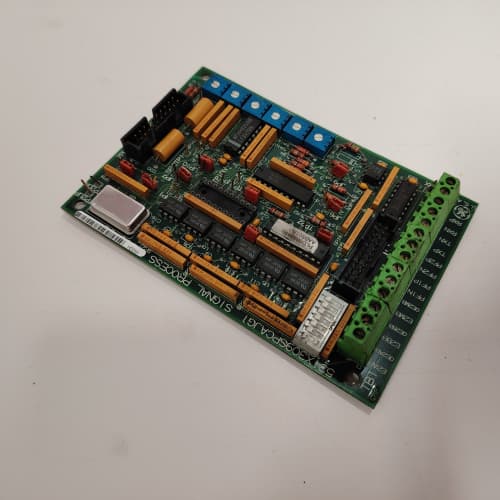
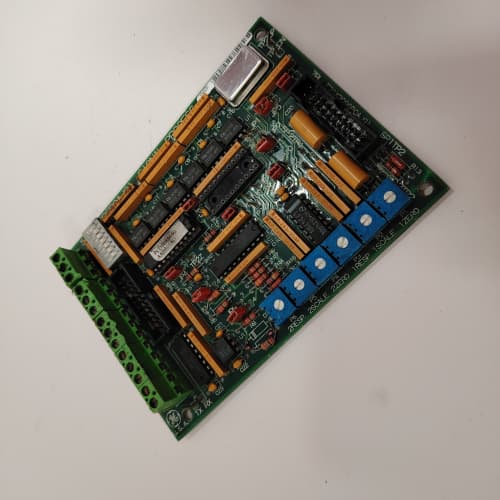
ABB RLM01
NI SCXI-1125
NI PXI-6052E
BACHMANN ISI222


Reviews
There are no reviews yet.