
Description
Product Overview
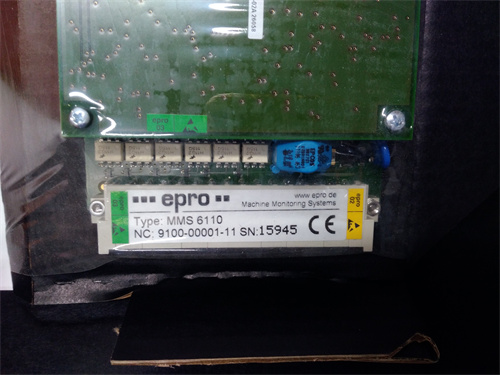
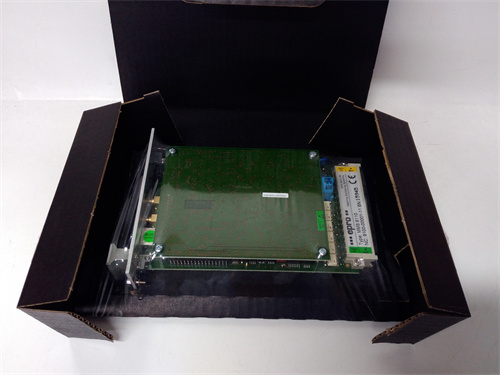
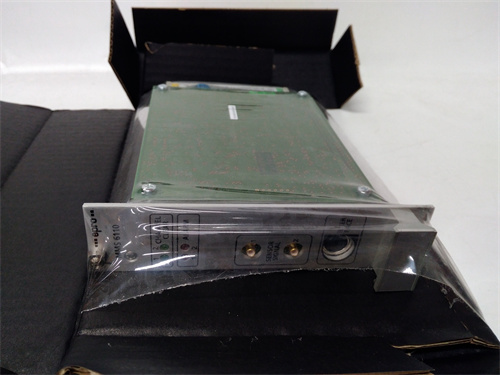
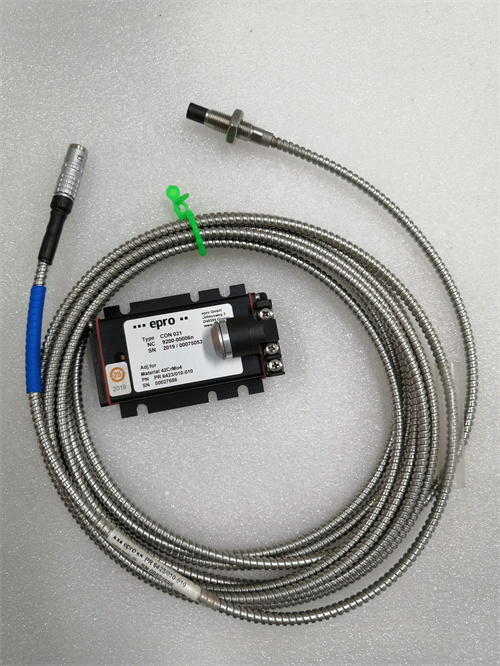
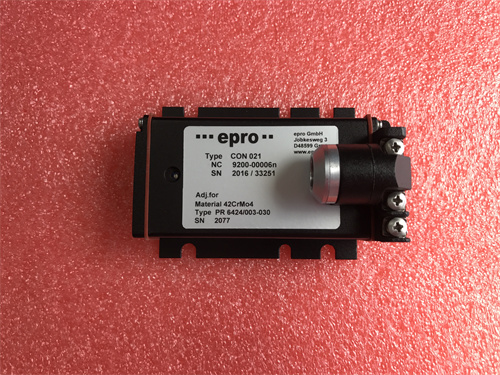
The EPRO MMS6110 is a high-performance machinery monitoring module from the EPRO (now part of Baker Hughes) PR 642x/… series, specifically designed as a velocity transducer interface. This module serves as a critical signal conditioner and monitor for velocity sensors (seismoprobes) that measure casing or absolute vibration on rotating machinery. The EPRO MMS6110 converts the raw sensor signal into standardized, reliable outputs for both protection and analysis, playing a vital role in predictive maintenance and machinery health systems.
Key Product Parameters
-
Product Type: Velocity Signal Conditioner / Vibration Monitor
-
Compatible System: EPRO PR 642x series monitoring system or compatible rack/backplane.
-
Sensor Input: Accepts input from piezoelectric velocity transducers (seismoprobes) with standard sensitivities (e.g., 20 mV/mm/s or 500 mV/in/s).
-
Measurement: Monitors overall vibration velocity, typically in units of mm/s RMS or in/s peak.
-
Outputs: Provides two key outputs:
-
Analog Output: A 4-20 mA or 0-10 V DC signal proportional to the vibration level for connection to PLC/DCS or chart recorders.
-
Dynamic Output: A buffered, raw AC velocity signal for connection to portable data collectors or online analysis systems (FFT analyzers).
-
-
Alarm Relays: Typically includes two adjustable setpoint relays (Alert and Danger) with independent time delays.
-
Power Supply: Requires an external DC power source, commonly 24 VDC.
-
Frequency Response: Optimized for the standard machinery vibration range (e.g., 10 Hz to 1 kHz).
-
Display: May feature a local bar-graph or digital display for vibration level.
Advantages and Core Features
The primary advantage of the EPRO MMS6110 is its robust and precise design for industrial vibration monitoring, a brand renowned in the power generation and turbomachinery sectors. It offers excellent signal conditioning, ensuring accurate and stable measurements even in electrically noisy environments. Its dual-output capability is a core feature, allowing it to function simultaneously as a protection device (via relays and 4-20mA) and a diagnostic tool (via the dynamic signal). The module typically includes comprehensive diagnostics for sensor health (e.g., cable break detection) and features like measurement validation to ensure signal integrity. The MMS6110 is engineered for long-term reliability and easy integration into monitoring systems.
Application Scenarios
This monitor is widely used to protect and monitor medium to large rotating equipment:
-
Pumps & Fans: Monitoring motor and pump bearing housing vibration on critical boiler feed pumps, cooling water pumps, ID/FD fans, and large blowers.
-
Compressors: Measuring casing vibration on reciprocating and centrifugal compressors in oil & gas and chemical plants.
-
Motors & Gearboxes: Providing overall vibration protection for large motors, turbine auxiliary drives, and industrial gearboxes.
-
Paper Machine Rolls: Monitoring vibration on dryer rolls and other large rotating sections.
Comparison with Competing Products
Competing products include velocity monitors from Bently Nevada (e.g., 3500/94), Emerson (CSI 9420), and Metrix. The EPRO MMS6110 is distinguished by its strong reputation in the European power market and its straightforward, reliable design. Compared to simple vibration switches, the MMS6110 provides continuous analog output and dynamic signals for diagnostics. Compared to more complex monitoring systems, it offers a cost-effective, dedicated solution for velocity monitoring that is easier to configure and maintain. It represents a strong middle-ground between basic and highly sophisticated monitoring.
Selection Guide and Important Notes
Selecting the EPRO MMS6110 requires matching it to the correct velocity sensor and defining the requirements for alarms and output signals.
Important Precautions:
-
Sensor Compatibility: The velocity transducer must have the correct sensitivity (mV/mm/s) and output range specified for the MMS6110. Using an incorrect sensor will yield inaccurate readings.
-
Power Supply Quality: Use a clean, regulated 24 VDC power supply. Noise or voltage fluctuations on the power line can affect measurement accuracy.
-
Output Load: For the 4-20 mA output, ensure the total loop resistance (wiring + PLC input impedance) does not exceed the module’s maximum load specification (e.g., 500 Ω).
-
Mounting & Environment: Ensure the module is mounted in a location with acceptable temperature and humidity. Protect it from excessive dust, moisture, and vibration.
-
Calibration & Setup: While pre-calibrated, the alarm setpoints (Alert/Danger) and output scaling must be correctly configured for the specific machine. The initial setup should be verified.
-
Dynamic Signal Use: The dynamic output is for analysis equipment only and should not be connected to control system inputs.
IS200TGENH1A GE PLCPLC
IS200TPROH1B GE PLC
IS200TREGH1B GE

Reviews
There are no reviews yet.