
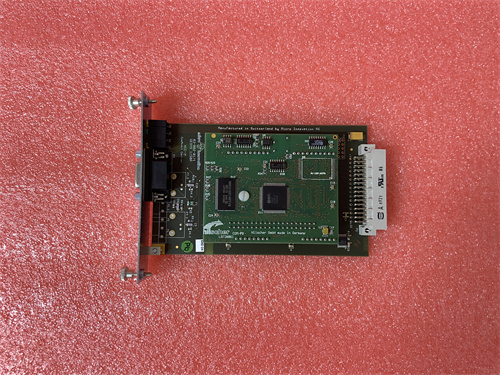
Description
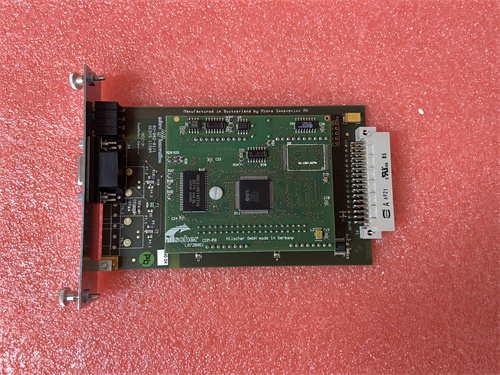
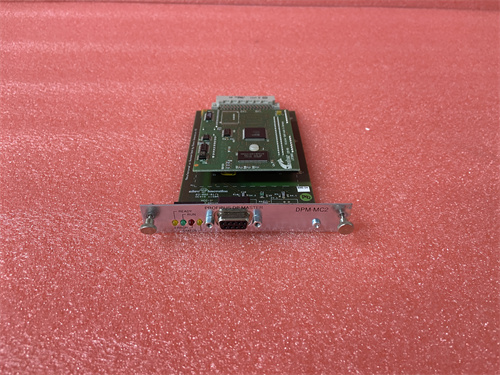
ABB 3HAC029157-001/06
ABB 3HAC026840-001/00 DCS
3HAC025097-001 ABB PLC
ABB 3hna006137-001/02 PLC
DSQC676 PLC
Product Overview
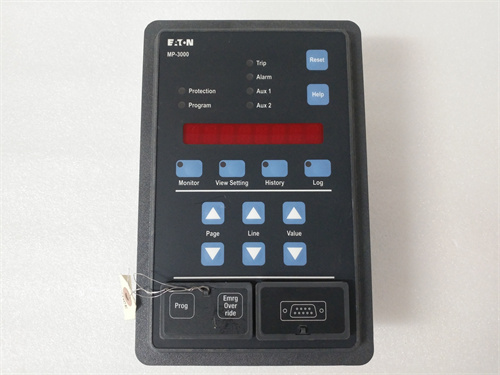
The EATON DPM-MC2 is a sophisticated and versatile multi-circuit power monitoring and control module designed for intelligent power distribution within industrial panels, data centers, and critical infrastructure. This device goes beyond simple measurement, acting as a networked controller that provides detailed insight into electrical parameters across multiple circuits. The EATON DPM-MC2 serves as a central node for monitoring branch circuit currents, voltages, power, and energy, while also offering advanced features like load shedding, alarm management, and power quality analysis. Its integration into Eaton’s broader suite of power management products makes the EATON DPM-MC2 a key component for achieving energy efficiency, predictive maintenance, and operational reliability. By providing granular, circuit-level data, the EATON DPM-MC2 enables facility managers and control systems to make informed decisions about power usage and system health.
Product Parameters and Specifications
-
Manufacturer: Eaton (Electrical Sector)
-
Product Type: Digital Power Monitor (Multi-Circuit)
-
Monitoring Capacity: Typically monitors multiple three-phase or single-phase circuits (exact number, such as 12 or 24 circuits, depends on configuration and current sensor types used).
-
Measured Parameters per Circuit:
-
Current (True RMS)
-
Voltage (Line-to-Line and Line-to-Neutral)
-
Active, Reactive, and Apparent Power (kW, kVAR, kVA)
-
Power Factor
-
Frequency
-
Energy (kWh, kVARh)
-
Harmonics (THD for current and voltage)
-
-
Inputs: Accepts signals from external current transformers (CTs) and potential transformers (PTs) for galvanic isolation and safe measurement.
-
Communication Interfaces: Equipped with multiple standard industrial communication ports, commonly including:
-
Ethernet (Modbus TCP/IP)
-
RS-485 (Modbus RTU)
-
BACnet MS/TP (for building automation)
-
-
Control Outputs: Includes programmable relay outputs for alarm annunciation or direct control actions, such as initiating load shedding sequences.
-
Power Supply: Operates from a standard control voltage, typically 24V AC/DC or 120/240V AC.
-
Display: Often features a built-in local LCD display for on-site configuration and real-time data viewing.
Advantages and Key Features
-
Centralized Multi-Circuit Monitoring: The primary advantage of the EATON DPM-MC2 is its ability to consolidate monitoring of numerous branch circuits into a single, compact device, eliminating the need for multiple single-circuit meters and simplifying wiring and data collection.
-
Advanced Power Quality Analysis: By measuring harmonics and THD, it helps identify potential issues caused by non-linear loads (like VFDs and UPS systems) that can lead to overheating, equipment malfunctions, and increased energy losses.
-
Energy Management and Submetering: Provides accurate energy consumption data for individual circuits, departments, or processes, enabling cost allocation, identifying energy waste, and verifying savings from efficiency projects.
-
Integrated Control Capabilities: The programmable logic and relay outputs allow the EATON DPM-MC2 to act as a local controller for demand response, peak shaving, or critical load sequencing based on predefined power thresholds or external commands from a BMS/SCADA system.
-
Open Protocol Connectivity: Support for industry-standard protocols like Modbus TCP and BACnet ensures easy integration into existing Building Management Systems (BMS), Industrial SCADA, or energy management software platforms.
Application Case Studies
-
Industrial Manufacturing Plant: Installed in a main motor control center (MCC), the EATON DPM-MC2 monitors the power consumption of individual production lines, large pumps, and compressors. The data is fed into the plant SCADA to track energy per unit produced and trigger alarms if a motor begins drawing abnormal current, indicating potential mechanical failure.
-
Critical Facility (Data Center): In a server room power distribution unit (PDU), this module monitors the load on each circuit breaker feeding server racks. It ensures no circuit is overloaded, provides real-time PUE (Power Usage Effectiveness) calculations, and can shed non-critical loads if utility power is lost and the facility is running on backup generators.
-
Commercial Building: Integrated into the electrical switchboard, the EATON DPM-MC2 performs submetering for tenant billing, monitors HVAC system power, and implements a load-shedding strategy during peak demand periods to reduce utility capacity charges.
Comparison with Competing Products
| Feature | EATON DPM-MC2 | Schneider Electric PowerLogic PM5000 Series | Siemens SENTRON PAC3200/PAC4200 |
|---|---|---|---|
| Architecture | Multi-circuit monitor with centralized CT inputs. | Range includes both multi-circuit and main device monitors. | Primarily focused on main/service entrance monitoring, with some multi-circuit capabilities. |
| Core Strength | High-density branch circuit monitoring with integrated control logic. | Very broad product range from simple to advanced, deep integration with EcoStruxure Power. | Strong brand presence in industrial automation, excellent integration with Siemens TIA and PCS 7. |
| Communication | Strong support for building (BACnet) and industrial (Modbus) protocols. | Strong in both Modbus and native Ethernet/IP, integrated into Schneider’s IoT ecosystem. | Strong PROFINET and Modbus support, designed for industrial network integration. |
| Software Ecosystem | Works with Eaton’s EPMS (Electrical Power Monitoring System) software. | Integrates with Schneider’s EcoStruxure Power Monitoring Expert. | Integrates with Siemens SENTRON Powercenter software. |
| Typical Use Case | Ideal for panel builders and engineers needing detailed branch circuit data and control in one device. | Suitable for comprehensive power system monitoring from utility entry to final distribution. | Often selected for industrial plants already using Siemens automation for seamless integration. |
Selection Suggestions and Important Notes
-
Selection Suggestion:
-
Choose the EATON DPM-MC2 when your primary need is detailed monitoring and control of multiple branch circuits (e.g., in a distribution panel, MCC, or PDU) rather than just the main incoming service.
-
It is an excellent choice for projects requiring both energy submetering and the ability to execute automated control actions (like load shedding) based on power measurements.
-
Select this device when integration into a BMS using BACnet or an industrial SCADA using Modbus TCP is a key requirement.
-
-
Important Notes:
-
Current Transformer (CT) Selection: The performance and accuracy of the EATON DPM-MC2 depend entirely on the proper selection and installation of matched external CTs. CT ratio, class, and burden must be correctly specified.
-
Configuration Complexity: While powerful, the device requires thorough configuration (CT ratios, circuit names, alarm setpoints, logic). Ensure access to the configuration software (often Eaton’s DPM Software) and necessary training.
-
Wiring and Space Planning: Account for the significant number of CT input wires and potential transformer connections. Proper panel layout and wire management are crucial for a clean and functional installation.
-
Communication Planning: Decide on the primary communication protocol and network topology (e.g., daisy-chained Modbus RTU or star topology Ethernet) during the design phase to ensure proper cabling and switch capacity.
-
Accuracy Class: Verify the accuracy class (e.g., Class 0.5% for energy) meets the requirements of your application, especially if used for billing or compliance reporting.
-
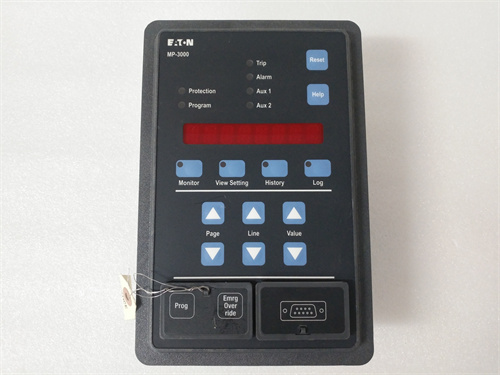



Reviews
There are no reviews yet.