
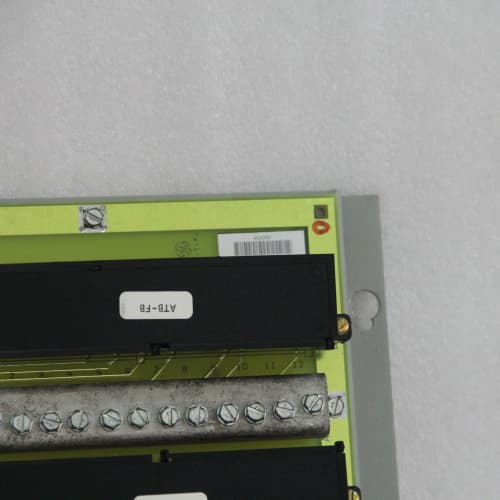
Description
Parameters
-
Input Type: 4–20mA (default), 0–10V DC, ±10V DC (jumper-configurable)
-
Channels: 4 differential (fixed)
-
Resolution: 12-bit ADC
-
Accuracy: ±0.075% of full scale (F1)
-
Sampling Rate: Up to 1.5kHz per channel (F1 optimized)
-
Scan Rate: 0.65ms per channel (F1 optimized)
-
Input Impedance: 250Ω (current) / >1MΩ (voltage)
-
Filtering: Programmable low-pass filter with adaptive anti-aliasing and real-time noise profiling (F1 feature)
-
Isolation: 2500V RMS optical isolation (channel-to-backplane)
-
Power: +5V DC @ 0.9A, +15V DC @ 0.25A (requires both rails)
-
Data Buffering: Onboard FIFO buffer for burst data capture (F1 feature)
-
Coating: Conformal coating (suffix F) – multi-layer acrylic with enhanced chemical and moisture resistance (superior to E)
-
Temp Range: -18°C to +74°C (extended over E variant)
-
Mounting: 6U VME Eurocard, single-slot
-
Diagnostics: Enhanced onboard with per-channel LED status, signal noise detection, sampling integrity monitoring, buffer status, and calibration alerts (F1 feature)
Advantages & Features
-
High-speed sampling (1.5kHz) captures fast-changing signals for real-time turbine protection with improved stability
-
F1 firmware offers better accuracy (±0.075%), faster scan (0.65ms), adaptive anti-aliasing filtering, real-time noise profiling, onboard FIFO data buffering, and enhanced diagnostics
-
Higher isolation (2500V) protects against ground loops and transient surges
-
4 differential channels provide noise rejection for high-speed signals in turbine environments
-
Onboard FIFO buffer allows burst data capture for transient analysis and post-event diagnostics
-
F-grade coating provides superior moisture and chemical resistance compared to E – suitable for environments with frequent humidity or chemical exposure
-
Extended temperature range (-18°C to +74°C) offers more flexibility than E variant
-
Front-panel LEDs for per-channel status including sampling integrity and buffer status alerts
-
Compatible with Mark IV backplanes and some VIe systems (with adapter)
Application Cases
-
Turbine shaft vibration monitoring – high-speed 4–20mA signals from proximity probes with burst data capture for transient analysis in chemically exposed environments
-
Overspeed detection – dynamic speed signals requiring sub-0.7ms response times with real-time noise profiling
-
Dynamic pressure monitoring – fast-changing combustion pressure signals with adaptive filtering and FIFO buffering
-
Thrust position monitoring – high-speed LVDT feedback for axial position in plants with chemical exposure
-
Retrofit projects upgrading from E1 firmware or lower-grade coatings for better performance and environmental protection
Competitor Comparison
-
vs. DS3800HITA1F1E (F1/E variant): Superior moisture and chemical resistance (F vs. E), wider temp range (-18°C vs. -15°C, +74°C vs. +72°C) – otherwise identical specifications
-
vs. DS3800HITA1E1E (E1/E variant): Better accuracy (±0.075% vs. ±0.08%), faster sampling (1.5kHz vs. 1.2kHz), faster scan (0.65ms vs. 0.8ms), F1 diagnostics, real-time noise profiling, onboard FIFO buffer, and superior F coating (vs. E) – significant upgrade
-
vs. DS3800HITA (standard A variant): Transformative upgrade across all parameters
-
vs. DS3800HSCB (high-speed analog): Similar high-speed capability; HITA1F1F offers improved accuracy, FIFO buffer, and F coating
-
vs. DS3800HIMA1C1D (standard analog C1/D): HITA offers much higher sampling rate (1.5kHz vs. 60ms/16Hz) – HITA is for dynamic signals
-
vs. ABB TB711 : ABB offers higher resolution (14-bit), but HITA1F1F offers higher sampling rate (1.5kHz vs. typically 100Hz on ABB), higher isolation (2500V vs. 1500V), FIFO buffer, and F coating
-
vs. Siemens 7MH410 : Siemens offers HART protocol support, but GE HITA offers higher-speed sampling, FIFO buffering, and F-grade environmental protection
-
vs. Woodward 8440-2015 : Woodward offers more flexible configuration, but GE HITA provides higher-speed capability, FIFO buffer, and F coating
-
vs. Bently Nevada 3500/42 : Bently is vibration-dedicated with specialized processing; HITA is a general-purpose high-speed analog input
Selection Suggestions
-
Critical: Confirm required sampling rate – HITA1F1F supports up to 1.5kHz; ensure this meets your dynamic signal requirements
-
Verify your backplane provides both +5V and +15V – this board requires both rails
-
Assess channel count – 4 differential channels may be sufficient for vibration/speed monitoring
-
Evaluate if F1’s FIFO buffer and real-time noise profiling are beneficial – particularly valuable for transient analysis and critical protection applications
-
Evaluate environmental conditions – F coating is suitable for frequent humidity and chemical exposure; choose G/H for more demanding conditions
-
Order mating front connector (p/n may vary – confirm with GE)
-
For critical protection applications, purchase with a calibration certificate and 12-month warranty
Precautions
-
Critical: Do not exceed 30mA or ±30V on input channels – overvoltage may damage the ADC and isolation circuits
-
Critical: High-speed sampling (1.5kHz) generates significant data – ensure the backplane and processor can handle the data throughput, especially when using FIFO buffer
-
Critical: Use shielded twisted-pair cables for all analog inputs to avoid EMI – high-speed signals are particularly susceptible to noise; F1’s adaptive filtering helps but is not a substitute for good wiring practices
-
Critical: Programmable filtering must be set correctly to avoid aliasing – consult the turbine control logic requirements
-
Critical: FIFO buffer data capture requires proper configuration – ensure the buffer size and trigger settings match your analysis requirements
-
Ensure field power supply (+24V DC) for loop-powered transmitters is stable (if used)
-
F1 firmware offers adaptive anti-aliasing – configure jumpers correctly for your signal type and frequency range
-
F coating provides good protection but is not suitable for direct salt spray, heavy chemical exposure, or continuous condensation – upgrade to G/H for those conditions
-
Allow 45-minute warm-up before calibration (F coating affects thermal equilibrium)
-
Store in ESD-safe packaging – edge connector is static-sensitive
-
Periodically verify channel calibration every 1 year (high-speed applications may require more frequent verification)
-
Do not hot-swap – Mark IV backplanes require power-off for insertion/removal
-
If replacing a similar high-speed board, verify pinout compatibility – HITA may differ from HSCB or other high-speed series in wiring assignments
-
F coating may make component-level repairs difficult – consider board replacement instead of repair
YASKAWA SGMAH-01AAF41
A-B 1746-IM16
A-B 1756-CNBR
FOXBORO P0916PW



Reviews
There are no reviews yet.