
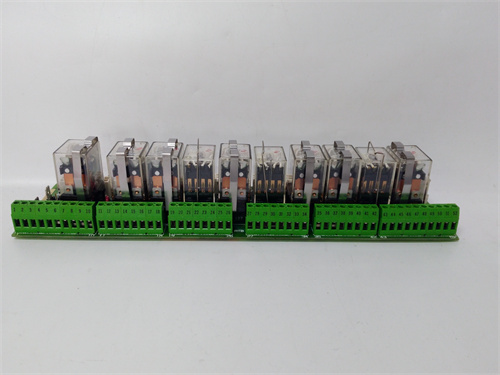
Description
Detailed Technical Parameters
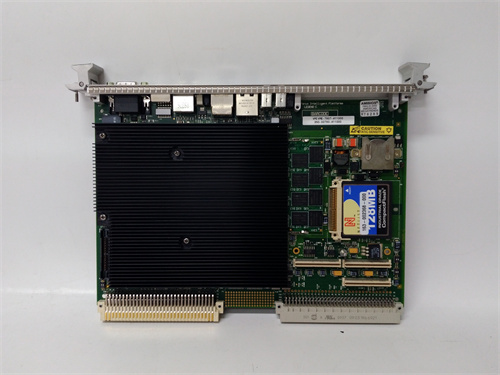
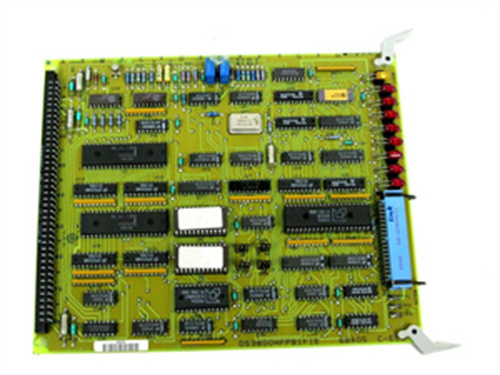
GE DS200UPLAG1BBA provides 16 digital input channels (24V DC nominal, with 1ms hardware debounce and timestamping capability), 16 digital output channels (solid-state relays rated at 0.5A continuous per channel with 60V DC maximum switching voltage and integrated thermal overload protection), and 8 analog input channels (16-bit resolution, configurable for 0-10V, 4-20mA, or ±10V with ±0.07% accuracy across the full -30°C to +65°C operating range). The board’s distinguishing feature is its power system monitoring capability: 6 dedicated AC voltage input channels (0-600V AC, isolated, with 0.15% accuracy) and 6 dedicated AC current input channels (0-5A or 0-1A, isolated, with 0.15% accuracy), supporting both PT and CT inputs with enhanced harmonic filtering and common-mode rejection. The board incorporates 4 dedicated frequency measurement channels for grid synchronization, measuring 45-65Hz with 0.001Hz resolution and featuring the “BBA” configuration’s refined PLL synchronization logic for smoother phase matching and reduced synchronization time. Onboard processing handles synchronization logic, under/over frequency protection (81), voltage protection (27/59), and load sharing calculations, with the “BBA” configuration including enhanced algorithms for minimizing phase mismatch during grid connection and improved stability during grid frequency variations. Communication occurs through a proprietary backplane interface at 8MB/s with 10ms cycle time. GE DS200UPLAG1BBA draws approximately 22W from the +5V DC and ±15V DC backplane rails and features conformal coating with vibration tolerance rated at 6G (10-500Hz) and shock resistance at 30G. All field connections terminate through three 50-pin D-sub connectors with gold-plated contacts and integral strain-relief brackets.
Advantages & Features
GE DS200UPLAG1BBA offers several distinctive advantages that differentiate it from other UPLA variants. The refined PLL synchronization logic provides smoother grid connections, reducing mechanical stress on turbine shafts and generator windings, and minimizing electrical transients that can impact grid stability. The enhanced harmonic filtering ensures stable measurements in environments with variable frequency drives, large motor starts, or other power electronics that can corrupt standard power measurements. The improved common-mode rejection provides accurate measurements even in installations with significant ground potential differences between generator and measurement location. The integration of power monitoring, synchronization, and protection functions directly into the Mark V chassis eliminates separate synchronizer panels, reducing cabinet footprint and simplifying system architecture. The “BBA” configuration represents a refined synchronization package for demanding grid interconnection applications.
Application Cases & Application Fields
GE DS200UPLAG1BBA is deployed in facilities requiring enhanced synchronization capabilities. In a 400MW plant with weak grid conditions, the refined PLL logic enabled successful synchronization despite significant frequency and phase variations. In a cogeneration facility with large motor loads and high harmonic content, the enhanced filtering provided stable synchronization. The board is also used in island mode applications requiring precise load sharing between multiple generators.
Competitor Comparison
Versus GE DS200UPLAG1B (standard synchronization), the “BBA” provides enhanced PLL logic and harmonic filtering. Versus the “ABA” variant (similar features on the “A” platform), the “BBA” offers the refined firmware of the “B” platform. Versus third-party synchronizers, the UPLA integrates seamlessly with Mark V control logic.
Selection Suggestions
Choose GE DS200UPLAG1BBA for installations requiring enhanced synchronization capabilities, weak grid conditions, or high harmonic content. Specify the “BBA” suffix for refined PLL and filtering performance. Verify PT/CT ratings and grid characteristics. Maintain spares considering 16-20 week lead times.
Critical Precautions
Never ground AC signal shields at the GE DS200UPLAG1BBA connector—ensure proper PT/CT grounding. Install CT shorting blocks. Verify PT/CT ratios. Perform software isolation before hot-swapping. Calibrate power channels annually. Store spares at 15-35°C. Over 40% of field issues trace to improper CT/PT connections.
A-B 1756-IT6I
ICS TRIPLEX 9100
A-B 1485C-P1A150
A-B TLY-A2540P-HK64AA

.jpg)

Reviews
There are no reviews yet.