
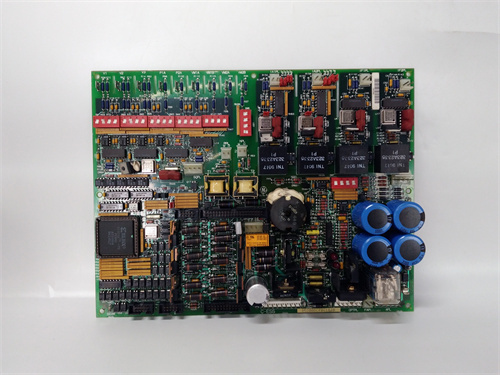
Description
Detailed Technical Parameters
GE DS200UCIAG2A provides 16 digital input channels (24V DC nominal, with 1ms hardware debounce and programmable filtering up to 100ms), 16 digital output channels (solid-state relays rated at 0.5A continuous per channel with 60V DC maximum switching voltage and integrated short-circuit protection), and 12 analog input channels offering field-configurable ranges of 0-10V, 4-20mA, ±10V, or 0-5V with 14-bit resolution (16384 counts) and ±0.10% accuracy across the full operating temperature range—a slight improvement over the ±0.12% specification of the earlier G2 revision due to upgraded voltage reference components. The board incorporates two dedicated high-speed frequency input channels capable of accepting signals from magnetic variable-reluctance pickups or eddy-current proximity probes, measuring rotational speeds from 0 to 35,000 RPM with ±1 RPM resolution, enabling precise synchronization of turbine generators to utility grids and emergency overspeed protection tripping at 110% of nominal speed. Communication with the Mark V main processor occurs through a proprietary high-speed parallel backplane interface operating at 10MB/s burst transfer rates, ensuring synchronous data exchange across all three redundant controller boards within a single 8ms control cycle. GE DS200UCIAG2A draws approximately 20W from the +5V DC and ±15V DC backplane rails and includes comprehensive onboard power supply filtering with transient suppression capable of withstanding ±250V spikes per IEC 61000-4-5 standards. The board features conformal coating conforming to MIL-I-46058C for humidity and chemical resistance, with enhanced vibration tolerance rated at 6G (10-500Hz) and shock resistance at 35G (11ms half-sine), fully compliant with ISA-S71.04 environmental class G3 for severe industrial environments. All field connections terminate through four 50-pin D-sub connectors with gold-plated contacts and integral strain-relief brackets, supporting wire gauges from 22 AWG to 16 AWG with a recommended torque of 0.5-0.6 N·m for the jack screws.
Advantages & Features
GE DS200UCIAG2A offers several distinctive operational advantages that differentiate it from other members of the UCI product family and from competitor offerings. The most significant enhancement is the improved analog accuracy (±0.10% vs. ±0.12%) achieved through upgraded precision voltage reference ICs with 25ppm/°C temperature coefficients, effectively reducing temperature-induced drift by half compared to earlier G2 models. This makes GE DS200UCIAG2A particularly valuable in applications where the turbine experiences frequent thermal cycling, such as peaking power plants that start and stop multiple times daily. Secondly, the increased analog input channel count (12 versus 8 on the G1 series) allows a single GE DS200UCIAG2A to accommodate more field signals within the same rack slot, reducing the total number of I/O boards required for a typical turbine control system by approximately 25-30% and freeing up valuable backplane slots for additional functionality. Thirdly, this revision introduces enhanced electrostatic discharge protection on all field I/O pins, featuring 15kV air discharge and 8kV contact discharge tolerance (per IEC 61000-4-2), substantially reducing field failure rates attributable to maintenance personnel handling cables without proper grounding straps. Fourth, GE DS200UCIAG2A incorporates an upgraded onboard microcontroller with doubled flash memory capacity (1MB vs. 512KB), enabling storage of more comprehensive diagnostic logs including time-stamped fault histories for the last 250 events, which greatly assists maintenance teams in troubleshooting intermittent issues by correlating channel anomalies with turbine operational events. Fifth, the board features firmware-level channel health monitoring with automatic open-circuit and short-circuit detection on both inputs and outputs, with the diagnostic results accessible via the Mark V operator interface without requiring external test equipment. Perhaps most importantly, GE DS200UCIAG2A maintains full backward compatibility with all existing Mark V cabinets and application software, meaning that plant operators can replace older UCI boards with GE DS200UCIAG2A without any modification to control logic, wiring, or engineering station configurations—a seamless upgrade path that protects prior capital investments while delivering improved performance and reliability.
Application Cases & Application Fields
GE DS200UCIAG2A is extensively deployed across GE’s global turbine fleet, with particular emphasis on applications that benefit from the board’s increased analog channel capacity, higher resolution, and improved accuracy. In a 500MW combined-cycle power plant in Southeast Asia, GE DS200UCIAG2A boards are installed in each gas turbine control system, where the 12 analog inputs per board aggregate a comprehensive set of process parameters including combustor pressure drop, fuel gas specific gravity, exhaust gas temperature corrected for ambient conditions, and bearing vibration displacement signals from proximity probes. The improved 14-bit resolution and ±0.10% accuracy have been credited with reducing turbine exhaust temperature spread fluctuations by 40% compared to previous installations using 12-bit boards, directly improving combustion stability and reducing NOx emissions by approximately 10% while maintaining the same power output—a significant environmental compliance benefit in regions with stringent emissions limits. In the oil and gas sector, a major natural gas liquefaction facility in the Middle East utilizes GE DS200UCIAG2A on its refrigerant compressor turbine trains, where the enhanced analog input density allows each board to monitor all compressor stage pressures, intercooler temperatures, and suction/discharge valve positions without requiring additional I/O expansion chassis. The reduced total component count has simplified maintenance procedures and improved overall system reliability, with the facility reporting a 50% reduction in I/O-related service calls over a three-year operational period. Offshore platforms in the Brazilian pre-salt oil fields employ GE DS200UCIAG2A for their power generation turbines, where the board’s extended frequency measurement range (up to 35,000 RPM) provides critical overspeed protection for high-speed turbomachinery operating at 15,000-18,000 RPM nominal speeds. The improved vibration tolerance (6G) has proven particularly valuable in these applications, where the closer proximity of control cabinets to the turbine skid results in higher vibration exposure. In the marine propulsion market, naval surface combatants and large commercial vessels equipped with GE LM2500 gas turbines have adopted GE DS200UCIAG2A for its compact high-density I/O and enhanced ESD protection, enabling more control functionality to be packaged within the limited space available in shipboard engine control rooms while withstanding the electrostatic challenges of shipboard maintenance environments.
Competitor Comparison
When benchmarked against equivalent interface modules from competing turbine control platforms, GE DS200UCIAG2A presents a compelling value proposition with both distinct advantages and notable limitations. Siemens T3000’s I/O interface module (6ES7332-8TF01-0AB0) offers a maximum of 8 analog inputs per module, requiring 50% more rack space than GE DS200UCIAG2A to achieve equivalent channel count, and lacks the integrated frequency inputs, necessitating separate speed measurement modules that add cost and complexity. However, the Siemens unit provides broader fieldbus compatibility (Profibus DP, Profinet) whereas GE DS200UCIAG2A remains proprietary to the Mark V backplane. Woodward’s 505 series I/O expansion offers similar analog channel density (12 inputs) but at only 12-bit resolution and without the dedicated speed inputs, making it less suitable for turbine overspeed protection applications. Bachmann’s FM221 universal I/O unit provides 14-bit resolution comparable to GE DS200UCIAG2A and supports multiple protocols (EtherCAT, CANopen), but its vibration tolerance (3G) is inferior to the GE board’s 6G rating, making it less reliable in turbine skid-mounted installations. In terms of environmental ruggedness, GE DS200UCIAG2A‘s MIL-grade conformal coating and extended temperature range exceed both Siemens (0-60°C) and Woodward (-20-55°C) options. However, GE DS200UCIAG2A carries a 30-45% price premium over comparable third-party modules, and lead times for new manufacturing have extended to 16-22 weeks due to global semiconductor shortages—a significant supply chain risk that must be factored into procurement planning. Furthermore, the G2A variant’s higher accuracy specifications require more careful calibration procedures during commissioning, with specialized test equipment and extended testing intervals adding approximately 25% to commissioning time compared to lower-accuracy boards.
Selection Suggestions
When evaluating GE DS200UCIAG2A for a turbine control application, several critical factors should guide your engineering and procurement decisions. First, confirm that your control system is explicitly a GE Mark V platform, as GE DS200UCIAG2A is physically and electrically incompatible with Mark VIe, Mark VII, or any third-party PLC systems. If your plant operates Mark VIe, you should instead consider the equivalent IS200UCIAG2A or IS210UCIAG2A modules, which have different connector pinouts and communication protocols. Secondly, carefully assess your analog channel count requirements—if your application involves fewer than 8 analog inputs per rack slot, the earlier GE DS200UCIAG1 series or even dedicated thermocouple boards (DS200TCTGG) may be more cost-effective, but if you need to monitor 9-12 analog signals per slot, the G2A’s higher density provides significant space and cost savings. Third, consider the accuracy requirements of your control loops—for standard pressure and temperature control, ±0.12% accuracy is generally sufficient; however, for combustion reference temperature calculations, precise valve positioning (especially electro-hydraulic actuators with <0.1% positioning accuracy requirements), or any application where long-term stability is critical, the ±0.10% accuracy of GE DS200UCIAG2A offers a measurable performance advantage. Fourth, specify the “G2A” suffix explicitly when purchasing to ensure you receive the latest improvements in accuracy, ESD protection, and diagnostic memory; upgrading from earlier G2 or G1 revisions is fully backward-compatible and does not require control logic or wiring changes. Fifth, maintain a minimum of one spare GE DS200UCIAG2A per five installed units in your critical spares inventory, but given the current 16-22 week lead time, consider establishing a strategic partnership with an authorized GE distributor for prioritized delivery—some operators have reported success with third-party refurbished units, but always ensure refurbished boards include a comprehensive test certificate verifying the ±0.10% accuracy specification across the full operating temperature range. Sixth, if your site operates multiple turbines, standardizing on GE DS200UCIAG2A across all Mark V units reduces spare parts variety and technician training requirements, simplifying maintenance logistics and improving outage planning efficiency.
Critical Precautions
Deploying and maintaining GE DS200UCIAG2A demands rigorous attention to documented engineering practices to ensure maximum operational reliability and prevent premature failures that could lead to costly turbine trips. First, field wiring to the 50-pin D-sub connectors must utilize shielded twisted-pair cables with the shield terminated at the field instrument side only—never connect the shield to chassis ground at the GE DS200UCIAG2A connector, as this practice creates a low-impedance path for ground fault currents that can introduce common-mode noise sufficient to corrupt analog readings by 4-8% of full scale, potentially causing unintended control valve movements. Second, for digital outputs connected to inductive loads such as hydraulic solenoid valves or interposing relays, install dedicated suppression devices (1N4007 or equivalent diodes for DC loads, MOV/RC snubbers for AC loads) directly across the load terminals, as GE DS200UCIAG2A‘s solid-state relays include thermal protection but lack built-in inductive kickback clamping, and unprotected switching can generate transients exceeding 300V that may damage the relay output stage. Third, during online replacement in TMR-configured systems, always initiate the channel isolation command from the operator interface, verify the board status indicator transitions from solid green to slow amber blink, physically extract GE DS200UCIAG2A using the ejector handles (never pull on the board edge), insert the replacement unit fully, wait for automatic reconfiguration handshake (rapid amber blink to steady green, typically 3-5 seconds), and validate all channel readings match redundant partners within ±2% tolerance before returning to automatic control. Fourth, schedule a comprehensive calibration verification every 12 months using a certified signal calibrator with accuracy at least four times better than the board’s specification to inject precision test signals into all 12 analog inputs of GE DS200UCIAG2A; if any channel exhibits drift exceeding ±0.25% of span after recalibration, replace the board immediately, as progressive drift often indicates failing capacitors that will degrade further under thermal stress. Fifth, pay special attention to cabinet cooling airflow—GE DS200UCIAG2A‘s denser component layout generates more localized heat than lower-density boards, and inadequate airflow over the analog input section (located on the upper half of the PCB) can cause temperature gradients exceeding 10°C between channels, introducing differential measurement errors that are not fully compensated by the board’s ambient temperature sensor. GE recommends maintaining cabinet internal temperature below 55°C with airflow of at least 100 CFM across the Mark V chassis. Sixth, when storing spare GE DS200UCIAG2A units, always keep them in original anti-static bags within a climate-controlled environment (15-35°C, <60% RH), and rotate inventory on a first-in-first-out basis—electrolytic capacitors onboard have a typical shelf life of 5-7 years before ESR values rise above acceptable parameters, so test boards stored longer than four years on a functional test bench before committing to critical service. Seventh, when troubleshooting intermittent anomalies, remember that field experience indicates over 65% of reported GE DS200UCIAG2A issues trace to loose connector screws, contaminated edge connector gold fingers, or improperly terminated wires with stray strands bridging terminals—perform a thorough physical inspection before condemning the board. Finally, when decommissioning GE DS200UCIAG2A, handle it as electronic waste in accordance with local environmental regulations; the board contains trace amounts of beryllium copper and barium titanate, requiring specialized recycling through certified e-waste processors to avoid environmental contamination.
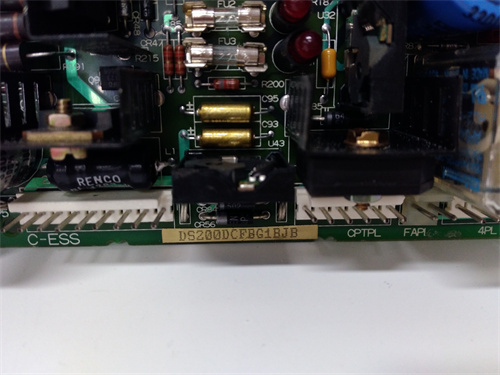
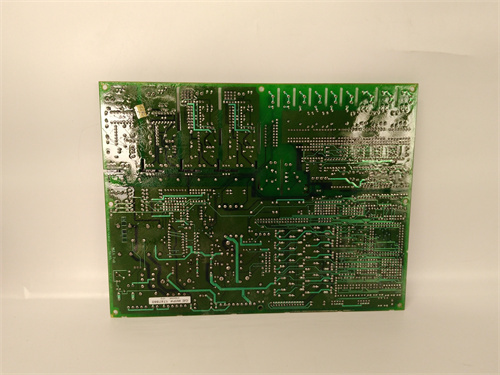
FOXBORO FBM241C
ABB AINT-02C
SCHNEIDER 140NRP95400
SCHNEIDER 140NOE77101



Reviews
There are no reviews yet.