
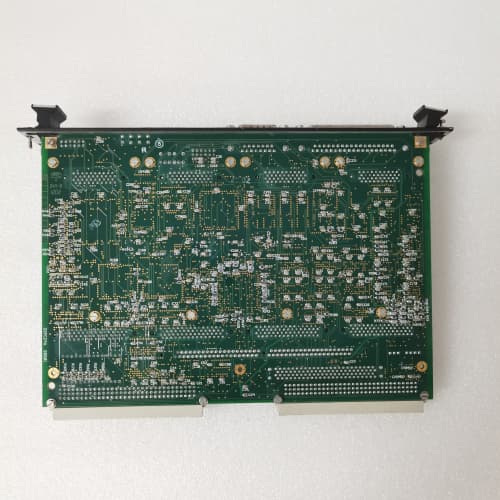
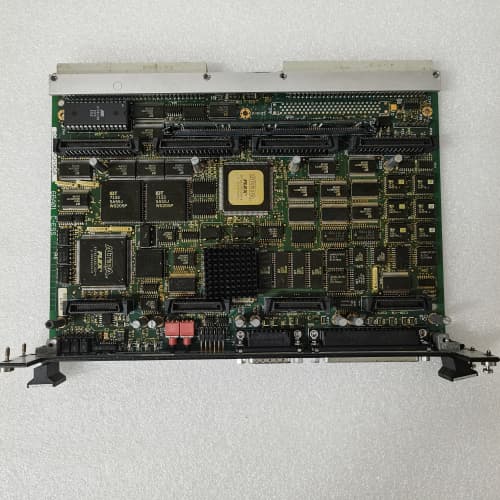
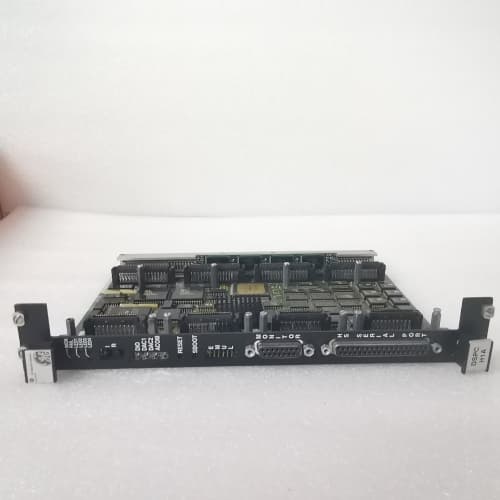
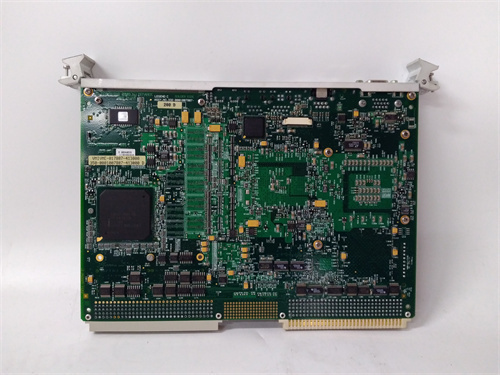
Description
Technical Parameters
Manufacturer: GE
Series: Mark V / Mark VIe
Channels: 16 differential
Input Range: -10 mV to +100 mV (Type J/K/T/E)
Cold Junction: Single onboard sensor with improved linearization (better than standard G1)
Isolation: 1500V AC
Accuracy: ±0.12% at 25°C, ±0.20% across full temperature range
Sampling: 5 Hz sequential
Operating Temp: -25°C to +60°C
Storage Temp: -40°C to +85°C
Mounting: VME rack
Suffix “G1A”: Basic accuracy (0.12%) + G1 wiring + basic diagnostics (open/short only) + enhanced cold-junction compensation + standard conformal coating
Key Features
Basic accuracy – ±0.12% for general-purpose temperature monitoring
Enhanced cold-junction compensation – better linearization across ambient variations than standard G1 variants
Basic self-diagnostics – open-circuit and short-circuit detection per channel
Standard sampling – 5 Hz for typical turbine monitoring applications
G1 wiring configuration – standard channel-to-terminal mapping matching most GE cabinets
Simple swap – no firmware changes required in most Mark V systems
LED status per channel + board health
Standard conformal coating for moisture/dust resistance
Backward compatible with Mark V and Mark VIe (hot-swap only on VIe Rev D+)
Applications
General-purpose gas turbine exhaust monitoring in variable ambient conditions – improved stability with basic accuracy
Steam turbine bearing temperature monitoring – standard protection with better compensation
Compressor inlet and discharge temperature – routine monitoring with enhanced ambient stability
HRSG temperature monitoring – where improved cold-junction compensation benefits accuracy
Legacy system upgrades – drop-in replacement for standard G1 boards with modest stability improvement
Comparison with Competitors
| Feature | DS200TCRAG1A |
ABB TTH300 | Siemens 7KG7750 |
|---|---|---|---|
| Channels | 16 | 8 | 12 |
| Accuracy | ±0.12% | ±0.10% | ±0.12% |
| Sampling | 5 Hz | 10 Hz (simultaneous) | 8 Hz (simultaneous) |
| Temp Range | -25°C to +60°C | -25°C to +65°C | -20°C to +60°C |
| Cold Junction Comp. | Enhanced | Standard | Standard |
| Diagnostics | Open/short | Group-level | Per-channel + HART |
| Hot-Swap | No (V) / Yes (VIe) | No | Yes |
| GE Native Integration | Yes | No | No |
Selection Tips
Choose the DS200TCRAG1A for basic temperature monitoring in G1 cabinets where improved cold-junction stability is beneficial without the cost of higher accuracy or advanced diagnostics
For standard compensation with the same accuracy, the DS200TCRAG1 is more economical
For higher accuracy (±0.08%) and faster sampling (10 Hz), upgrade to the DS200TCQAG1 series (with diagnostics) or DS200TCEAG1B (without diagnostics)
For enhanced coating protection with similar specs, consider DS200TCRAG1A with specialized coating suffix (e.g., DS200TCRAG1ABC or similar)
Source refurbished units with cold-junction compensation verification in the test report
Precautions
ESD sensitive – use wrist strap
Power down for Mark V removal (no hot-swap)
Torque terminals to 0.5 N·m max
Do not exceed -25°C to +60°C operating range
Calibrate every 24 months – accuracy spec depends on valid calibration
Ground shields only at the board end
Verify thermocouple type – optimized for J/K (T/E reduces accuracy to ±0.20%)
Label clearly – mark board and slot as “TCRAG1A – ENH CJC” to distinguish from standard G1 boards
GE 8502-BI-DP
REXROTH AA10VS028DR/31R-PKC62K01-S013
WATLOW ANAFAZE CLS208




Reviews
There are no reviews yet.