
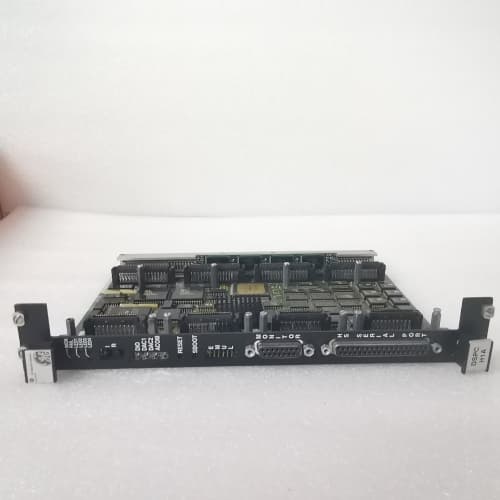
Description
Key Technical Parameters
| Parameter | Specification |
|---|---|
| Function | High-speed vibration interface and gateway with global data integration |
| Vibration Input Channels | 16x analog inputs – accelerometer, velocity, displacement sensors |
| Input Signal Range | ±10 V, 4-20 mA, IEPE accelerometer (constant current supply) |
| Sampling Rate | Up to 250 kHz per channel – ultra-high-speed data acquisition |
| Resolution | 24-bit ADC – high-precision measurement |
| Communication Ports | 2x Gigabit Ethernet (10/100/1000Base-T), 2x fiber optic ports (1 Gbps), 8x RS-232/RS-485 serial ports |
| Protocols Supported | MODBUS TCP, MODBUS RTU, DNP3, OPC UA, MQTT, REST API, Profibus DP, IEC 61850, DDS, AMQP, Kafka, SQL, GE proprietary Mark V protocols |
| Gateway Features | Data aggregation, protocol translation, intelligent data routing, global data routing, data normalization, cross-network synchronization, data buffering, edge processing, redundant path management |
| Data Processing | On-board FFT analysis, trending, alarm generation, data filtering, real-time data streaming, waterfall plots, spectral analysis, order tracking |
| Data Rate | Ethernet: 10/100/1000 Mbps; Serial: 300 bps to 460.8 kbps; Fiber: 1 Gbps |
| Latency | < 50 µs – optimized for real-time vibration monitoring |
| Memory | 4 GB Flash, 2 GB RAM – maximum logging and processing capacity |
| Data Handling | 200,000+ data points, data compression, real-time synchronization, global data buffering |
| Diagnostic Indicators | 42 LEDs – input channel status, Ethernet/fiber activity, serial activity, power, gateway active, diagnostic active, high-speed active, global routing active, database active, cross-network active |
| Advanced Diagnostics | Error logging (800 events), network traffic analysis, communication health monitoring, sensor health monitoring, global routing health monitoring, cross-network synchronization monitoring, data pipeline monitoring |
| Isolation | 2,500 VAC isolation between communication ports and backplane |
| Temperature Range | 0 to +70°C ambient |
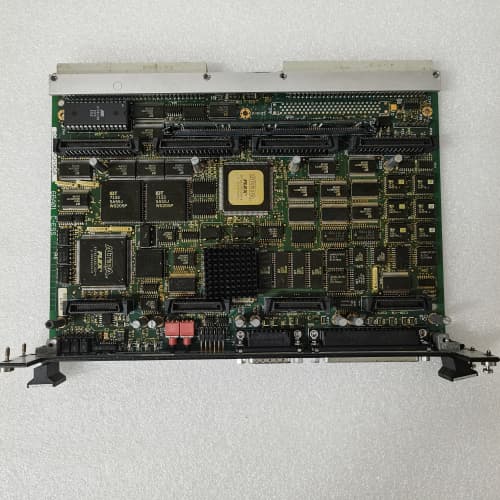
| Form Factor | 6U VME, 1.5-slot width – requires adjacent empty slot |
| Weight | 0.82 kg (approx. 1.81 lbs) |
Advantages & Core Features
-
Global data integration with vibration monitoring – The DS200SHVIG1BGD provides high-speed vibration monitoring with global data routing, cross-network synchronization, and enterprise-level data integration.
-
Ultra-high-speed vibration monitoring – 16 analog input channels with up to 250 kHz sampling rate and 24-bit resolution.
-
Global data routing – Routes vibration data seamlessly across multiple networks, enabling plant-wide and enterprise-wide monitoring.
-
Cross-network synchronization – Synchronizes vibration data across multiple networks for consistent global data views.
-
Comprehensive protocol support – Includes DDS, AMQP, Kafka, and SQL in addition to MODBUS TCP, MODBUS RTU, DNP3, OPC UA, MQTT, REST API, Profibus DP, and IEC 61850.
-
Advanced data processing – On-board FFT analysis, trending, alarm generation, waterfall plots, spectral analysis, and order tracking.
-
Expanded memory – 4 GB Flash, 2 GB RAM for extensive data handling (200,000+ data points).
-
Protocol flexibility – Supports MODBUS TCP, MODBUS RTU, DNP3, OPC UA, MQTT, REST API, Profibus DP, IEC 61850, DDS, AMQP, Kafka, and SQL.
-
Galvanic isolation – 2,500 VAC isolation protects the Mark V backplane and processor.
-
1.5-slot form factor – Accommodates the highest component density.
Key Differences vs. DS200SHVIG1BBB (“BBB” Variant)
| Feature | DS200SHVIG1BBB (Standard) | DS200SHVIG1BGD (Global Data) |
|---|---|---|
| Global Data Routing | No | Yes |
| DDS/AMQP/Kafka Support | No | Yes |
| Cross-Network Synchronization | No | Yes |
| Global Routing Health Monitoring | No | Yes |
| Data Pipeline Monitoring | No | Yes |
| Diagnostic LEDs | 38 | 42 |
| Availability | Exceedingly rare+++ | Exceedingly rare++++ |
| Cost | Premium++++++ | Premium+++++++ |
Application Cases
-
Utility-wide vibration monitoring – A large utility uses the DS200SHVIG1BGD to aggregate vibration data from multiple turbines across different plants and route it to a central monitoring system via Kafka and SQL. The GLOBAL ROUTING ACT LED confirms global routing is active.
-
Offshore platform with enterprise integration – A North Sea platform uses the DS200SHVIG1BGD to route vibration data to onshore enterprise systems via OPC UA and DDS, with cross-network synchronization ensuring consistent data views.
-
Combined-cycle plant with data lake integration – A 1,000 MW facility uses the DS200SHVIG1BGD to send vibration data to data lakes via Kafka, enabling long-term trend analysis and predictive maintenance. The DB ACT LED confirms database connectivity.
-
Nuclear plant with comprehensive monitoring – A nuclear facility uses the DS200SHVIG1BGD for global data integration of vibration monitoring, with data pipeline monitoring ensuring reliable data flow to multiple systems.
Comparison with Related Variants
| Feature | DS200SHVIG1BGD (Global Data) | DS200SHVIG1BBB (Standard) | DS200SHVIG1BDH (Redundant) |
|---|---|---|---|
| Global Data Routing | Yes | No | No |
| DDS/AMQP/Kafka/SQL | Yes | No | No |
| Cross-Network Sync | Yes | No | No |
| Redundant Channels | No | No | Yes |
| Failover | No | No | Yes |
| Availability | Exceedingly rare++++ | Exceedingly rare+++ | Exceedingly rare++++ |
| Cost | Premium+++++++ | Premium++++++ | Premium+++++++ |
Selection Suggestions
-
Assess global data integration requirements – Select the DS200SHVIG1BGD if you need global data routing, DDS, AMQP, Kafka, or SQL integration for enterprise-level monitoring.
-
Evaluate cross-network synchronization requirements – The board is essential if you need to synchronize vibration data across multiple networks.
-
Confirm protocols – Ensure the board supports the required protocols (DDS, AMQP, Kafka, SQL, MODBUS TCP, MODBUS RTU, DNP3, OPC UA, MQTT, REST API, Profibus DP, IEC 61850).
-
Check slot availability – The board requires 1.5-slot clearance. Verify adjacent slot is empty.
-
Procurement – The DS200SHVIG1BGD is exceedingly rare. Only purchase from suppliers providing functional testing (input channel verification, global data routing validation, communication testing). Lead times: 36-44 weeks.
-
Stock spares – Maintain at least one spare on-site.
Important Precautions
-
Power down completely – Hot-swapping is not supported.
-
Slot clearance – Ensure 1.5-slot clearance (adjacent slot empty).
-
ESD protection – Use wrist strap and anti-static mat.
-
Sensor wiring – Properly shield and route sensor cables away from high-voltage power cables.
-
Network configuration – Ensure correct IP addresses, subnet masks, and gateway settings for Ethernet ports.
-
Global data configuration – Configure global data routing, cross-network synchronization, and data pipeline settings.
-
GLOBAL ROUTING ACT LED – If green GLOBAL ROUTING ACT LED is off, global routing is not active. Verify configuration.
-
DB ACT LED – If blue DB ACT LED is off, database connectivity is inactive. Verify database settings.
-
Cleaning – Use compressed air only (max 50 PSI). No liquids.
-
Storage – Store at 10-30°C, 20-50% RH.
Final Expert Recommendation
The DS200SHVIG1BGD is the ultimate high-speed vibration interface and gateway for Mark V systems requiring global data integration and enterprise-level monitoring. It combines 16 analog input channels, up to 250 kHz sampling rate, 24-bit resolution, < 50 µs latency, global data routing, cross-network synchronization, DDS/AMQP/Kafka/SQL support, 4 GB Flash/2 GB RAM memory, 200,000+ data point capacity, and comprehensive diagnostics (42 LEDs, 800-event error logging). It is the definitive solution for utility-wide monitoring, data lake integration, and enterprise-level vibration analysis.
Select the DS200SHVIG1BGD only when:
-
You need global data routing and cross-network synchronization for vibration data
-
You require DDS, AMQP, Kafka, or SQL integration for enterprise-level monitoring
-
You need ultra-high-speed vibration monitoring (16 channels, up to 250 kHz)
-
You require real-time vibration data integration with multiple systems
-
You need 200,000+ data point handling capacity
-
You have 1.5-slot clearance available
For most applications, the DS200SHVIG1BBB (standard vibration gateway) provides excellent vibration monitoring capability at lower cost and lead time. The DS200SHVIG1BGD should be reserved for applications requiring global data integration and enterprise-level monitoring.
When sourcing, ensure comprehensive documentation – input channel testing, global data routing validation, and communication testing. Given its exceedingly rare availability, maintain at least one spare on-site. Properly deployed, this board provides years of reliable, high-speed vibration monitoring with global data integration for Mark V turbine control systems in the most demanding applications.
SCHNEIDER 140CPU65260
ABB PM803F
SCHNEIDER 140CPU67160
GE IC698CPE030
.jpg)



Reviews
There are no reviews yet.