
Description
Product Description
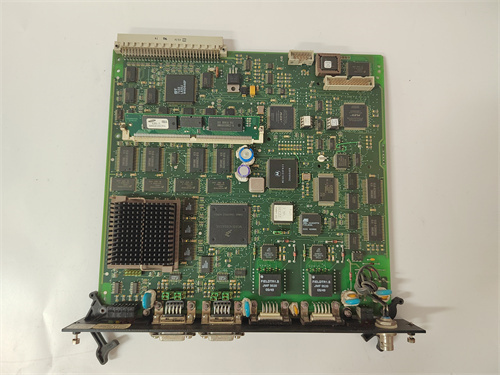
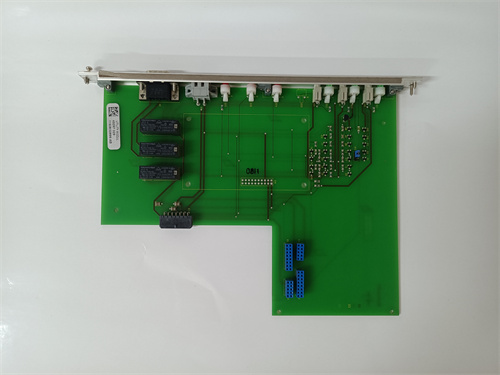
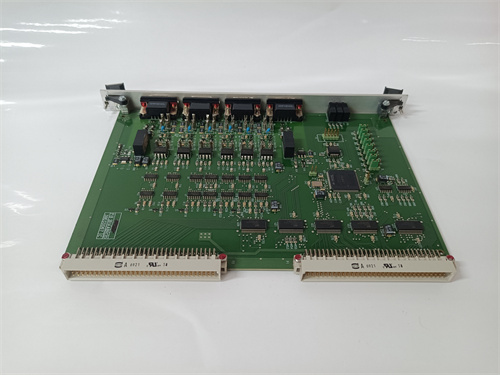
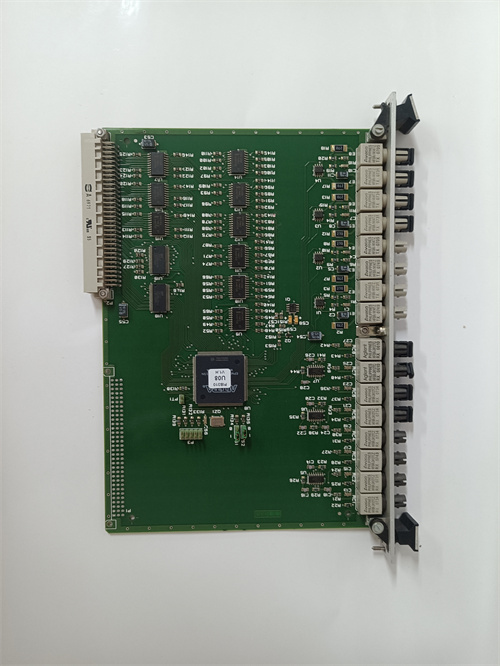
The ALSTOM UT150-1 is a versatile and robust terminal unit module designed for industrial automation systems. It functions as a critical field interface component, likely serving as a Universal Terminal or signal conditioning block within a larger Alstom (now GE Vernova) control architecture, such as the Alspa series or distributed I/O systems. The primary role of the ALSTOM UT150-1 is to provide a secure, organized, and electrically protected termination point for field wiring connected to sensors, actuators, and other devices, often incorporating signal conversion, isolation, or distribution functions.
Product Parameters
-
Model: ALSTOM UT150-1.
-
Function: Universal Terminal / Signal Conditioning / Interface Module.
-
I/O Type: Can accommodate a mix of signal types; likely configurable for digital inputs/outputs (24V DC) and analog signals (4-20mA, 0-10V).
-
Termination Points: Features a defined number of screw terminal or spring-clamp connections for field and internal system wiring.
-
Signal Conditioning: May include functions such as surge protection, galvanic isolation, signal conversion (e.g., current-to-voltage), and filtering.
-
Power Distribution: Often includes pass-through or fused distribution for sensor supply power (e.g., 24V DC).
-
Diagnostic Indicators: Equipped with LEDs for channel status, power presence, and fault indication.
-
Mounting: Standard DIN-rail mounting design.
-
Housing: Typically housed in a modular plastic or metal enclosure for protection and easy labeling.
-
Agency Approvals: Complies with relevant industrial standards for safety and EMC.
Advantages and Features
-
Enhanced System Protection and Isolation: Provides galvanic isolation between field wiring and the control system, protecting sensitive PLC/DCS I/O cards from transients, ground loops, and high-voltage faults.
-
Simplified Wiring and Maintenance: Consolidates field terminations into a single, organized module with clear markings, drastically reducing wiring errors and simplifying troubleshooting and loop checks.
-
Flexible Signal Handling: The universal design of the ALSTOM UT150-1 allows it to interface with a wide variety of field devices, reducing the number of different terminal block types needed in a panel.
-
Integrated Diagnostic Capabilities: Status LEDs provide immediate visual feedback on signal presence and module health, enabling rapid identification of field device or wiring failures.
-
Robust and Compact Design: Built for the industrial environment, offering a space-efficient solution that improves panel layout and organization.
Application Cases in Relevant Fields
-
PLC/DCS Remote I/O Marshalling: The ALSTOM UT150-1 is used as the primary marshalling and interface terminal in remote I/O panels, collecting all field signals before they are connected to the electronic I/O modules.
-
Motor Control Center (MCC) Intelligent Interface: Installed in MCCs to terminate control wires from motor starters, temperature sensors, and vibration switches, providing conditioned signals to a networked PLC or controller.
-
Process Skid Instrumentation Interface: Used on packaged process skids (e.g., pumps, compressors) to provide a standardized, protected terminal point for all instrumentation signals before they are connected to the main plant control system.
-
Signal Conversion and Isolation: Employed to convert 4-20mA field signals to a 0-10V input for a specific controller card, or to isolate signals from hazardous areas or high-noise environments.
Comparisons with Competing Products
Compared to using simple, passive terminal blocks from manufacturers like Wago, Phoenix Contact, or Weidmüller, the ALSTOM UT150-1 is an active, system-oriented component.
-
Active vs. Passive Functionality: While standard terminal blocks are just connection points, the ALSTOM UT150-1 integrates active electronics for protection, isolation, and diagnostics, offering a higher level of functionality and system integrity.
-
System-Optimized Design: It is often part of a designed interface system that matches the form factor and connection philosophy of the associated Alspa or GE control hardware, ensuring a cohesive and reliable interconnection.
-
Simplified System Documentation and Spares: Using a defined ALSTOM UT150-1 module simplifies the bill of materials and ensures consistency across multiple panels, making maintenance and spare parts management more straightforward than managing a collection of disparate passive components. For a fully integrated and protected interface solution, the authentic ALSTOM UT150-1 is the recommended choice.
Selection Suggestions and Precautions
-
Define the Specific Interface Requirement: Determine the exact signals (digital, analog, voltage, current) and the number of channels that need to be terminated and conditioned by the ALSTOM UT150-1.
-
Verify Electrical Specifications: Match the module’s input/output voltage/current ranges, isolation ratings, and fuse ratings (if applicable) with the characteristics of your field devices and control system I/O cards.
-
Plan for Adequate Space and Labeling: Ensure there is sufficient DIN-rail space in the enclosure. Plan for clear and permanent labeling of each terminal on the ALSTOM UT150-1 according to loop diagrams.
-
Source from Authorized Industrial Distributors: Purchase from authorized GE Vernova/Alstom automation suppliers or certified panel builders to guarantee you receive a genuine product with the specified protective components and certifications.
-
Follow Proper Wiring Practices: Adhere to manufacturer-recommended torque settings for terminal screws. Use proper wire ferrules for stranded wires. Maintain separation between low-voltage signal wires and power cables within the cabinet.
-
Test Isolation and Functionality: After installation, use a multimeter or megohmmeter to verify isolation resistance where required. Perform loop checks to ensure each channel of the ALSTOM UT150-1 is correctly passing the signal from the field device to the control system I/O.
A5E01649374 GE
A5E02624585 GE
A1A363628.00M GE
A1A260986.00 GE
A1A363818.00M GE PLC
A1A098194 GE
A1A0100275 GE

Reviews
There are no reviews yet.