
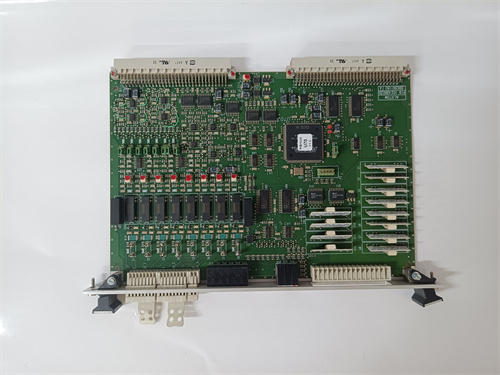
Description
Product Description
The BENTLY 135473-01 is a eddy current proximity probe that forms the front-end sensing element in Bently Nevada’s machinery monitoring systems. This probe operates on the principle of eddy current generation, where a high-frequency signal energizes a coil in the probe tip, creating an electromagnetic field. When a conductive target (typically the rotating shaft) approaches the probe tip, eddy currents are generated in the target surface, altering the impedance of the probe coil and producing a voltage signal proportional to the gap between probe and target.
The BENTLY 135473-01 features a rugged, hermetically sealed construction designed for harsh industrial environments. The probe tip contains the sensing coil encapsulated in a durable material resistant to oil, water, and most industrial contaminants. The probe body is constructed from stainless steel, providing mechanical strength and corrosion resistance. The integral coaxial cable is specially shielded to maintain signal integrity over distances up to several meters.
This probe operates in conjunction with a Bently Nevada Proximitor driver, which provides the oscillator/demodulator function, converting the probe impedance change into a DC voltage proportional to gap (for position measurement) and an AC voltage proportional to vibration (for dynamic measurement). The combined probe and driver system provides two critical measurements from a single sensor: static gap (position) and dynamic motion (vibration).
The BENTLY 135473-01 is available in various lengths and thread configurations to accommodate different machine configurations and mounting requirements. The probe tip diameter, typically 5mm, 8mm, or 11mm, determines the linear range and sensitivity of the measurement. The 135473-01 model represents a specific configuration within Bently Nevada’s extensive probe family, with characteristics optimized for common turbomachinery applications.
Calibrated for specific target materials (typically steel alloys), the BENTLY 135473-01 provides linear output over its measurement range, enabling precise determination of shaft position and accurate measurement of vibration amplitudes. The system’s frequency response extends from DC to over 10 kHz, capturing both slow position changes and high-frequency vibration components essential for comprehensive machinery condition assessment.
Parameters and Specifications
| Parameter | Specification |
|---|---|
| Model Number | 135473-01 |
| Manufacturer | Bently Nevada (Baker Hughes) |
| Product Type | Eddy Current Proximity Probe |
| System Compatibility | 3300, 3500, and other Bently Nevada monitoring systems |
| Measurement Principle | Eddy current |
| Probe Tip Diameter | 5 mm, 8 mm, or 11 mm (verify specific variant) |
| Linear Range | Typically 0.25 mm to 2.3 mm (varies by tip diameter) |
| Sensitivity | Typically 7.87 V/mm (200 mV/mil) for 8mm probe |
| Frequency Response | DC to 10 kHz |
| Target Material | Ferromagnetic and non-ferromagnetic conductive materials (calibrated for steel) |
| Temperature Rating (Probe) | -35°C to +177°C (standard) |
| Temperature Rating (Cable) | -51°C to +177°C |
| Pressure Rating | Probe tip: 2000 psi (138 bar) |
| Connector Type | Integral coaxial cable with connector |
| Cable Length | Various lengths available (specify when ordering) |
| Cable Type | RG-174/U coaxial, fluorocarbon insulation |
| Probe Body Material | Stainless steel |
| Probe Tip Material | Encapsulated coil in PEEK or similar high-temperature material |
| Mounting Thread | 3/8-24 UNF or metric options (verify specific variant) |
| Hazardous Area Approvals | CSA, ATEX, IECEx (model dependent) |
| Ingress Protection | IP68 (probe and cable) |
| Vibration Resistance | 25 g peak |
| Shock Resistance | 50 g peak |
| Weight | Approximately 0.2 kg (varies with cable length) |
| Certifications | CE, CSA, ATEX, IECEx (model dependent) |
Advantages and Features
The BENTLY 135473-01 offers numerous benefits that make it the preferred choice for critical machinery vibration monitoring:
Key Advantages
-
Non-Contact Measurement: The eddy current principle enables measurement without physical contact with the rotating shaft, eliminating wear and allowing operation at any rotational speed, from zero to maximum.
-
Dual Measurement Capability: A single BENTLY 135473-01 probe provides both static (position) and dynamic (vibration) information, enabling comprehensive assessment of shaft condition and behavior.
-
Insensitive to Contaminants: The eddy current principle is unaffected by oil, water, steam, or process fluids in the gap between probe and target, ensuring reliable operation in lubricated environments.
-
Wide Frequency Response: DC to 10 kHz response captures both slow thermal growth and high-frequency vibration components, essential for complete machinery analysis.
-
Rugged Construction: Hermetically sealed, stainless steel construction with high-temperature capability ensures reliable operation in harsh turbine and compressor environments.
-
High Accuracy: Precision calibration provides linear output with high sensitivity, enabling accurate measurement of small vibration amplitudes and precise position determination.
-
Long-Term Stability: The passive sensing element exhibits no drift over time, ensuring consistent measurements throughout the probe’s operational life.
-
Hazardous Area Suitability: Versions with appropriate approvals can be installed in explosive atmospheres, common in oil and gas applications.
-
Bently Nevada Integration: Seamless compatibility with Bently Nevada’s 3300 and 3500 monitoring systems ensures proper signal conditioning and integration with protection and diagnostic software.
-
Field-Proven Reliability: With decades of service in thousands of critical machines worldwide, the BENTLY 135473-01 has demonstrated exceptional reliability in the most demanding applications.
-
Interchangeability: Standardized mounting threads and electrical characteristics allow replacement with minimal system reconfiguration.
Application Fields and Cases
The BENTLY 135473-01 is essential for vibration and position monitoring across various critical rotating machinery applications:
Primary Application Areas
-
Power Generation:
-
Gas turbine generators (radial vibration and thrust position)
-
Steam turbine generators (journal bearings and thrust bearings)
-
Hydroelectric turbines (guide bearings)
-
Generator exciters and collector rings
-
-
Oil and Gas:
-
Centrifugal compressors (pipeline and process)
-
Gas turbine-driven compressors
-
Pumps (especially high-speed or critical service)
-
Expanders and turboexpanders
-
-
Industrial:
-
Large electric motors (above 1000 HP)
-
Gearboxes (high-speed shafts)
-
Fans and blowers (critical service)
-
Paper machine rolls
-
-
Marine:
-
Main propulsion turbines
-
Ship service generators
-
Compressors on LNG carriers
-
Application Case Examples
-
Combined Cycle Power Plant: A 600 MW combined cycle facility utilizes BENTLY 135473-01 probes on all gas turbine and steam turbine journal bearings and thrust bearings. During a startup following maintenance, one probe detected an abnormal vibration signature that analysis revealed as a rotor bow condition. The early warning allowed operators to shut down and investigate before damage occurred, avoiding a potential catastrophic failure and extended outage.
-
Gas Pipeline Compressor Station: A major pipeline operator employs BENTLY 135473-01 probes on centrifugal compressors across multiple stations. The probes’ immunity to oil and process gas contamination ensures reliable operation in the challenging environment. When a compressor began showing increasing synchronous vibration, analysis of probe data identified the onset of rotor imbalance, enabling planned maintenance during a scheduled outage rather than an emergency shutdown.
-
Refinery Critical Pump: A refinery’s hydrocracker unit depends on a high-speed pump monitored by BENTLY 135473-01 probes. When the pump experienced a sudden vibration increase, the monitoring system triggered an alarm, allowing operators to switch to the standby pump before failure. Subsequent inspection revealed bearing damage that would have caused catastrophic failure within hours. The probe’s early warning prevented a unit shutdown costing millions in lost production.
-
Hydroelectric Plant: A large hydroelectric facility installed BENTLY 135473-01 probes on turbine guide bearings during a modernization project. The ability to measure both shaft position and vibration from a single probe simplified installation and reduced wiring requirements. The position measurement capability proved valuable for monitoring bearing wear over time, enabling predictive maintenance scheduling.
Comparison with Competitors
When compared to similar proximity probes from other manufacturers, the BENTLY 135473-01 demonstrates several distinctive characteristics:
| Feature | BENTLY 135473-01 | EPRO PR6423 | Vibro-Meter IQS 450 | GE BC337 |
|---|---|---|---|---|
| Manufacturer | Bently Nevada | EPRO (Emerson) | Vibro-Meter (Meggit) | GE (Bently legacy) |
| Measurement Principle | Eddy current | Eddy current | Eddy current | Eddy current |
| Tip Diameter Options | 5, 8, 11mm | 5, 8, 11, 25mm | 5, 8, 11, 18mm | 5, 8, 11mm |
| Temperature Range | -35°C to +177°C | -40°C to +180°C | -40°C to +180°C | -35°C to +177°C |
| Pressure Rating | 2000 psi | 2000 psi | 2000 psi | 2000 psi |
| System Compatibility | Bently 3300/3500 | EPRO MMS 3000/6000 | Vibro-Meter VM600 | GE Bently |
| Hazardous Area Approvals | Extensive | Extensive | Extensive | Extensive |
| Interchangeability | Excellent within Bently | Excellent within EPRO | Good within system | Good within system |
| Installed Base | Largest worldwide | Large in Europe | Large in aero-derivative | Large in GE turbines |
Comparative Advantages
-
Installed Base Leadership: The BENTLY 135473-01 benefits from the largest installed base of any proximity probe in critical turbomachinery, providing unparalleled field experience and proven reliability.
-
Bently System Integration: As the original Bently Nevada probe, the BENTLY 135473-01 offers seamless integration with the full range of Bently monitoring systems, including 3300, 3500, and System 1 software.
-
Application Expertise: Bently Nevada’s decades of focus on machinery monitoring translate into probes optimized for the specific requirements of turbomachinery applications.
-
Interchangeability Standards: Bently probes have established de facto industry standards for mounting threads and electrical characteristics, simplifying replacement and sparing.
-
Comprehensive Support: Backed by Baker Hughes’ global service network, users of BENTLY 135473-01 probes have access to extensive technical support and application engineering.
Selection Suggestions and Precautions
Selection Criteria
When considering the BENTLY 135473-01 for your application, evaluate the following factors:
-
System Compatibility: Verify that the probe is compatible with your Bently Nevada monitoring system (3300, 3500, etc.). The BENTLY 135473-01 requires matching Proximitor drivers for proper operation.
-
Measurement Requirements: Determine the required measurement range, sensitivity, and frequency response for your application. Different tip diameters provide different linear ranges and sensitivities.
-
Physical Installation: Assess the available mounting space, required probe length, and thread type (imperial or metric) needed for your machine. The BENTLY 135473-01 is available in various configurations.
-
Target Material: Verify that the probe calibration matches your shaft material. Bently probes are typically calibrated for AISI 4140 steel; other materials may require recalibration or correction factors.
-
Environmental Conditions: Ensure the probe temperature rating meets your application requirements. Standard probes handle -35°C to +177°C; high-temperature versions are available for extreme conditions.
-
Hazardous Area Requirements: If installing in classified areas, verify that the BENTLY 135473-01 variant has the required certifications (CSA, ATEX, IECEx) for your location.
-
Cable Length: Determine the required cable length to reach the Proximitor driver location. Excess cable can be coiled, but proper practices must be followed.
-
Spare Parts Strategy: For critical machines, maintain spare BENTLY 135473-01 probes to minimize downtime in case of damage during maintenance or unexpected failure.
Installation Precautions
-
Handling Sensitivity: The probe tip and cable are sensitive to damage. Handle with care, avoiding sharp bends in the cable and impacts to the probe tip.
-
Mounting Preparation: Ensure the mounting hole is clean, properly tapped, and deburred before installation. Debris in the threads can damage the probe or affect measurements.
-
Installation Torque: Follow Bently’s recommended installation torque to avoid damaging the probe or affecting its characteristics. Over-torquing can damage the probe tip.
-
Gap Setting: Proper initial gap is critical for measurement range. Follow manufacturer recommendations for cold gap setting based on expected thermal growth.
-
Cable Routing: Route probe cables away from high-voltage sources and avoid running parallel to power cables. Maintain minimum bend radius specifications.
-
Cable Securing: Secure the probe cable at regular intervals to prevent vibration-induced movement and connector stress. Use appropriate cable ties and clamps.
-
Connector Protection: Ensure connectors are properly protected from moisture and contamination. Use approved sealing methods for hazardous area installations.
-
Target Condition: The target surface (shaft) must be clean and free of scratches, pits, or magnetic inconsistencies that could affect measurements.
-
Electrical Runout Check: Before final acceptance, perform an electrical runout check to verify that shaft surface variations do not produce false vibration signals.
-
Documentation: Record probe installation details including serial numbers, initial gap readings, and cable routing for future reference.
Commissioning and Maintenance
-
Initial Verification: After installation, verify probe operation by measuring gap voltage at the Proximitor output and comparing to expected values.
-
System Calibration: Confirm that the monitoring system configuration matches the probe characteristics (sensitivity, range, etc.).
-
Baseline Recording: Record baseline vibration and position readings for future comparison during trend analysis.
-
Periodic Checks: During routine maintenance, inspect probe cables for damage, verify connector integrity, and check gap readings if machine has been reassembled.
-
Replacement Precautions: When replacing a probe, verify that the new unit has identical characteristics and is properly configured in the monitoring system.
Conclusion
The BENTLY 135473-01 represents the industry standard for eddy current proximity probing in critical rotating machinery monitoring applications. Its robust construction, proven reliability, and seamless integration with Bently Nevada monitoring systems make it the preferred choice for protecting valuable turbomachinery assets in power generation, oil and gas, and industrial applications worldwide.
By providing both static position and dynamic vibration information from a single sensor, the BENTLY 135473-01 enables comprehensive condition monitoring essential for predictive maintenance, machinery protection, and failure analysis. The probe’s immunity to contaminants, wide frequency response, and long-term stability ensure reliable measurements in the most demanding environments.
For facilities with Bently Nevada monitoring systems, maintaining an appropriate inventory of BENTLY 135473-01 probes represents a prudent risk management strategy. These sensors are often the first line of defense against machinery failure, and their availability when needed is critical for minimizing downtime.
As industrial facilities face increasing demands for reliability and asset utilization, the BENTLY 135473-01 provides the accurate, reliable measurement foundation for effective machinery condition monitoring programs. By choosing genuine Bently Nevada components, you ensure compatibility, performance, and access to the application expertise essential for protecting critical rotating equipment.
For purchasing or additional technical information about the BENTLY 135473-01, please visit: BENTLY 135473-01 Product Page
ALSTOM PIB102A 3BEB0180 – Process Interface Board for Turbine Control
Introduction
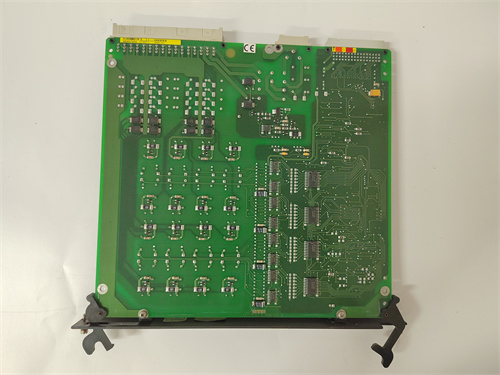
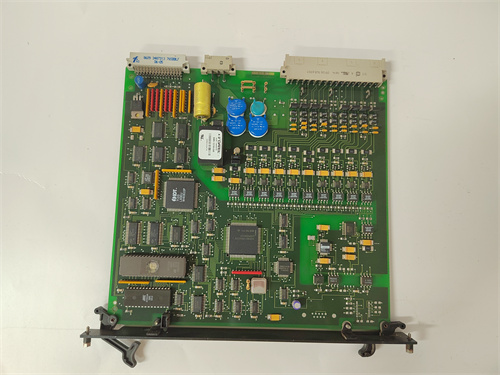
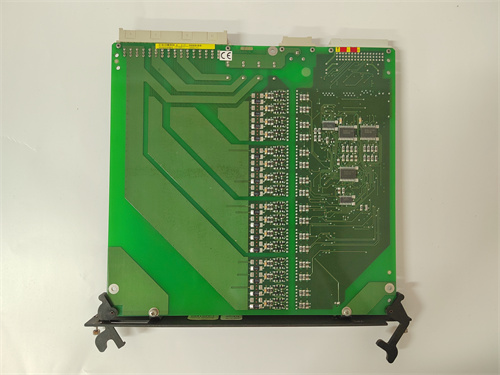
The ALSTOM PIB102A 3BEB0180 is a specialized process interface board designed for ALSTOM’s turbine control systems, providing critical I/O connectivity for industrial gas and steam turbine applications. This interface module serves as the connection point between field sensors, actuators, and the turbine control system, ensuring reliable data acquisition and control signal distribution for power generation and industrial turbomachinery. As an essential component of ALSTOM’s control platform, the ALSTOM PIB102A 3BEB0180 delivers the robustness and precision required for critical turbine control applications. For more detailed information, please visit the product page: ALSTOM PIB102A 3BEB0180
Product Description
The ALSTOM PIB102A 3BEB0180 is a process interface board specifically engineered for ALSTOM’s turbine control systems, providing the essential connectivity between field devices and the control processor. This module accepts signals from various turbine-mounted sensors including speed probes, temperature sensors, pressure transmitters, and position feedback devices, conditioning these signals for processing by the control system. Simultaneously, it provides output signals to actuators, valves, and other control elements that regulate turbine operation.
The ALSTOM PIB102A 3BEB0180 features multiple input and output channels configured for the specific requirements of turbine control applications. Analog input channels accept signals from temperature sensors (thermocouples, RTDs), pressure transmitters, and position sensors, with appropriate signal conditioning including linearization, cold junction compensation, and filtering. Digital input channels monitor contact closures from limit switches, pushbuttons, and protective devices. Analog output channels provide control signals to servo valves, positioners, and other final control elements, while digital outputs drive solenoids, relays, and indicators.
Built with a focus on reliability essential for turbine protection, the ALSTOM PIB102A 3BEB0180 incorporates comprehensive isolation between channels and from the control system, preventing fault propagation and ensuring that a field-side issue does not compromise overall turbine control. The board includes extensive diagnostic capabilities, continuously monitoring input and output circuits for faults and reporting status to the main controller.
Designed for the harsh environment of turbine generator installations, the ALSTOM PIB102A 3BEB0180 features rugged construction with industrial-grade components capable of withstanding temperature extremes, vibration, and electrical noise typical of power generation facilities. The board mounts in standard ALSTOM control racks, with front-accessible connections simplifying wiring and maintenance.
The ALSTOM PIB102A 3BEB0180 communicates with the turbine control processor via a high-speed backplane interface, ensuring deterministic data exchange essential for real-time control. Configuration parameters for each channel—including input types, ranges, and alarm limits—are stored in non-volatile memory, ensuring consistent operation after power cycles.
As part of ALSTOM’s comprehensive turbine control solutions, this interface board benefits from the manufacturer’s extensive experience in turbomachinery control, incorporating features and reliability measures developed through decades of power generation applications.
Parameters and Specifications
| Parameter | Specification |
|---|---|
| Model Number | PIB102A 3BEB0180 |
| Manufacturer | ALSTOM |
| Product Type | Process Interface Board |
| System Compatibility | ALSTOM Turbine Control Systems |
| Analog Input Channels | 8-16 (typical, configurable) |
| Analog Input Types | 4-20 mA, 0-10V, thermocouple (J, K, T), RTD (Pt100) |
| Analog Input Resolution | 16-bit |
| Analog Output Channels | 4-8 (typical) |
| Analog Output Types | 4-20 mA, ±10V |
| Analog Output Resolution | 14-16 bit |
| Digital Input Channels | 16-32 (typical) |
| Digital Input Voltage | 24V DC, 48V DC, 125V DC (configurable) |
| Digital Output Channels | 8-16 (typical) |
| Digital Output Type | Relay (Form C) or solid state |
| Isolation | 1500V channel-to-channel and channel-to-backplane |
| Diagnostics | Continuous self-test with status reporting |
| Communication | Backplane interface to turbine controller |
| Power Supply | +5V DC, ±15V DC, +24V DC from backplane |
| Power Consumption | 15W typical |
| Indicators | LED for power, communication, channel status |
| Operating Temperature | -20°C to +65°C |
| Storage Temperature | -40°C to +85°C |
| Humidity | 5% to 95% non-condensing |
| Vibration Resistance | 5g @ 10-150 Hz |
| Dimensions (H x W x D) | 240 mm x 45 mm x 200 mm (approx.) |
| Weight | Approximately 1.2 kg |
| Mounting | Plugs into ALSTOM control rack |
| Certifications | CE, UL, CSA |
| RoHS Compliance | Yes |
Advantages and Features
The ALSTOM PIB102A 3BEB0180 offers numerous benefits that make it an essential component for ALSTOM turbine control systems:
Key Advantages
-
Comprehensive I/O Integration: Combining multiple I/O types on a single ALSTOM PIB102A 3BEB0180 board reduces rack space requirements and simplifies system architecture compared to using separate modules for each signal type.
-
Turbine-Specific Design: Engineered specifically for turbine control applications, the ALSTOM PIB102A 3BEB0180 incorporates signal conditioning optimized for turbine sensors including speed probes, thermocouples, and position transducers.
-
High Reliability: With redundant power inputs and comprehensive isolation, the ALSTOM PIB102A 3BEB0180 provides the reliability essential for turbine protection applications where failures can have catastrophic consequences.
-
Extensive Diagnostics: Continuous monitoring of all channels with fault reporting enables predictive maintenance and rapid troubleshooting, reducing mean time to repair.
-
Flexible Configuration: Programmable input types and ranges allow the same ALSTOM PIB102A 3BEB0180 to accommodate various field devices, simplifying sparing and system modifications.
-
Rugged Construction: Designed for the demanding turbine hall environment, the board withstands temperature extremes, vibration, and electrical noise typical of power generation facilities.
-
Fast Response: Optimized for real-time control, the ALSTOM PIB102A 3BEB0180 provides minimal latency between input sampling and output updates, essential for turbine control loops.
-
Field-Proven Design: Based on ALSTOM’s extensive turbine control experience, the ALSTOM PIB102A 3BEB0180 incorporates lessons learned from thousands of turbine installations worldwide.
-
Hot-swappable Capability: In supported configurations, the board can be replaced while the system remains operational, minimizing downtime during maintenance.
-
Backward Compatibility: Designed to work with both newer and legacy ALSTOM control systems, facilitating upgrades and spare parts management.
Application Fields and Cases
The ALSTOM PIB102A 3BEB0180 is extensively deployed in turbine control applications across various power generation and industrial sectors:
Primary Application Areas
-
Power Generation:
-
Gas turbine power plants (simple and combined cycle)
-
Steam turbine generators (fossil and nuclear)
-
Combined heat and power (CHP) facilities
-
Biomass and waste-to-energy plants
-
-
Industrial Turbomachinery:
-
Compressor station turbine drives
-
Pump drives in pipeline service
-
Cogeneration systems in industrial facilities
-
Blast furnace gas expanders
-
-
Marine Propulsion:
-
LNG carrier propulsion turbines
-
Naval vessel power generation
-
Application Case Examples
-
Combined Cycle Power Plant: A 500 MW combined cycle facility in Europe utilizes multiple ALSTOM PIB102A 3BEB0180 boards for gas turbine and steam turbine control. When a vibration monitoring channel began showing intermittent readings, the board’s diagnostics identified the specific channel fault, allowing maintenance personnel to replace the affected field wiring connector during operation without shutting down the unit. The rapid diagnosis and repair prevented a potential turbine trip and saved significant outage costs.
-
Gas Turbine Upgrade: A peaking plant operator upgraded older gas turbines with modern controls incorporating ALSTOM PIB102A 3BEB0180 interface boards. The flexible I/O configuration accommodated the existing sensor complement without requiring additional signal conditioners, reducing installation costs. Following the upgrade, turbine starting reliability improved from 92% to 99%, contributing to grid stability during peak demand periods.
-
Industrial Cogeneration: A chemical plant’s cogeneration system relies on ALSTOM PIB102A 3BEB0180 boards for steam turbine control. When a turbine experienced an overspeed event during a grid disturbance, the interface board’s fast response ensured that control valves moved quickly to limit speed excursion, preventing mechanical damage. Post-event analysis using the board’s diagnostic data helped engineers optimize control settings for future disturbances.
-
Hydroelectric Plant Modernization: A hydroelectric facility replaced aging turbine controls with ALSTOM systems including ALSTOM PIB102A 3BEB0180 interface boards. The ability to directly connect existing sensors without rewiring simplified the retrofit, completing the project ahead of schedule. The new controls improved turbine efficiency by 3% through more precise speed and guide vane control.
Comparison with Competitors
When compared to similar interface boards from other turbine control manufacturers, the ALSTOM PIB102A 3BEB0180 demonstrates several distinctive characteristics:
| Feature | ALSTOM PIB102A 3BEB0180 | GE IS200TPROH1 | Siemens 6DD1681 | Woodward MicroNet |
|---|---|---|---|---|
| System Compatibility | ALSTOM Turbine Controls | GE Mark VI/Vle | Siemens T3000 | Woodward MicroNet |
| I/O Integration | High (mixed types) | Moderate | High | High |
| Turbine-Specific Features | Extensive | Extensive | Extensive | Moderate |
| Isolation | 1500V channel-to-channel | 1500V | 500V group | 1000V |
| Diagnostics | Comprehensive channel-level | Comprehensive | Good | Good |
| Operating Temperature | -20°C to +65°C | -30°C to +65°C | 0°C to +60°C | -40°C to +70°C |
| Hot-swap Support | Yes | Yes | Yes | Yes |
| Installed Base | Large in Europe/Asia | Worldwide | Large in Europe | Worldwide |
| Typical Application | ALSTOM turbines | GE turbines | Siemens turbines | Various turbines |
Comparative Advantages
-
ALSTOM-Specific Optimization: The ALSTOM PIB102A 3BEB0180 is specifically designed for ALSTOM’s turbine control philosophy, ensuring optimal integration with ALSTOM’s control algorithms and protection strategies.
-
European Market Presence: With a strong installed base in European power generation, the ALSTOM PIB102A 3BEB0180 benefits from extensive local support and application expertise.
-
Comprehensive I/O Mix: The board’s integration of multiple I/O types reduces the number of modules required compared to systems using separate modules for each function.
-
Mature Design: With years of refinement in ALSTOM turbine applications, the ALSTOM PIB102A 3BEB0180 represents a mature, well-understood design with proven reliability.
-
Legacy System Support: For facilities with older ALSTOM turbines, this board provides a path for control system upgrades while maintaining compatibility with existing field wiring.
Selection Suggestions and Precautions
Selection Criteria
When considering the ALSTOM PIB102A 3BEB0180 for your application, evaluate the following factors:
-
System Compatibility: Verify that your turbine control system is ALSTOM and that the ALSTOM PIB102A 3BEB0180 is compatible with your specific controller and rack configuration.
-
I/O Requirements: Determine the types and quantities of I/O channels required for your turbine application. The ALSTOM PIB102A 3BEB0180 provides a specific complement of analog and digital I/O; ensure it matches your needs.
-
Sensor Types: Verify that the board supports your specific field devices. The ALSTOM PIB102A 3BEB0180 accommodates common turbine sensors, but special types may require additional signal conditioning.
-
Environmental Conditions: Ensure the installation environment falls within the board’s operating temperature range. The ALSTOM PIB102A 3BEB0180 is rated for -20°C to +65°C, suitable for most turbine hall installations.
-
Redundancy Requirements: Determine whether your application requires redundant I/O paths. The ALSTOM PIB102A 3BEB0180 may support redundancy in appropriate configurations.
-
Hazardous Area Requirements: If installing in classified areas, verify that the ALSTOM PIB102A 3BEB0180 and associated barriers meet applicable safety certifications.
-
Spare Parts Strategy: For critical turbines, maintain spare ALSTOM PIB102A 3BEB0180 boards to minimize downtime in case of failure. Consider ALSTOM’s long-term support programs.
Installation Precautions
-
ESD Sensitivity: The board contains sensitive electronic components. Follow proper ESD handling procedures during installation and removal. Use grounded wrist straps and anti-static mats.
-
Rack Compatibility: Ensure the control rack is properly configured and provides adequate power for the ALSTOM PIB102A 3BEB0180. Verify slot compatibility per ALSTOM documentation.
-
Power Off for Wiring: Typically, field power should be removed during wiring to prevent accidental shorts or shocks. Follow plant lockout/tagout procedures.
-
Wiring Practices:
-
Use properly sized wire for field connections
-
Follow ALSTOM’s recommended wire types and gauges
-
Maintain separation between power and signal wiring
-
Use shielded cable for analog signals
-
Properly terminate shields according to ALSTOM’s guidelines
-
-
Sensor Compatibility: Verify that all field sensors match the ALSTOM PIB102A 3BEB0180 input specifications before connection.
-
Configuration Verification: Before commissioning, verify that all channel configurations (input types, ranges, alarm limits) match the application requirements.
-
Commissioning:
-
Verify proper seating in rack and secure latching
-
Apply power and observe LED indicators
-
Verify communication with turbine controller
-
Test each input channel with known signal sources
-
Test each output channel by commanding values and verifying response
-
Verify alarm and diagnostic functions
-
Document all test results
-
-
Labeling: Clearly label all field wiring at the board terminals to facilitate troubleshooting and future maintenance.
-
Documentation: Maintain accurate records of board configuration settings, including channel assignments and special parameters.
-
Periodic Maintenance: Establish a regular schedule for:
-
Inspecting terminal connections for tightness
-
Checking for signs of overheating or contamination
-
Verifying input accuracy with calibrated test sources
-
Reviewing diagnostic logs for any reported issues
-
Conclusion
The ALSTOM PIB102A 3BEB0180 represents a critical interface component in ALSTOM’s turbine control systems, providing the essential connectivity between field sensors, actuators, and the control processor. Its comprehensive I/O integration, turbine-specific design, and robust construction make it an essential element for reliable turbine control in power generation and industrial applications.
By delivering accurate signal acquisition and reliable control output, the ALSTOM PIB102A 3BEB0180 enables precise turbine operation essential for efficiency, reliability, and safety. The extensive diagnostics facilitate predictive maintenance and rapid troubleshooting, minimizing downtime and reducing maintenance costs.
For facilities with ALSTOM turbines, maintaining an appropriate inventory of ALSTOM PIB102A 3BEB0180 boards represents a prudent risk management strategy. These interface boards are critical for turbine control, and their availability when needed is essential for minimizing downtime.
As power generation facilities face increasing demands for flexibility, efficiency, and reliability, the ALSTOM PIB102A 3BEB0180 provides the dependable I/O foundation for meeting these challenges. By choosing genuine ALSTOM components, you ensure compatibility, performance, and access to the application expertise essential for protecting critical turbine assets.
For purchasing or additional technical information about the ALSTOM PIB102A 3BEB0180, please visit: ALSTOM PIB102A 3BEB0180 Product Page
6RB2110-0FF01 PLC
YPQ-101E YT204001-FS PLC
2711P-K10C4D8 PLC
2711P-K7C4D8 PLC

Reviews
There are no reviews yet.