
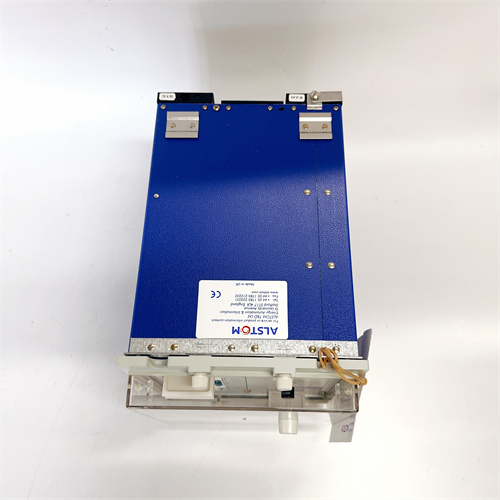
Description
Product Description
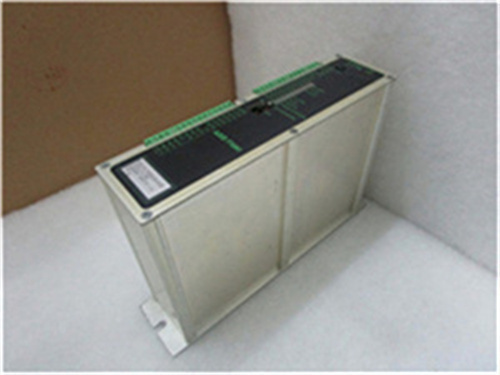
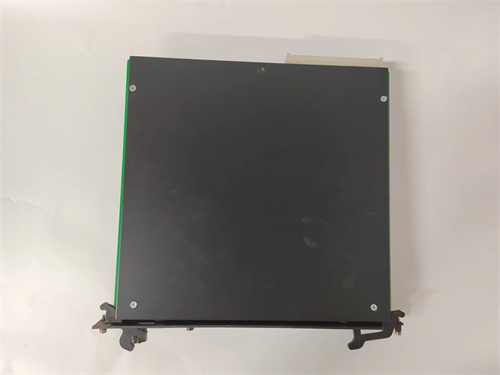
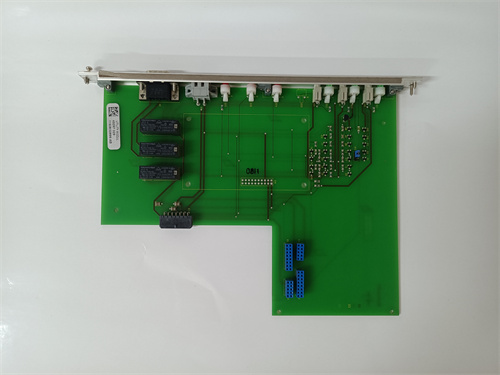
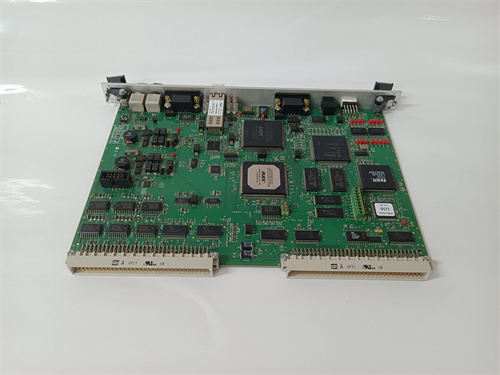
The ALSTOM MCGG62N1CB0753F is a sophisticated and highly specialized analog signal processing module from Alstom’s (now GE Vernova) automation portfolio, designed for critical measurement and control tasks in power generation and heavy industrial processes. The “CGG” prefix in its model number strongly suggests a function related to gas analysis or specialized signal conditioning. This module is engineered to interface with complex analytical sensors or transmitters, such as those measuring gas composition (e.g., O2, CO, CO2), conductivity, pH, or other specialized process variables that output a conditioned current or voltage signal.
Product Parameters
-
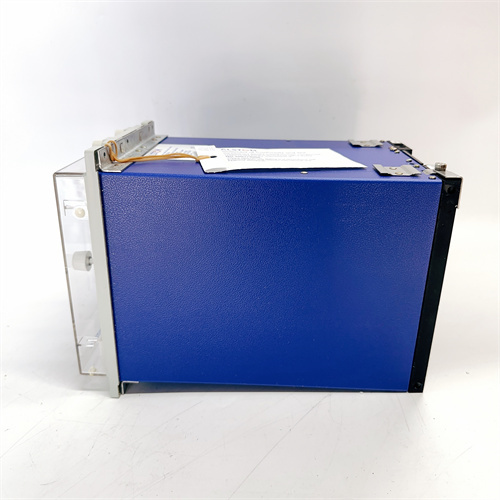
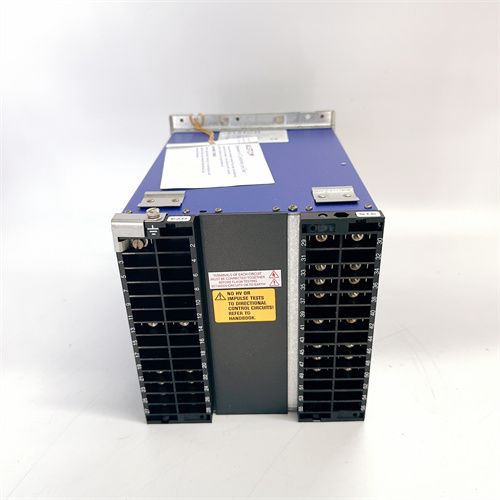
Model: ALSTOM MCGG62N1CB0753F.
-
Function: Specialized Analog Signal Conditioner / Transmitter Interface Module.
-
Input Type: Accepts analog signals from specific sensors; likely configurable for low-level voltage/mV, or current (4-20mA) from analyzers and transmitters.
-
Sensor Excitation: May provide a stable voltage or current excitation source for 2-wire or 4-wire transmitters and analytical sensors.
-
Signal Processing: Includes advanced functions such as linearization (for non-linear sensor outputs), temperature compensation, and scaling specific to the connected sensor type.
-
Number of Channels: Typically 1, 2, or 4 channels, given the complexity and cost of the signal conditioning required.
-
Isolation: High galvanic isolation between the field sensor side and the control system side for safety and to eliminate ground loops.
-
Accuracy and Stability: Very high accuracy and low drift specifications to ensure reliable long-term measurements.
-
Communication Interface: Connects to the control system via a proprietary backplane or a standard industrial network/analog output.
-
Diagnostics: Features diagnostics for sensor break, short circuit, and out-of-range conditions.
Advantages and Features
-
High-Precision for Critical Measurements: Delivers exceptional accuracy and stability for measurements that directly impact process efficiency, product quality, or regulatory compliance, such as flue gas oxygen content.
-
Integrated Sensor Management: Simplifies system design by providing built-in excitation and linearization tailored to specific sensor types, reducing the need for external signal conditioners.
-
Superior Noise Immunity and Isolation: The high level of isolation protects sensitive analytical sensor signals from the harsh electrical environment of a plant, ensuring data integrity.
-
Enhanced Diagnostic Capabilities: Provides detailed feedback on sensor health and signal validity, enabling predictive maintenance and preventing undetected measurement drift.
-
Robust Industrial Design: Built to operate reliably in the challenging environments where these analyzers are often installed, such as near boilers or in process skids.
Application Cases in Relevant Fields
-
Combustion Efficiency Optimization: The ALSTOM MCGG62N1CB0753F is crucial for interfacing with zirconia oxygen (O2) probes or carbon monoxide (CO) analyzers in boiler and furnace systems, providing the data needed to control the air-to-fuel ratio for maximum efficiency and minimum emissions.
-
Continuous Emissions Monitoring Systems (CEMS): Used to condition and digitize signals from gas analyzers (e.g., for SO2, NOx) before sending them to a data acquisition system for environmental reporting.
-
Water and Effluent Treatment: Interfaces with pH, ORP (Oxidation-Reduction Potential), and conductivity sensors for precise control of chemical dosing and monitoring of water quality.
-
Chemical Process Control: Conditions signals from in-line process analyzers measuring composition, density, or viscosity for closed-loop control of reactors and distillation columns.
Comparisons with Competing Products
Compared to universal analog input modules or generic signal conditioners from manufacturers like Moore Industries or Pepperl+Fuchs, the ALSTOM MCGG62N1CB0753F is a highly application-specific, system-integrated solution.
-
Application-Specific Intelligence: It incorporates sensor-specific linearization and compensation algorithms that generic conditioners lack. This results in more accurate and reliable direct measurements without additional external computation.
-
Deep System Integration: When used within an Alstom/GE distributed control system, the ALSTOM MCGG62N1CB0753F offers seamless integration with advanced control loops and operator displays pre-configured for these analytical parameters.
-
Validated Performance for Critical Loops: Its performance is validated for use in critical control and monitoring loops (e.g., emissions), which may be a requirement for regulatory acceptance. Generic components may not meet the same validation standards. For optimal accuracy and integration in specialized analytical applications, the authentic ALSTOM MCGG62N1CB0753F is the specified choice.
Selection Suggestions and Precautions
-
Identify the Exact Sensor/Transmitter Type: The ALSTOM MCGG62N1CB0753F must be matched to the specific sensor technology (e.g., zirconia O2 cell, electrochemical CO sensor). The part number suffix likely encodes this compatibility.
-
Verify Signal and Excitation Requirements: Precisely match the module’s input signal range, required excitation voltage/current, and wiring (2-wire vs. 4-wire) with the specifications of your analytical transmitter.
-
Plan for Calibration and Configuration: These modules require precise configuration (scaling, linearization curve selection) and regular calibration. Ensure you have access to the correct configuration tools and procedures, which are often specific to the OEM.
-
Source from Authorized Process Instrumentation Suppliers: Purchase from authorized GE Vernova/Alstom distributors or specialized process instrumentation vendors. The accuracy of analytical measurements is highly dependent on using genuine, calibrated components.
-
Implement Proper Installation Practices: Install the module in a controlled environment away from extreme heat or vibration. Use high-quality, shielded instrumentation cables and follow strict grounding guidelines to maintain signal integrity.
-
Establish a Rigorous Maintenance Schedule: Analytical sensors and their conditioning modules require regular calibration checks and maintenance. Factor this into the total cost of ownership and operational procedures to ensure ongoing measurement accuracy.
1747-L543 ABDCS
1747-L551 AB DCS
1747-L552 AB DCS
1747-L553 AB .DCS
1747-M13 AB
1756-A10 AB PLC
1756-A13 AB DCS
.jpg)
Reviews
There are no reviews yet.