
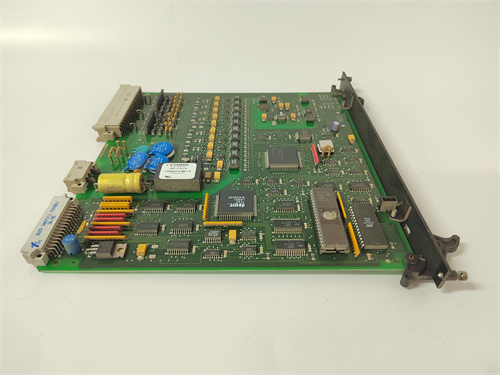
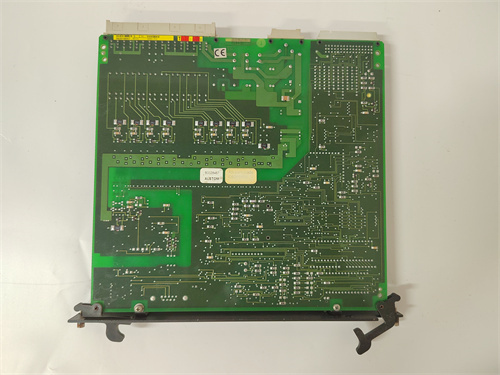
Description
Product Description
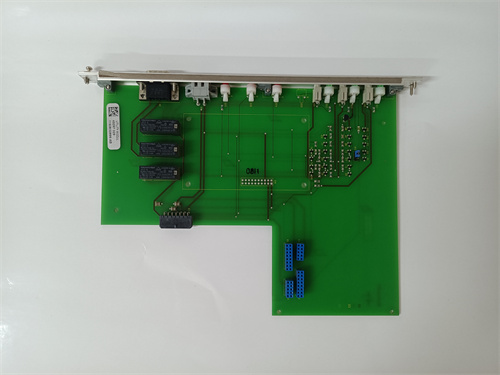
The ALSTOM AB121 is a specialized analog interface module from the Alstom (now GE Vernova) automation portfolio, specifically designed for the Alspa series of programmable controllers. This module functions as a precision analog input or analog output unit, serving as the critical bridge between the digital control system and the analog world of process sensors and actuators. The primary role of the ALSTOM AB121 is to accurately convert signals: as an input module, it transforms analog values like 4-20mA or 0-10V from field transmitters into digital data for the PLC; as an output module, it converts digital commands from the PLC into precise analog control signals for devices like valve positioners or variable speed drives.
Product Parameters
-
Model: ALSTOM AB121.
-
Function: Analog Input or Analog Output Module.
-
Signal Type: Configurable for standard industrial signals: Current (e.g., 4-20mA, 0-20mA) or Voltage (e.g., 0-10V, ±10V).
-
Number of Channels: Typically features a low channel count, such as 2, 4, or 8 channels per module.
-
Resolution: High-resolution conversion, typically 12-bit or 16-bit, ensuring fine measurement and control granularity.
-
Accuracy: Specified with high accuracy (e.g., ±0.1% of full scale) and low drift over temperature and time.
-
Isolation: Channel-to-channel and/or channel-to-backplane isolation to prevent noise coupling and ground loops.
-
Update Rate: Defines the speed at which analog values are sampled (input) or updated (output).
-
Power Supply: Powered from the Alspa PLC rack’s backplane.
-
Diagnostics: May include basic diagnostics for open circuit, short circuit, or out-of-range signals.
-
Compatibility: Designed for specific Alspa PLC racks (e.g., S40 series) and requires correct configuration in the PLC software.
Advantages and Features
-
High Precision and Stability: Engineered for accurate signal conversion, which is critical for maintaining tight control over process variables like temperature, pressure, and flow.
-
Excellent Noise Immunity: The inclusion of isolation and filtering ensures reliable operation in electrically noisy industrial environments, providing a clean and stable signal to the PLC.
-
Modular and Scalable Design: As part of the Alspa modular I/O system, the ALSTOM AB121 allows for easy expansion of analog points as process needs grow without changing the core controller.
-
Ease of Integration: Fully compatible with the Alspa programming and configuration environment, allowing for straightforward scaling, alarming, and integration of analog values into the control logic.
-
Robust Industrial Construction: Built to withstand the typical conditions of an industrial control cabinet, ensuring long-term reliability.
Application Cases in Relevant Fields
-
Process Control Loops: In chemical or pharmaceutical plants, the ALSTOM AB121 (as an input) reads signals from pH, pressure, or temperature transmitters for PID control, or (as an output) sends a speed reference to a variable frequency drive (VFD) controlling a pump.
-
Temperature and Pressure Monitoring: Used in power plant auxiliary systems to monitor bearing temperatures, lube oil pressure, or condensate levels via 4-20mA transmitters.
-
Batch and Dosing Control: In food & beverage or water treatment, provides precise analog output signals to control the stroke of metering pumps or the opening of proportional valves for chemical dosing.
-
Machine Tool Control: Interfaces with analog sensors for position or pressure feedback, or provides analog speed/torque commands to servo drives in specialized manufacturing equipment.
Comparisons with Competing Products
When compared to analog modules from universal PLC brands like Siemens (SM331/SM332) or Schneider Electric (Modicon TM3), the ALSTOM AB121 is a system-specific component for the Alspa ecosystem.
-
Guaranteed Compatibility and Performance: Its electrical characteristics and communication with the CPU are optimized for the Alspa backplane, ensuring plug-and-play operation and validated performance. Third-party modules require additional gateways and engineering.
-
Simplified Engineering Workflow: Configuration of the ALSTOM AB121 is done within the native Alspa programming software (e.g., Alspa P80/P85), providing a unified engineering environment. Integrating a different brand’s analog I/O adds another software tool and complexity.
-
Lifecycle and Support Synergy: For facilities with an existing base of Alspa controllers, using the ALSTOM AB121 aligns with a single-vendor support strategy and spare parts inventory, simplifying long-term maintenance. For a seamless fit within an Alspa system, the authentic ALSTOM AB121 is the logical and supported choice.
Selection Suggestions and Precautions
-
Confirm Input vs. Output Function: First, determine whether you need an analog input (AI) or analog output (AO) module. The ALSTOM AB121 may be produced in both variants; using the wrong type will not function.
-
Verify Signal Range and Type: Match the module’s configurable input/output ranges (e.g., 4-20mA vs. 0-10V) precisely with the specifications of your field transmitters or final control elements.
-
Check PLC Rack Compatibility and Addressing: Ensure the ALSTOM AB121 is compatible with your specific Alspa CPU and rack. Verify the available slot and configure the correct I/O address in the PLC hardware configuration.
-
Implement Proper Analog Wiring Practices: Use shielded, twisted-pair cables for all analog signals. Connect the cable shield to ground at one end only (typically in the control cabinet) to prevent ground loops and noise ingress.
-
Source from Authorized Automation Distributors: Purchase from authorized GE Vernova/Alstom distributors or reputable suppliers. Counterfeit analog modules often have poor accuracy, high drift, and inadequate isolation, leading to unreliable process control.
-
Calibrate and Scale in Software: After installation, use the PLC configuration software to correctly scale the raw analog values (e.g., 0-16383) into meaningful engineering units (e.g., 0-100°C, 0-10 bar). Periodically verify calibration against a known standard for critical loops.
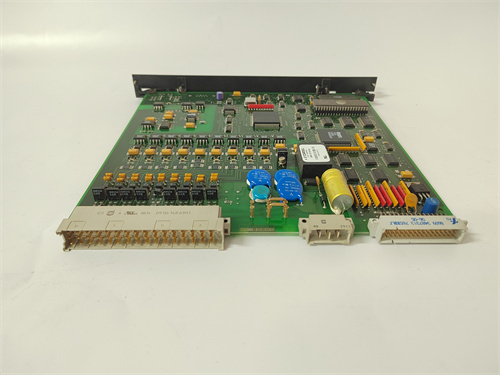
1746-NI16I AB
1746-0V16 AB
CRAFT 012-92599-53 FCS
1746-NI4 AB
1746-NI8 AB
1746-0X8 AB
1746-P3 AB FCS
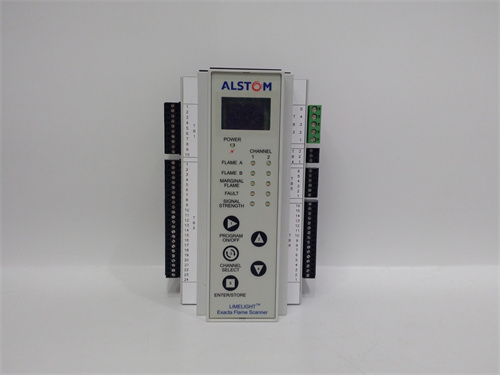
Reviews
There are no reviews yet.