
Description
Product Description
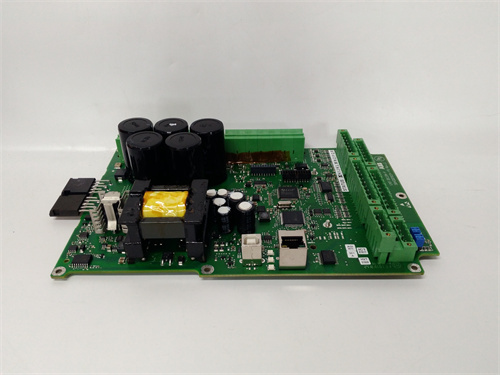
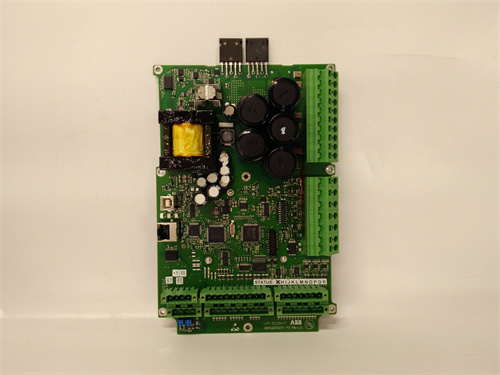
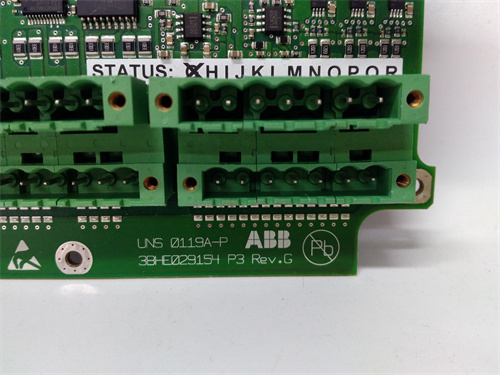
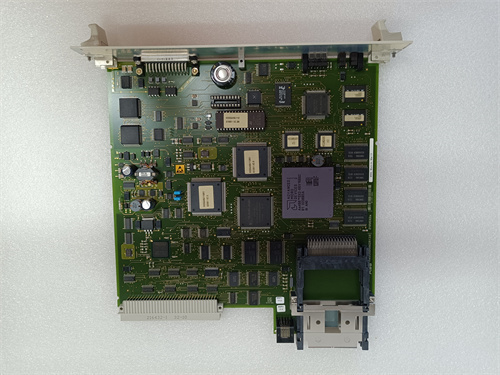
The ABB UNS0119A-P V101 is a specialized communications module or network interface unit, likely designed for ABB’s extensive range of industrial automation systems such as the AC 800M or Advant Controller series. This module, the ABB UNS0119A-P V101, serves as a critical gateway, providing a specific industrial network protocol interface (such as Profibus DP, Modbus, or a proprietary ABB network) to connect the controller with field devices, remote I/O, or higher-level supervisory systems. Its primary function is to manage the physical and data link layers of communication, ensuring reliable, deterministic data exchange between the PLC/DCS controller and the connected devices on the network. The design of the ABB UNS0119A-P V101 emphasizes robust data transmission in electrically noisy industrial environments.
Product Parameters
The technical specifications for the ABB UNS0119A-P V101 communication module are defined by its network role:
-
Module Type: Communication Interface Module (Specific protocol to be verified by datasheet, e.g., Profibus DP Slave/Master, Modbus TCP Slave).
-
Supported Protocol: Implements a specific industrial fieldbus or Ethernet-based protocol. The “UNS” and “V101” codes often indicate a particular protocol version and hardware revision.
-
Physical Interface: Typically features one or more ports, such as a 9-pin D-sub connector for RS-485 (Profibus) or an RJ45 connector for Ethernet.
-
Data Transfer Rate: Supports configurable baud rates or speeds specific to its protocol (e.g., Profibus up to 12 Mbps, Ethernet 10/100 Mbps).
-
Number of Connections: Defines the maximum number of devices, I/O points, or data areas it can manage on the network.
-
Configuration: Requires configuration via dedicated software tools (e.g., ABB Control Builder, or a specific configurator like PROFIBUS DP Configurator) to set station address, baud rate, and I/O mapping.
-
Power Supply: Powered from the controller’s backplane or may require an external auxiliary power connection.
-
Status Indicators: Equipped with LEDs for power, network activity, communication status, and errors.
Advantages and Features
The ABB UNS0119A-P V101 offers key benefits for networked automation:
-
Reliable Network Integration: The ABB UNS0119A-P V101 provides a certified and tested interface for integrating ABB controllers into standardized industrial networks, ensuring reliable and stable data exchange.
-
Extended System Reach: Enables the controller to communicate with remote I/O stations, drives, and intelligent devices located hundreds of meters away, facilitating distributed control architectures.
-
Deterministic Communication: For real-time protocols like Profibus DP, the module ensures cyclic and deterministic data exchange, which is crucial for synchronized control and fast process responses.
-
Simplified Wiring: Using a fieldbus network drastically reduces the amount of point-to-point wiring compared to traditional parallel I/O, lowering installation costs and complexity.
-
Diagnostics and Troubleshooting: The module provides network-level diagnostics, helping to identify issues like cable breaks, station failures, or configuration errors, speeding up maintenance.
Application Cases in Industry
This communication module enables connectivity in diverse automation scenarios:
-
Manufacturing Automation: Connects an AC 800M controller to a Profibus DP network of remote I/O panels, frequency drives, and HMI panels on a automotive assembly or packaging line.
-
Process Plant Integration: Used as a Profibus DP slave interface on a subsystem, allowing it to be integrated into a larger plant-wide DCS network managed by a master controller.
-
Water Treatment Plant: Facilitates communication between a central PLC and remote pump station PLCs or RTUs over a robust fieldbus network for SCADA control.
-
Material Handling: Links the main warehouse control system with conveyor motor drives, sortation controllers, and barcode scanners via a deterministic network.
-
Building Automation: Enables an ABB controller to act as a gateway, integrating HVAC subsystems using BACnet or Modbus into a unified management platform.
Comparisons with Competing Products
When compared to universal protocol gateways or communication modules from other PLC brands, the ABB UNS0119A-P V101 offers native system advantages:
-
Native Hardware and Software Integration: Unlike a standalone gateway, the ABB UNS0119A-P V101 is designed as a plug-in module for the ABB controller backplane. It is configured within the same engineering software (e.g., Control Builder), offering a seamless workflow and direct data mapping to controller variables.
-
Optimized Performance and Determinism: Its communication drivers are optimized for the specific ABB controller’s operating system, providing lower latency and more predictable performance than an external gateway with generic drivers.
-
Unified Diagnostics: Communication faults and status are integrated into the controller’s diagnostic system and can be easily displayed on the system HMI, whereas a third-party gateway requires separate diagnostic tools and interfaces.
-
Space and Cost Efficiency: As an internal module, it saves panel space and often provides a more cost-effective integration solution for a single controller compared to an external gateway device.
Selection Suggestions and Precautions
Correct selection and configuration are vital for network stability:
-
Verify Protocol and Controller Compatibility: The most critical step is to confirm that the ABB UNS0119A-P V101 supports the required network protocol (e.g., Profibus DP-V1) and is compatible with your specific ABB controller model (e.g., AC 800M CPU type) and its firmware version.
-
Match Network Specifications: Ensure the module’s electrical specifications (e.g., RS-485 termination, isolation) match the requirements of the network you are installing. Incorrect termination is a common cause of communication failures.
-
Plan the Network Configuration: Before configuration, design the network topology, assign unique station addresses to all devices, and calculate the total network load (baud rate vs. cable length, number of devices).
-
Use Correct Configuration Tools: You will need the appropriate software tool (often an add-on to Control Builder) to configure the UNS0119A-P V101 module’s parameters and I/O mapping. The standard PLC programming software alone may not be sufficient.
-
Observe ESD and Handling Precautions: Handle the module as a static-sensitive device. Ensure the controller is powered down before inserting or removing the module to prevent damage to the backplane and the module itself.
TSXP573623M PLC
CDBR-4220B
6AV3617-1J20-0AX1
IS215VCMIH2B
VT5035-17b
6GK7443-5FX01-0XE0
3HAC021127-001
A350-8001-T922/02 PLC


Reviews
There are no reviews yet.