
Description
Product Overview
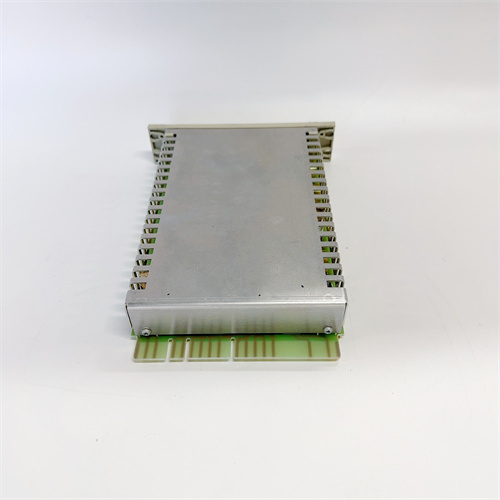
The ABB E3ES is a high-performance electronic overload relay, a critical component for motor protection and control within industrial automation systems. It represents a significant evolution from traditional thermal overload relays, offering precise, adjustable, and intelligent protection for three-phase asynchronous motors. The core function of the ABB E3ES is to continuously monitor motor current and protect against damaging conditions such as overload, phase loss (unbalance), and jamming (locked rotor). Its electronic design provides superior accuracy, repeatability, and a wide range of configurable settings compared to bimetallic counterparts. The ABB E3ES is typically installed in combination with a contactor to form a coordinated motor starter, playing a vital role in safeguarding expensive motors, minimizing production downtime, and enhancing overall system safety. The adaptability and reliability of the ABB E3ES make it a preferred choice for engineers designing robust motor control circuits.
Product Parameters and Specifications
-
Manufacturer: ABB
-
Product Series: Electronic Overload Relay (part of the ES/EF series family).
-
Protection Functions:
-
Overload Protection: Adjustable trip class (e.g., Class 5, 10, 15, 20, 30) and precise current setting (I_x) via a rotary dial or digital interface.
-
Phase Unbalance/Loss Protection: Detects and trips on significant imbalance or loss of a phase.
-
Locked Rotor / Jam Protection: Short-time protection against motor stalling.
-
Ground Fault Protection: Available on advanced models (often denoted by a suffix like ‘P’).
-
-
Current Range: Covers a wide range of motor full-load currents (FLC), typically from fractions of an amp up to several hundred amps, achieved through separate rating plates or sensor modules.
-
Control Voltage: Available for various AC and DC control supply voltages (e.g., 24V AC/DC, 110-120V AC, 220-240V AC) to power the relay’s electronics.
-
Auxiliary Contacts: Provides at least one normally open (NO) and one normally closed (NC) changeover contact for signaling trip status to the PLC or control circuit.
-
Communication Capability: Advanced versions can be equipped with communication modules (e.g., for PROFIBUS DP, Modbus RTU) for integration into networked control systems, allowing for remote monitoring, parameter setting, and diagnostics.
-
Mounting: Designed for direct snap-on mounting to compatible ABB contactors (like the A-line) or for DIN-rail mounting with a separate base.
Advantages and Key Features
-
Precise and Adjustable Protection: The electronic design of the ABB E3ES allows for exact setting of the motor full-load current and selection of the trip class. This precision ensures optimal motor protection without nuisance tripping, maximizing both motor life and process uptime.
-
Advanced Diagnostic Information: Beyond simple tripping, it can provide valuable diagnostic data. The trip cause (overload, phase loss, etc.) is often indicated via an LED display or communicated over a network, enabling faster troubleshooting and root-cause analysis.
-
Excellent Ambient Temperature Compensation: Unlike thermal relays whose trip characteristics vary with ambient temperature, the ABB E3ES maintains consistent protection performance across a wide temperature range, ensuring reliable operation in non-climate-controlled environments.
-
Communication Ready: The platform is designed for Industry 4.0 integration. Adding a communication module transforms the ABB E3ES from a standalone protector into an intelligent node on the plant network, feeding motor health data directly to SCADA or maintenance systems.
-
Compact and Service-Friendly: Its modular design allows for easy installation, replacement, and configuration without rewiring the power circuit when using a separate base unit.
Application Case Studies
-
Water Treatment Plant Pump Control: Multiple ABB E3ES relays protect raw water intake and chemical dosing pumps. Their phase loss protection is critical, as a single-phased pump will quickly overheat. The adjustable trip class allows for coordination with the pump’s high starting current during valve opening sequences.
-
Conveyor System in a Mining Operation: Protecting motors on long belt conveyors, the ABB E3ES is set with a Class 30 trip characteristic to allow for extended starting times under heavy load. Its jam protection can detect a seized roller and trip the motor before the belt is damaged.
-
HVAC System Fan Control: In a building’s air handling unit, the overload relay protects the large supply fan motor. A communicating version of the E3ES sends motor current and operational status to the Building Management System (BMS) for energy monitoring and predictive maintenance alerts.
Comparison with Competing Products
| Feature | ABB E3ES | Siemens 3RU Sirius (Thermal) / 3RB (Electronic) | Schneider Electric TeSys LRD/T (Thermal) / LR9F (Electronic) |
|---|---|---|---|
| Technology | Electronic, with thermal memory modeling. | Offers both traditional thermal (3RU) and advanced electronic (3RB) versions. | Offers both traditional thermal (LRD) and advanced electronic (LR9 F) versions. |
| Setting Precision | High precision with digital dial or communication. | Thermal: coarse adjustment. Electronic: high precision. | Thermal: coarse adjustment. Electronic: high precision. |
| Trip Indication | Clear LED indicators for status and trip cause. | Thermal: mechanical flag. Electronic: LED diagnostics. | Thermal: mechanical flag. Electronic: LED display. |
| Communication | Available via add-on modules for major fieldbuses. | Electronic versions offer integrated or modular communication. | Electronic versions offer integrated communication (e.g., TeSys U). |
| Integration | Optimized for snap-on to ABB contactors, part of ABB’s motor starter ecosystem. | Optimized for Siemens SIRIUS contactors and TIA Portal integration. | Optimized for Schneider contactors and integration within EcoStruxure. |
| Key Strength | Excellent balance of precise protection, diagnostics, and a clear upgrade path to connectivity within ABB’s portfolio. | Strong brand recognition, wide availability, and deep integration for Siemens-centric panels. | Strong global presence, user-friendly design, and good integration with Schneider VSDs and software. |
Selection Suggestions and Important Notes
-
Selection Suggestion:
-
Choose the ABB E3ES over a thermal relay when motor protection accuracy, diagnostic feedback, and ambient temperature stability are important for the application.
-
It is the ideal choice for new panel builds using ABB components or for upgrading existing installations to gain intelligent motor protection features.
-
For projects planning for future IIoT/Industry 4.0 integration, select the communicable version of the ABB E3ES from the outset, even if the network won’t be connected immediately.
-
-
Important Notes:
-
Accurate Motor Current Setting: The single most critical setting is the motor’s full-load current (FLC). This value must be taken from the motor nameplate, not estimated. An incorrect setting voids effective protection.
-
Trip Class Selection: Choose the trip class (e.g., 10, 20, 30) based on the motor’s starting characteristics and the process’s allowable starting time. A class that is too low will cause nuisance trips; one that is too high may not provide adequate protection.
-
Proper Sizing of Current Sensors: For higher current ranges, the ABB E3ES uses separate current sensors or rating plugs. Ensure these are correctly matched to the relay’s model and the motor’s actual current.
-
Control Power Supply: Verify that the control supply voltage of the selected E3ES model matches the available control circuit voltage in the panel.
-
Testing and Commissioning: After installation, it is good practice to test the tripping function of the relay (using the test button) and verify that the trip signal is correctly received by the PLC or control system.
-
3HAC7998-1 PLC
3HNA011999-001 PLC
3HNA011784-001 ABB
3HAC17339-1 ABB PLC
.jpg)


Reviews
There are no reviews yet.