
Description
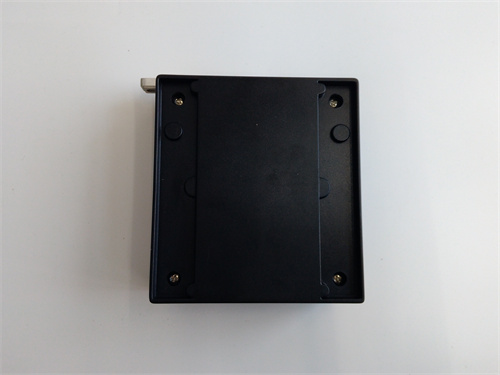
ABB DSQC365 – Digital I/O Unit for Robotics
Product Description
The ABB DSQC365 is a compact and versatile digital input/output module designed specifically for ABB’s industrial robot controllers, such as those in the IRC5 and S4C+ series. This module expands the controller’s capacity to interface with peripheral equipment, enabling the robot to interact with sensors, grippers, conveyors, and safety devices. The ABB DSQC365 provides a reliable and standardized method for adding discrete signal points directly on the robot’s DeviceNet network. By integrating a DSQC365 module, system integrators can create more complex and responsive robotic workcells.
Product Parameters
-
Product Family: DSQC 300 series I/O module for ABB robots.
-
I/O Type: Combination Digital Input and Digital Output module.
-
I/O Count: Typically configured as 8 digital inputs and 8 digital outputs.
-
Input Type: 24 VDC sinking or sourcing, electrically isolated.
-
Output Type: 24 VDC transistor outputs, typically sourcing.
-
Communication Interface: DeviceNet, using a standard 5-pin micro-style connector.
-
Module Addressing: DeviceNet node address set via rotary switches on the module.
-
Mounting: Designed for direct mounting within the robot controller cabinet or on a DIN rail in an external junction box.
-
Configuration: Configured using ABB’s RobotStudio or directly via the robot teach pendant.
Advantages and Features
-
Native Robot Integration: Designed, tested, and supported by ABB for seamless integration with their robot controllers, ensuring reliable communication and easy configuration.
-
Compact Form Factor: Its small size allows for flexible mounting inside the often space-constrained robot controller cabinet.
-
Standardized DeviceNet Interface: Utilizes the common DeviceNet protocol, which simplifies wiring through a single cable trunkline and allows for easy addition of other DeviceNet devices in the cell.
-
Flexible I/O Configuration: The mix of inputs and outputs in one unit is ideal for controlling typical end-of-arm tooling (e.g., gripper open/close, vacuum detection) and receiving signals from cell sensors.
-
Robust Industrial Design: Built to withstand the electrical noise and vibration present in industrial automation environments.
-
Easy Diagnostics: Status LEDs provide clear indication of power, network communication, and I/O state for simplified troubleshooting.
Application Cases in Various Fields
-
Automotive Assembly: Used to control pneumatic grippers for part handling, read sensor signals for part presence at a fixture, and interface with weld gun controllers.
-
Machine Tending: Connects to CNC machine door interlocks, receives “cycle complete” signals from the machine, and controls part pick/place mechanisms.
-
Packaging & Palletizing: Interfaces with conveyor photo-eyes to detect product arrival, controls stoppers/diverters, and signals to a wrapper or palletizer.
-
Arc Welding: Provides outputs to control weld wire feed, gas solenoids, and inputs to read from touch-sense or seam-tracking sensors.
-
General Material Handling: Used to integrate safety mats, light curtains (muted signals), and control indicator lights within the robotic workcell.
Comparisons with Competing Products
Competing products include generic DeviceNet I/O blocks from manufacturers like Rockwell Automation (Point I/O) or IFM. The key advantage of the ABB DSQC365 is its plug-and-play compatibility within the ABB robot ecosystem. While generic blocks may be less expensive, they require additional configuration steps, may not have pre-defined DeviceNet Electronic Data Sheets (EDS) recognized by RobotStudio, and lack ABB’s direct firmware validation. Using the DSQC365 guarantees full support from ABB and reduces integration risk and commissioning time for robotic applications.
Selection Suggestions and Precautions
-
Controller Compatibility: Verify the DSQC365 is supported by your specific robot controller model (e.g., IRC5, S4C+) and its system software version.
-
DeviceNet Network Planning: Ensure the robot controller is equipped with a DeviceNet master/scanner option (e.g., DSQC 1000). Plan the DeviceNet network topology, addressing, and cable length according to specification.
-
Address Setting: Each DSQC365 on the same DeviceNet network must have a unique node address set via its rotary switches. Document this addressing scheme clearly.
-
Power Supply Requirements: The module and its connected field devices require a clean, regulated 24VDC power source. Do not use the robot controller’s internal logic power for high-current outputs.
-
I/O Specification Matching: Confirm that the input type (sink/source) matches your sensor outputs, and that the output current rating is sufficient for the connected loads (e.g., solenoid valves, relay coils).
-
Configuration File: The I/O signals must be defined and mapped within the robot’s system configuration file using RobotStudio or the teach pendant. This step is mandatory for the robot program to access the signals.
330180-91-00
330130-045-00-00
330130-040-00-00
3500/50M 286566-02
177230-01-01-05
990-04-50-01-00 PLC


Reviews
There are no reviews yet.