
Description
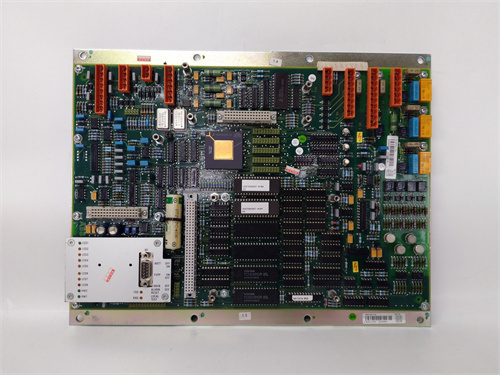
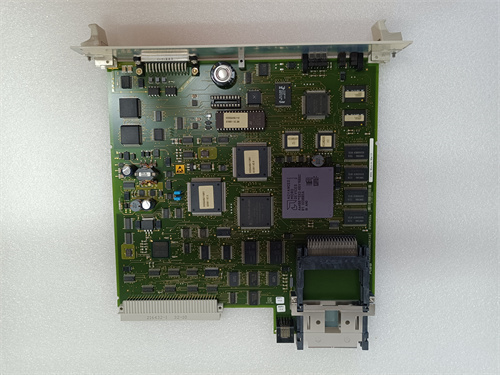
ABB DC523 – Touch Control Panel Module
Product Description
The ABB DC523 is a sophisticated, touch-screen operator panel module designed as part of the Advant Controller Builder (ACB) or MasterPiece 200 series of automation systems. This module serves as the primary human-machine interface (HMI), providing operators with visualization, data entry, alarm acknowledgment, and control functionality for connected processes. Integrating the ABB DC523 into a control panel delivers a centralized and intuitive window into the automation system, enhancing operational awareness and efficiency. As a core interface component, the DC523 facilitates both local and supervisory control, making it a vital link between plant personnel and the underlying controller logic.
Product Parameters
-
Product Family: Advant Controller Builder / MasterPiece 200 Operator Panel.
-
Display Type: Monochrome or grayscale LCD touch screen (specific to the variant).
-
Screen Size: Typically a compact, panel-mounted screen (e.g., 5.7-inch diagonal).
-
Communication Interface: Connects directly to the ACB system via a proprietary bus (e.g., DS bus) or serial connection (RS-232/485).
-
Memory: Contains internal memory for storing display pages, faceplates, and alarm lists.
-
Programming: Configured using dedicated ABB engineering software, such as ABB Panel Builder or Advant Station.
-
Enclosure Rating: Designed for front-of-panel mounting in an industrial enclosure (typically IP54 or similar for the front face).
Advantages and Features
-
Integrated System Compatibility: Offers seamless, plug-and-play integration with the ACB/MP200 control system, ensuring reliable communication and coordinated functionality with controllers and I/O.
-
Dedicated Faceplate Control: Often supports pre-configured faceplates for common process objects (e.g., valves, motors, PID loops), enabling rapid deployment and consistent operator experience.
-
Robust Industrial Design: Built to withstand the rigors of the plant floor, including resistance to vibration, electrical noise, and typical industrial temperature ranges.
-
Local Control Capability: Allows for critical operator interventions, mode changes, and setpoint adjustments directly at the machine or process unit, independent of a higher-level SCADA system.
-
Alarm Management: Provides a local point for alarm display, acknowledgment, and silencing, which is crucial for immediate operator response.
-
Legacy System Support: Serves as a key spare part for maintaining and supporting long-lifecycle ACB systems, ensuring continued operator access.
Application Cases in Various Fields
-
Chemical Batch Processing: Mounted on a reactor skid to allow operators to locally start sequences, view temperatures and pressures, acknowledge alarms, and enter batch-specific parameters.
-
Water Treatment Plants: Used on control panels for filter beds or chemical dosing stations to provide local status, manual override controls, and trend displays for key process variables.
-
Pharmaceutical Manufacturing: Provides a validated interface on filling or packaging machinery for operator checks, manual interventions, and logging of process events.
-
Power Plant Auxiliaries: Installed on local control panels for boiler feed pump systems or air compressors, giving maintenance personnel a direct interface for testing and troubleshooting.
-
Manufacturing Cells: Serves as the primary operator station for a standalone robotic cell or assembly station, displaying cycle status, fault messages, and production counts.
Comparisons with Competing Products
Competing products include other proprietary operator panels of the era, such as the Siemens OP7/OP17 or Rockwell Allen-Bradley PanelView 300/600. The primary advantage of the ABB DC523 is its native, high-level integration with the ABB ACB and MasterPiece 200 controller families. While modern, standalone HMIs (e.g., from Beijer or Weintek) offer more features and connectivity, they require significant configuration and protocol gateway setup to communicate with the legacy ACB system. The DC523 provides guaranteed functionality, pre-defined communication drivers, and a form factor designed for the original system cabinet, making it the optimal choice for like-for-like replacement and system integrity.
Selection Suggestions and Precautions
-
System Compatibility Verification: This is the most critical step. Confirm the DC523 is compatible with the specific version of the ACB or MasterPiece 200 system in use. This includes the controller model (e.g., AC 410, AC 450) and the system software version.
-
Software and Configuration: Ensure access to the original configuration software (e.g., ABB Panel Builder) and the source application files (*.apf) for the existing panel. Without these, a new DC523 cannot be configured, and a replacement may require a full HMI reprogramming.
-
Display Variant: Clarify the required display type (monochrome, grayscale) and resolution, as different variants of the DC523 may exist.
-
Communication Port: Verify the physical communication connection (bus connector type, serial port) matches the available port on the controller or communication module.
-
Spare Part Strategy: For critical processes, consider keeping a pre-configured ABB DC523 as a cold spare to minimize downtime in case of a failure.
-
Obsolescence Planning: As a legacy product, evaluate the long-term support strategy. For major upgrades, migrating to a modern ABB or third-party HMI with a protocol converter may be a more sustainable long-term option.
128229-01
330180-91-05 DCSPLC
330180-50-05 DCS
330180-080-00-00
330101-02-78-05-02-00 DCS



Reviews
There are no reviews yet.