
Description
Product Description
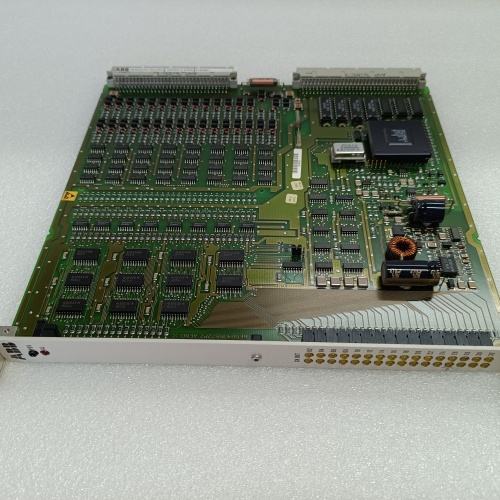
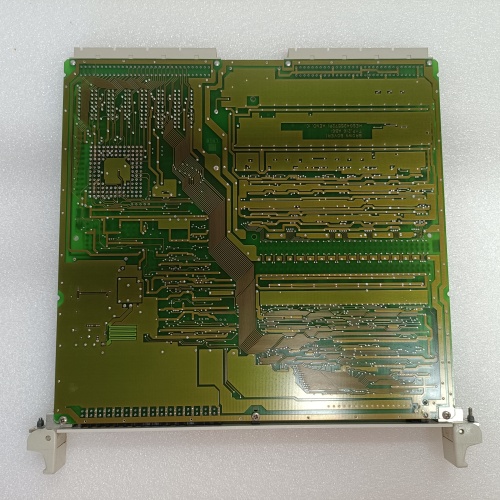
The ABB 216AB61 is a high-performance, analog output module from the renowned Advant Master (AC 400) series of process automation controllers. This module serves as a critical interface, enabling the controller to send precise, variable commands to field actuators and final control elements. The primary function of the ABB 216AB61 is to convert digital control signals generated by the Advant Master controller’s processor into stable, industry-standard analog current outputs. These outputs are used to control devices such as modulating valves, variable frequency drives (VFDs), and positioning systems, allowing for exact regulation of flow, pressure, level, and other continuous process variables. The design of the 216AB61 emphasizes signal integrity and reliability in continuous process environments, making it a trusted component in complex industrial control loops.
Technical Parameters and Specifications
-
Module Type: Analog Output (AO) Module.
-
Output Channels: 2 independent, galvanically isolated output channels.
-
Output Signal: 4 to 20 mA DC, with passive (sink) or active (source) capability, depending on configuration and wiring.
-
Load Compliance: Capable of driving a typical loop load of up to 750 ohms, ensuring compatibility with a wide range of field devices.
-
Resolution: High resolution (typically 12-bit or better) for precise control.
-
Accuracy: High typical accuracy, often within ±0.1% of full scale under reference conditions.
-
Update Time: Fast update rate to support responsive control loops.
-
Isolation: Channel-to-channel and channel-to-bus galvanic isolation for noise immunity and safety.
-
Diagnostics: Features module and channel-level diagnostics, including wire-break detection on the current loop and output stage faults.
-
Connection: Via a front-mounted, removable terminal block for easy wiring.
-
Power Supply: Powered directly from the Advant Master field bus (AF 100) or module rack.
-
Redundancy Support: Can be configured in redundant pairs within the Advant Master system architecture to ensure maximum availability for critical control loops.
Advantages and Key Features
-
High Precision and Stability: The ABB 216AB61 is engineered for exceptional signal stability and accuracy, which is fundamental for maintaining tight control over critical process variables and ensuring product quality and efficiency.
-
Dual-Channel Efficiency: Providing two fully isolated output channels in a single module optimizes space within the controller rack and offers a cost-effective solution for controlling multiple loops.
-
Robust Design for Harsh Environments: Built to the high standards of the Advant series, it is designed for reliable, long-term operation in industrial settings with electrical noise, vibration, and wide temperature ranges.
-
Comprehensive Diagnostics: Integrated diagnostic capabilities allow for proactive maintenance by detecting issues such as open circuits or overloads, helping to prevent unscheduled process downtime.
-
Seamless System Integration: As a native component of the ABB Advant Master (AC 400) ecosystem, the 216AB61 offers plug-and-play compatibility and is easily configured and monitored using ABB’s engineering tools, ensuring predictable performance and simplified lifecycle management.
Application Cases in Various Fields
-
Chemical & Petrochemical Processing: Precisely controlling the stroke of modulating valves on reactor feed lines or distillation columns to regulate temperature, pressure, and flow rates. The accuracy of the ABB 216AB61 is key to process yield and safety.
-
Oil & Gas Production: Managing the position of choke valves on wellheads or the speed of export pumps via 4-20 mA signals to VFDs, ensuring optimal production flow and pipeline pressure.
-
Pulp & Paper Manufacturing: Controlling the consistency of stock flow to headboxes or the dosage of chemicals in bleaching stages, where precise analog control directly impacts product quality and resource consumption.
-
Power Plant Auxiliary Systems: Regulating feedwater control valves, damper actuators, or sootblower sequences in boiler control systems, leveraging the reliability of the 216AB61 for continuous plant operation.
Comparison with Competing Products
When compared to analog output modules from contemporary systems like Siemens SIMATIC S5/S7 (e.g., SM432) or legacy Foxboro I/A Series components, the ABB 216AB61 demonstrates specific strengths:
-
Ecosystem-Centric Performance: Its primary advantage is its optimized performance and deep integration within the ABB Advant Master and MOD 300 systems, offering reliable operation and support that generic third-party modules may not match.
-
Architectural Philosophy: The 216AB61 is part of a distributed, fieldbus-based I/O architecture (AF 100), which was advanced for its time. This contrasts with the more centralized backplane I/O of some contemporary PLC systems.
-
Focus on Process Industries: The design and diagnostics of the Advant series, including the 216AB61, are heavily tailored for the demands of continuous and batch process control, whereas competitors’ modules of the era may have had a broader industrial focus.
-
Redundancy Features: Its design for use in high-availability redundant configurations is a strong feature for critical process control, an area where some competing modules required external logic or complex setup.
Selection Suggestions and Precautions
-
Verify System Compatibility: The ABB 216AB61 is designed for the Advant Master (AC 400) platform. Confirm compatibility with your specific controller model (e.g., AC 410, AC 450) and the firmware/software version of your system.
-
Configure Output Type Correctly: Ensure the module is correctly configured in the control software for the desired output behavior (e.g., active vs. passive output, fail-safe state) to match the requirements of the connected field device.
-
Loop Load and Power Supply: Calculate the total loop resistance (wire + field device) for each channel to ensure it does not exceed the module’s load compliance limit. Verify that the rack’s power supply can support all active outputs.
-
Wiring and Grounding Practices: Use proper shielded, twisted-pair cables for analog outputs. Follow ABB’s installation guidelines for grounding the shield (typically at the system marshalling cabinet) to prevent ground loops and ensure signal integrity.
-
Leverage Diagnostics: Integrate the module’s diagnostic bits (wire break, fault) into the control program or HMI alarm system to enable rapid operator awareness and maintenance response to output channel issues.
-
Consider Obsolescence and Spares: The Advant Master series is a mature platform. When procuring the ABB 216AB61, verify lead times and long-term availability. For operational plants, maintaining a strategic spare parts inventory is highly recommended to mitigate downtime risks.
PM861AK02 PLC
PM864AK01 ABB PLC
PM864AK02 ABB PLC
PM866K01 PLC ABB
PM866K02 DCS ABB
SB821 ABB PLC




Reviews
There are no reviews yet.