
Description
Product Description
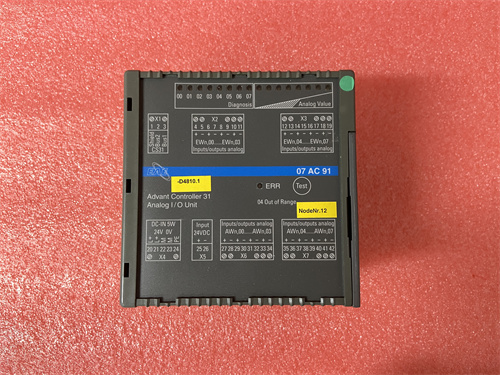
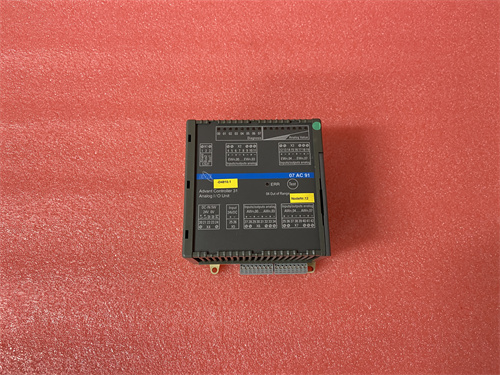
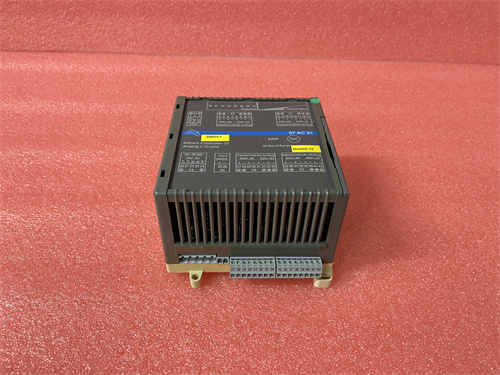
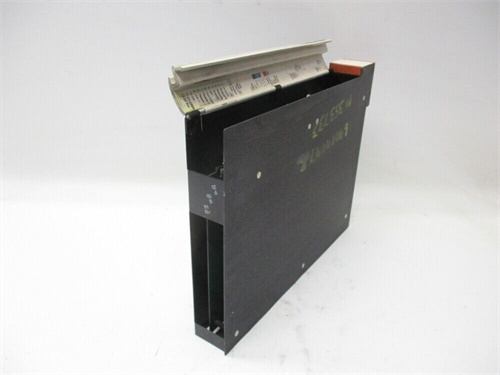
The ABB 07AC91 is a central processing unit (CPU) module for the highly regarded and robust AC 800M controller family, specifically belonging to the PM802F series. This controller is engineered for demanding, medium to large-scale automation applications where advanced control, high reliability, and deterministic performance are paramount. As the core computational and control unit, the 07AC91 orchestrates the execution of user programs, manages communication with I/O systems, and coordinates data exchange across networks. The design of the ABB 07AC91 emphasizes processing power and functional safety, making it a cornerstone for both standard and safety-instrumented control loops within the same hardware platform. Its deployment is critical in industries where process uptime and safety are inseparable from operational success.
Technical Parameters and Specifications
-
Product Family: AC 800M, Safety CPU PM802F.
-
Processor & Performance: Features a powerful processor capable of handling complex control algorithms and extensive I/O configurations typical of large processes.
-
Memory: Equipped with significant user program memory and data memory. Memory size is expandable using dedicated memory extension modules.
-
Integrated Interfaces: Includes multiple communication ports, typically:
-
An RS-232C service port for engineering and maintenance.
-
An Ethernet port (TCP/IP) for plant network connectivity.
-
-
Safety Integrity Level: Certified for use in Safety Instrumented Systems (SIS), capable of achieving SIL 3 according to IEC 61508 / IEC 61511 standards when used in a certified safety architecture.
-
Redundancy Support: Can be configured in a hardware-redundant (H-R) pair with a partner CPU to ensure maximum system availability and fault tolerance.
-
Programming: Programmed and configured using ABB’s Control Builder M engineering tool, supporting multiple languages of the IEC 61131-3 standard, including Function Block Diagram (FBD), Ladder Diagram (LD), and Structured Text (ST).
-
Operating Temperature: Designed for a standard industrial temperature range (e.g., 0 to 60°C).
Advantages and Key Features
-
Dual-Use Safety & Standard Control: A primary advantage of the ABB 07AC91 is its ability to execute both standard process control and safety instrumented functions in a single controller, simplifying architecture and reducing lifecycle costs.
-
High Performance and Determinism: The module delivers the high-speed, deterministic scan times required for fast processes and complex sequential control, ensuring the 07AC91 meets rigorous performance demands.
-
Certified Safety Platform: Its SIL 3 certification provides a proven, rigorously tested foundation for implementing safety functions, offering peace of mind and compliance with international safety standards.
-
Hardware Redundancy: Support for true, bumpless hardware redundancy is a critical feature for high-availability applications, minimizing the risk of a single point of failure at the controller level.
-
Scalability within AC 800M: As part of the AC 800M family, the 07AC91 benefits from seamless integration with a vast range of I/O, communication, and ancillary modules, allowing systems to scale efficiently.
Application Cases in Various Fields
-
Oil & Gas (Platforms, Refineries): Used for integrated process control and emergency shutdown (ESD) or fire and gas (F&G) systems, where the 07AC91 manages both continuous control and critical safety interlocks on production trains or separation units.
-
Chemical & Petrochemical Plants: Implements batch control, reactor sequencing, and interlock management for high-value processes, where its safety certification is used for reactor overpressure protection or burner management systems (BMS).
-
Power Generation: Controls auxiliary systems in thermal power plants or manages balance-of-plant functions, utilizing the ABB 07AC91‘s reliability for turbine lube oil systems or condenser control, often in a redundant configuration.
-
Pharmaceutical Manufacturing: Manages complex, validated processes where its deterministic performance ensures repeatable batch execution, and its data integrity supports regulatory compliance (e.g., FDA 21 CFR Part 11).
Comparison with Competing Products
Compared to safety controllers from competitors like Siemens (S7-400F/FH), Rockwell Automation (ControlLogix with GuardLogix), or Honeywell (Safety Manager), the ABB 07AC91 holds its ground with specific distinctions:
-
Integrated Engineering Environment: Control Builder M provides a single tool for both standard and safety programming for the 07AC91, whereas some competitors require separate, specialized software for safety logic.
-
AC 800M Ecosystem Strength: It leverages the open architecture and extensive library of pre-certified function blocks of the AC 800M platform, which can accelerate project development for users already invested in this ecosystem.
-
Focus on Process Industries: The 07AC91 is particularly optimized and proven in continuous and batch process industries, compared to some competitors that may have stronger roots in discrete or machine safety.
-
Redundancy Philosophy: Its hardware redundancy implementation is a core, well-documented feature, offering a different approach compared to software-based redundancy or specific paired controller models from other vendors.
Selection Suggestions and Precautions
-
Clear Safety Requirements Definition: Before selecting the ABB 07AC91, clearly define the Safety Integrity Level (SIL) requirements of your application. Engage with safety lifecycle methodologies to ensure the entire system design, including sensors and final elements, meets the target SIL.
-
Engineering Tool Expertise: Ensure your engineering team is trained and proficient in using ABB’s Control Builder M software, including its safety application programming and management features.
-
Redundancy Necessity: Evaluate if your process justifies the cost and complexity of a redundant CPU configuration. For applications where planned downtime is acceptable or process consequences of a stop are minor, a single 07AC91 may suffice.
-
I/O and Network Architecture: Carefully plan the associated I/O system (S800 I/O) and network architecture (e.g., PROFIBUS, PROFINET). The performance and safety certification of these components are integral to the overall system’s capability and certification.
-
Memory Planning: Estimate the required program and data memory early in the design phase. For large or complex applications, factor in the potential need for a memory extension module to avoid constraints during development.
-
Lifecycle and Support: Verify the long-term availability and support lifecycle for the 07AC91 with ABB, especially for greenfield projects with an expected operational life of decades. Plan for spare parts strategy accordingly.
MVI56-ADMNET PROSOFT
MVI56-MNET PLC
MVI56-MNETC PLC
MVI56-MNETCR PLC
MVI56-MNETR PROSOFT
.jpg)



Reviews
There are no reviews yet.