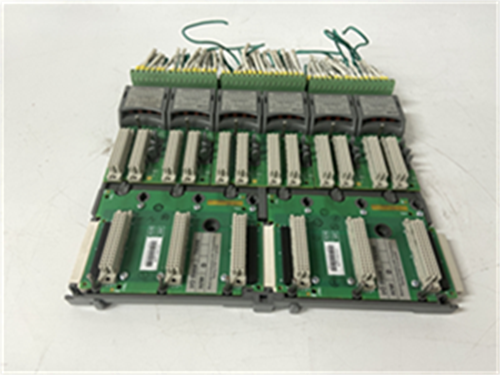
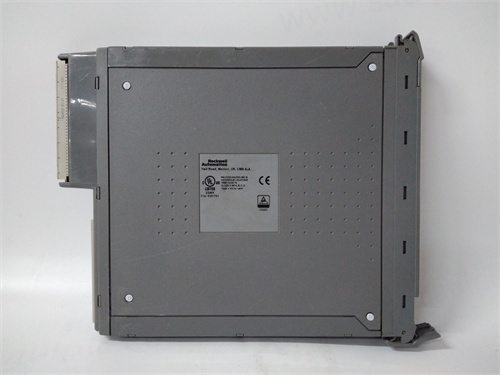
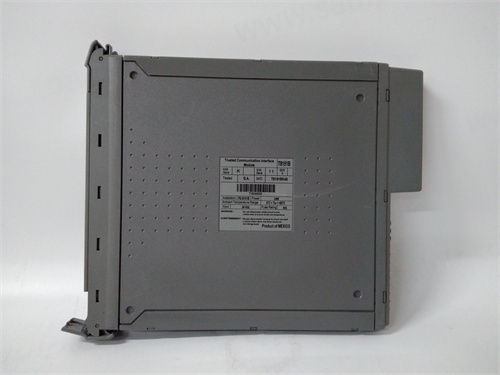
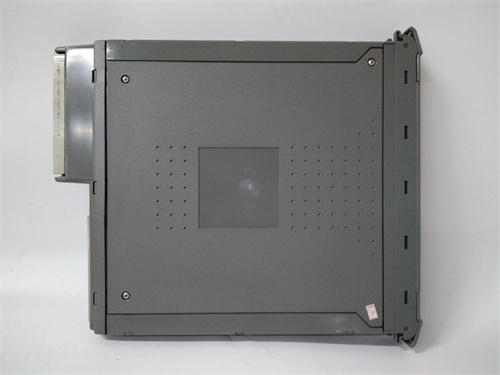
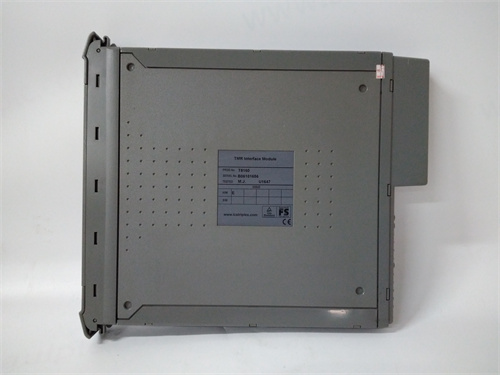
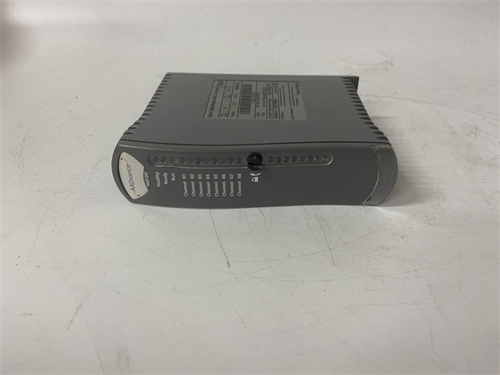
ICS TRIPLEX 9832 is a highly advanced and reliable automation component developed by ICS TRIPLEX, a well-respected company in the field of industrial automation and safety systems.
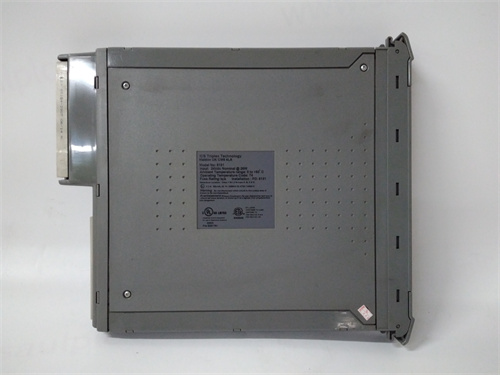
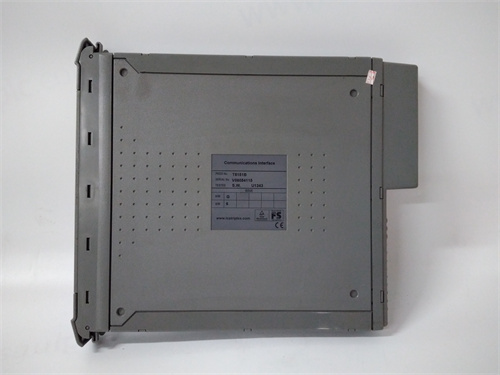
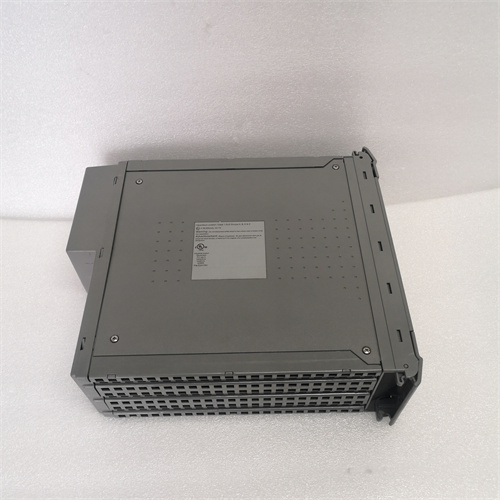
ICS TRIPLEX T8151B(www.sxrsrobot.com) is a crucial PLC spare part from the renowned ICS TRIPLEX brand in the industrial automation field. This component is specifically engineered to play a vital role in enhancing the safety and control capabilities within Programmable Logic Controller (PLC) systems.
The core function of the ICS TRIPLEX T8151B is to serve as a high-reliability digital input module. It is designed to receive digital signals from various field devices such as switches, sensors, and relays. These digital inputs are then processed and transferred to the PLC’s central processing unit for further analysis and control actions. The T8151B is capable of accurately detecting the state of these digital signals (on or off) and providing reliable data to the control system, enabling precise monitoring and control of industrial processes.
Compatibility: When selecting ICS TRIPLEX T8110B, ensure that it is compatible with your existing PLC system, sensors, and actuators. Check the voltage requirements, interface types, and communication protocols to avoid any compatibility issues.
Installation Environment: Consider the environmental conditions where ICS TRIPLEX T8110B will be installed. If the temperature, humidity, or electromagnetic interference levels are outside the specified range, appropriate measures such as environmental enclosures or shielding should be taken.
Budget: Evaluate the cost of ICS TRIPLEX T8110B in relation to your budget. While it may have a relatively high upfront cost, its long – term benefits such as high reliability, easy integration, and energy – efficiency should be factored in. A more expensive but high – performance component like ICS TRIPLEX T8110B can often result in lower overall costs over its lifespan.
7. Precautions
Installation: Follow the manufacturer’s installation instructions carefully. Ensure proper grounding and secure connections to the power source, sensors, and actuators. Incorrect installation can lead to malfunctions or safety hazards.
Safety: Before performing any maintenance or repair work on ICS TRIPLEX T8110B, disconnect it from the power source to avoid the risk of electric shock.
Maintenance: Regularly inspect ICS TRIPLEX T8110B for signs of wear, dust accumulation, or moisture ingress. Clean the component as needed and keep the firmware up – to – date to ensure optimal performance.
The ICS TRIPLEX T8151B PLC spare part is suitable for various industries, including manufacturing, energy, and process control. Its high precision and real-time data processing capabilities make it ideal for applications requiring precise control and monitoring. In one specific case study, a large manufacturing plant utilized the ICS TRIPLEX T8151B to automate its production lines. The PLC provided seamless control over various machinery and processes, leading to improved product quality and a significant increase in productivity.
5. Competitive Comparison
Compared to other PLC spare parts in the market, the ICS TRIPLEX T8151B offers superior reliability, ease of integration, and advanced diagnostic capabilities. Its high-performance processor and ample memory ensure smooth and efficient operation, even in demanding industrial environments. Additionally, the PLC’s compact design and energy efficiency set it apart from similar models, making it an ideal choice for organizations seeking to optimize their automation processes while minimizing operational costs.
6. Selection Advice
When selecting the ICS TRIPLEX T8151B PLC spare part, consider factors such as compatibility with existing systems, processing requirements, and budget. Ensure that the PLC meets the specific needs of your application, including control logic complexity and communication needs. Additionally, consider the long-term benefits of high reliability and ease of maintenance when making your decision. The ICS TRIPLEX T8151B is an excellent choice for applications requiring advanced processing capabilities, real-time data analysis, and robust performance.
The ICS TRIPLEX T8160 PLC spare part is suitable for various industries, including manufacturing, energy, and process control. Its high precision and real-time data processing capabilities make it ideal for applications requiring precise control and monitoring. In one specific case study, a large oil and gas company utilized the ICS TRIPLEX T8160 to automate its refining processes. The PLC provided seamless control over various refining stages, leading to improved product quality and reduced operational costs.
5. Competitive Comparison
Compared to other PLC spare parts in the market, the ICS TRIPLEX T8160 offers superior reliability, ease of integration, and advanced diagnostic capabilities. Its high-performance processor and ample memory ensure smooth and efficient operation, even in demanding industrial environments. Additionally, the PLC’s compact design and energy efficiency set it apart from similar models, making it an ideal choice for organizations seeking to optimize their automation processes while minimizing operational costs.
6. Selection Advice
When selecting the ICS TRIPLEX T8160 PLC spare part, consider factors such as compatibility with existing systems, processing requirements, and budget. Ensure that the PLC meets the specific needs of your application, including control logic complexity and communication needs. Additionally, consider the long-term benefits of high reliability and ease of maintenance when making your decision. The ICS TRIPLEX T8160 is an excellent choice for applications requiring advanced processing capabilities, real-time data analysis, and robust performance.
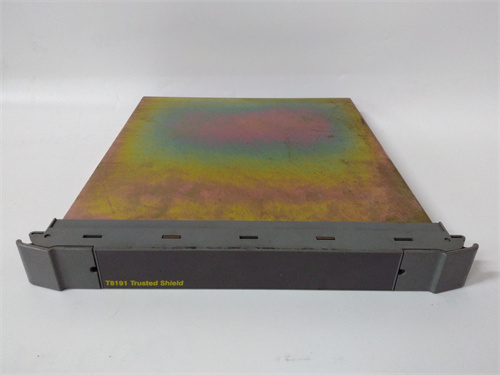
Application Areas: ICS TRIPLEX T8191 is suitable for a wide range of industries, including manufacturing, energy, and automation control. In manufacturing, it can be used in industries such as electronics, textiles, and automotive. In the energy sector, it can be applied in power plants, oil and gas platforms, and renewable energy installations. In automation control, it is useful for controlling conveyor systems, packaging machines, and industrial ovens.
Application Case: In a solar power plant, ICS TRIPLEX T8191 was used to control the tracking system of solar panels. It continuously monitored the position of the sun and adjusted the angle of the solar panels accordingly. As a result, the power generation efficiency of the solar power plant increased by 15%, and the overall energy output improved significantly.
5. Competitor Comparison
Compared to similar products in the market, ICS TRIPLEX T8191 offers several advantages. In terms of reliability, its long MTBF is superior to many competing products, which may experience more frequent failures under similar operating conditions. The data transfer speed of ICS TRIPLEX T8191, especially through its Ethernet interface, is relatively fast, enabling quicker response times in industrial processes. Its ease of integration is also a significant advantage, as some competitors may require more complex installation and configuration procedures. Moreover, the energy – efficiency of ICS TRIPLEX T8191 can lead to greater cost savings in the long run compared to less efficient alternatives.
6. Selection Suggestions
Compatibility: When selecting ICS TRIPLEX T8191, ensure that it is compatible with your existing PLC system, sensors, and actuators. Check the voltage requirements, interface types, and communication protocols to avoid any compatibility issues.
Installation Environment: Consider the environmental conditions where ICS TRIPLEX T8191 will be installed. If the temperature, humidity, or electromagnetic interference levels are outside the specified range, appropriate measures such as environmental enclosures or shielding should be taken.
Budget: Evaluate the cost of ICS TRIPLEX T8191 in relation to your budget. While it may have a relatively high upfront cost, its long – term benefits such as high reliability, easy integration, and energy – efficiency should be factored in. A more expensive but high – performance component like ICS TRIPLEX T8191 can often result in lower overall costs over its lifespan.
Compatibility: When selecting ICS TRIPLEX T8193, ensure that it is compatible with your existing PLC system, sensors, and actuators. Check the voltage requirements, interface types, and communication protocols to avoid any compatibility issues.
Installation Environment: Consider the environmental conditions where ICS TRIPLEX T8193 will be installed. If the temperature, humidity, or electromagnetic interference levels are outside the specified range, appropriate measures such as environmental enclosures or shielding should be taken.
Budget: Evaluate the cost of ICS TRIPLEX T8193 in relation to your budget. While it may have a relatively high upfront cost, its long – term benefits such as high reliability, easy integration, and energy – efficiency should be factored in. A more expensive but high – performance component like ICS TRIPLEX T8193 can often result in lower overall costs over its lifespan.
7. Precautions
Installation: Follow the manufacturer’s installation instructions carefully. Ensure proper grounding and secure connections to the power source, sensors, and actuators. Incorrect installation can lead to malfunctions or safety hazards.
Safety: Before performing any maintenance or repair work on ICS TRIPLEX T8193, disconnect it from the power source to avoid the risk of electric shock.
Maintenance: Regularly inspect ICS TRIPLEX T8193 for signs of wear, dust accumulation, or moisture ingress. Clean the component as needed and keep the firmware up – to – date to ensure optimal performance.
Compared to similar products in the market, ICS TRIPLEX T8403 offers several advantages. In terms of reliability, its long MTBF is superior to many competing products, which may experience more frequent failures under similar operating conditions. The high – speed Ethernet interface of ICS TRIPLEX T8403 enables faster data transfer, allowing for quicker response times in industrial processes. Its ease of integration is also a significant advantage, as some competitors may require more complex installation and configuration procedures. Moreover, the energy – efficiency of ICS TRIPLEX T8403 can lead to greater cost savings in the long run compared to less efficient alternatives.
6. Selection Suggestions
Compatibility: When selecting ICS TRIPLEX T8403, ensure that it is compatible with your existing PLC system, sensors, and actuators. Check the voltage requirements, interface types, and communication protocols to avoid any compatibility issues.
Installation Environment: Consider the environmental conditions where ICS TRIPLEX T8403 will be installed. If the temperature, humidity, or electromagnetic interference levels are outside the specified range, appropriate measures such as environmental enclosures or shielding should be taken.
Budget: Evaluate the cost of ICS TRIPLEX T8403 in relation to your budget. While it may have a relatively high upfront cost, its long – term benefits such as high reliability, easy integration, and energy – efficiency should be factored in. A more expensive but high – performance component like ICS TRIPLEX T8403 can often result in lower overall costs over its lifespan.
High Reliability: In a large – scale power generation plant, the T9402 has been operating continuously for over 8 years with only routine maintenance. Its Mean Time Between Failures (MTBF) is estimated to be around 150,000 hours. This long – term reliable operation has minimized production disruptions. For instance, in the turbine operation of the power plant, any failure in the T9402 could lead to power generation interruptions. The T9402’s reliability has prevented such issues, saving the power plant approximately $100,000 in potential losses due to downtime.
Easy Integration: In an automotive manufacturing plant’s expansion project, integrating the T9402 into the existing PLC – based production line control system took only 3 days. Its well – defined interfaces and compatibility with the plant’s system allowed for seamless connection with other components in the system.
Fast and Stable Data Processing: With an Ethernet data transfer rate of up to 100Mbps and a stable data processing algorithm, the T9402 can quickly and accurately handle data. In a chemical processing plant, this enabled real – time adjustment of chemical reaction parameters, improving product quality and reducing waste by 25%.
4. Application Areas and Application Cases
Application Areas: The T9402 is widely used in the manufacturing industry, including automotive, electronics, and machinery manufacturing. In the energy sector, it can be found in power plants, oil refineries, and gas – processing plants. It also has applications in the water treatment industry for controlling water treatment processes and in the food and beverage industry for regulating production lines.
High Reliability: In a large – scale chemical plant, the T9451 has been operating continuously for over 7 years with only routine maintenance. Its Mean Time Between Failures (MTBF) is estimated to be around 130,000 hours. This long – term reliable operation has minimized production disruptions. For instance, in a chemical reaction process, any failure in the T9451 could lead to incorrect chemical dosing, resulting in product quality issues. The T9451’s reliability has prevented such problems, saving the plant approximately $75,000 in potential losses due to production downtime.
Easy Integration: In an automotive manufacturing plant’s expansion project, integrating the T9451 into the existing PLC – based production line control system took only 3 days. Its well – defined interfaces and compatibility with the plant’s system allowed for seamless connection with other components in the system.
Fast and Accurate Data Processing: With a data processing rate of up to 2000 instructions per second and an accuracy of ±0.5% for analog signals, the T9451 can quickly and precisely process data. In an electronics manufacturing plant, this enabled real – time adjustment of the pick – and – place machines, reducing the error rate of component placement by 20%.
4. Application Areas and Application Cases
Application Areas: The T9451 is widely used in the manufacturing industry, including automotive, electronics, and machinery manufacturing. In the energy sector, it can be found in power plants, oil refineries, and gas – processing plants. It also has applications in the water treatment industry for controlling water treatment processes and in the food and beverage industry for regulating production lines.
Application Case: In a water treatment plant, the T9451 was used to control the water disinfection process. It received real – time data from sensors monitoring the chlorine concentration in the water. Based on this data, it adjusted the operation of chlorine – dosing pumps. As a result, the chlorine concentration in the treated water was maintained within the required range more accurately, improving the quality of the disinfected water and reducing the consumption of chlorine by 15%.
Compatibility: When selecting T8110B, make sure it is compatible with your existing control system, including the main controller, other modules, and communication protocols.
Installation Environment: Consider the installation space and environmental conditions. The operating temperature range of T8110B is 0°C to 60°C, so make sure the installation environment can meet this requirement4. Also, pay attention to factors such as dust, humidity, and vibration.
Budget: Although T8110B offers high performance and reliability, it is necessary to consider your budget. Evaluate the performance and price of the product comprehensively to ensure that it meets your needs and economic capabilities.
7. Precautions
Installation: Follow the installation instructions carefully to ensure correct installation. When installing, make sure that the power is off and take anti-static measures to avoid damage to the module.
Operation: Do not exceed the rated voltage and current range during operation to avoid equipment damage. Regularly check the operating status of T8110B to see if there are any abnormal noises, temperatures, or error indicators.
Maintenance: Regularly clean the surface of the module to remove dust and dirt. Check the connection of each interface regularly to ensure good contact. When replacing components, use original or compatible parts to ensure the performance and reliability of the system.
Application Areas: The T9451 is suitable for a variety of industries, including manufacturing, energy, and transportation. In manufacturing, it can be used to control assembly lines, automated warehouses, and packaging machines. In the energy sector, it can monitor and control power generation and distribution systems. In transportation, it can be used in railway signaling and traffic control systems.
Application Case: In a food processing plant, the T9451 was used to control the temperature and pressure in a cooking process. By accurately monitoring the input signals from temperature and pressure sensors, it adjusted the heating and cooling systems in real – time. This resulted in a more consistent product quality, with a reduction in product defects by 20% and an increase in production efficiency by 15%.
5. Competitor Comparison
Compared to other similar products in the market, the T9451 stands out in several aspects. Its high – speed processing capabilities give it an edge in applications where real – time control is crucial. The flexible configuration options allow for easier integration into existing systems, reducing the overall system cost. Additionally, its high reliability means less downtime and lower maintenance costs, making it a more cost – effective choice in the long term.
6. Selection Suggestions
Compatibility: Ensure that the T9451 is compatible with your existing industrial equipment, including sensors, actuators, and communication networks. Check the input and output signal types, communication protocols, and power supply requirements.
Installation Environment: Consider the installation environment, such as temperature, humidity, and the presence of dust or electromagnetic interference. Make sure the T9451 can operate reliably in such conditions.
Budget: Evaluate the cost of the T9451 in relation to your budget. However, also consider its long – term benefits, such as improved productivity and reduced maintenance costs.