
Description
Product Overview and Description
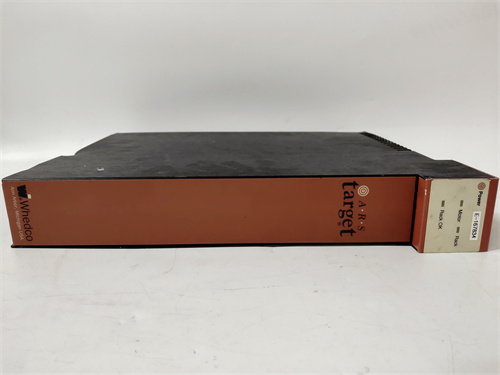
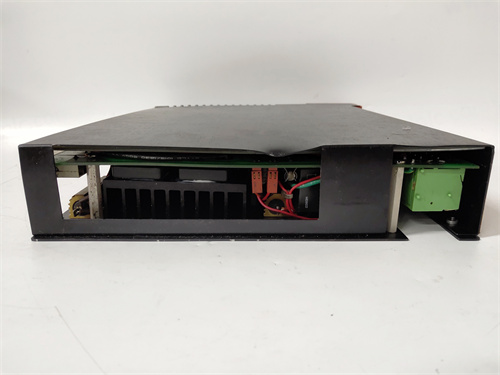
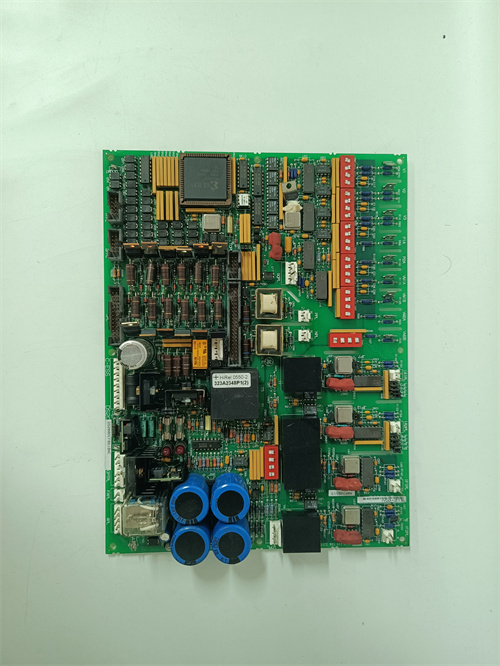
The GE 7807RC is a high-performance, single-channel speed monitoring relay designed for critical machinery protection, specifically within the legacy GE Mark Century and Mark V turbine control system families. It is a dedicated, hardware-based protective device, not a general-purpose PLC module, but a vital component interfacing with the overall control system to prevent catastrophic damage to rotating equipment. The primary function of the GE 7807RC is to monitor the rotational speed of a turbine, compressor, pump, or engine shaft using signals from magnetic pickups (MPUs) or proximity probes, and to provide immediate relay outputs to initiate alarms or emergency shutdowns upon detecting overspeed, underspeed, or zero-speed conditions. This module embodies the robust, analog design philosophy of its era, offering extremely fast and reliable protection that is independent of software cycles. The GE 7807RC is a cornerstone component in vintage turbine control panels, where its deterministic response is trusted for the most critical safety function: preventing mechanical overspeed.
Product Parameters and Specifications
-
Product Type: Single-Channel Speed Monitoring Relay / Overspeed Trip Device
-
Manufacturer Part Number (MPN): 7807RC
-
Brand: GE (General Electric)
-
System Compatibility: GE Mark I, Mark II, Mark IV, Mark V Steam/Gas Turbine Control Systems.
-
Input Signal: Accepts a raw AC sine wave signal from a passive magnetic pickup (MPU), typically generating 50mV to 120V AC (peak-to-peak) proportional to speed.
-
Input Frequency Range: Designed for specific speed ranges corresponding to machine operating and trip speeds (e.g., 0-20 kHz).
-
Setpoints: User-adjustable for Alarm and Trip (Danger) speeds via precision potentiometers on the module’s front panel. Often includes a separate zero-speed detection threshold.
-
Outputs: Multiple Form C (SPDT) relay contacts for Alarm, Trip, and System Ready/Fault status. Contacts are typically rated for 5A, 125V DC.
-
Response Time: Extremely fast, often in the range of 10-20 milliseconds, which is critical for overspeed protection.
-
Power Supply: Operates on standard DC control voltages, such as 48V DC or 125V DC.
-
Display: Analog meter or LED bar-graph for speed indication on some variants; status LEDs for power, alarm, trip, and signal presence.
-
Mounting: Designed for panel mounting in a standard 19-inch rack or turbine control cabinet.
Key Advantages and Features
The paramount advantage of the GE 7807RC is its simplicity, speed, and reliability as a dedicated hardware protector. Its purely electronic, analog-based design provides a deterministic response that is unaffected by software bugs, network latency, or processor scan times. The module is renowned for its ruggedness and ability to operate reliably in the high-vibration, high-electrical-noise environment of a power plant turbine deck. Features include adjustable damping to ignore transient speed fluctuations, a built-in signal monitor to detect MPU failure (loss of signal), and independent, high-capacity relay outputs capable of directly breaking the turbine trip solenoid circuit. Its front-accessible test switches allow for functional testing of the trip circuit without requiring the turbine to be spun. The proven, long-term field performance of the GE 7807RC has made it a de facto standard in legacy turbine protection.
Application Scenarios and Use Cases
The GE 7807RC is almost exclusively applied in the protection of large, critical rotating machinery in power generation and heavy industry. Its primary and most critical application is as the Overspeed Trip Device on steam and gas turbines in power plants, providing the final, independent hardware backup to the digital turbine control system. It is also used on large turbine-driven compressors and pumps in petrochemical and pipeline facilities. Furthermore, it serves as a reliable speed switch for boiler fan motors, providing alarm signals for loss of airflow. In any of these applications, the GE 7807RC is typically configured in a 2-out-of-3 or 2-out-of-2 voting logic with identical modules to create a fault-tolerant protection system, ensuring a single failure does not prevent a safe shutdown nor cause a nuisance trip.
Comparison with Competing Products
The GE 7807RC competed historically with similar dedicated overspeed relays from manufacturers like Woodward (505/509) and Rexnord (Digital Dynamics DDPX). Compared to modern digital triple-modular-redundant (TMR) turbine protection systems (e.g., Woodward NetCon, GE Mark Vie), the 7807RC represents an older, single-channel, analog technology. Its advantages are extreme simplicity, transparency, and a long, proven history. The disadvantages are lack of advanced diagnostics, communication capabilities, and the need for multiple units to achieve redundancy. Compared to a speed monitoring function programmed into a modern safety PLC, the GE 7807RC offers a physically independent layer of protection, which is often a regulatory or insurance requirement for turbines. It is selected for its specific role as a dedicated, non-programmable safety hardware component.
Selection Guidelines and Important Notes
Selection Advice:
-
Match to Existing System: The GE 7807RC is almost always selected as a like-for-like replacement in an existing Mark Century/V turbine control panel. Verify the exact model and firmware/revision match.
-
Verify Signal Source: Ensure the magnetic pickup (MPU) characteristics (pulses per revolution, gap voltage, etc.) are compatible with the module’s input requirements.
-
Confirm Power Supply: Match the module’s voltage rating (e.g., 48VDC vs. 125VDC) to the plant’s control voltage.
-
Setpoint Calibration: This module requires precise calibration using a frequency generator during installation. The setpoints (Alarm, Trip) must be documented and sealed per plant procedures.
Important Precautions:
-
Critical Safety Device: The GE 7807RC is a primary safety device. Work on it must be performed under a strict plant lock-out/tag-out (LOTO) procedure and often requires a specific work permit.
-
Functional Testing Mandatory: The entire overspeed protection loop, including the MPU, wiring, and the 7807RC relay, must be functionally tested at regular intervals as defined by the plant’s safety and reliability program. This often involves simulating a speed signal.
-
Do Not Alter Setpoints Casually: The trip setpoint is a calculated mechanical limit for the turbine. Adjusting it requires formal engineering review and authorization.
-
Wiring Integrity: Use the specified shielded cable for the MPU signal. Check for and repair any ground loops or insulation damage that could cause false trips.
-
Obsolescence Notice: This is a legacy product. Ensure availability of spare parts or have a migration plan to a modern system for long-term support.
-
Documentation: Maintain the original GE manual for the 7807RC, which contains critical calibration curves and wiring diagrams.
TRICONEX?3006
TRICONEX?3007A
TRIC0NEX?3601E
TRIC0NEX?3604E.
TRICONEX?3700A.
TRICONEX?4329.
TRICONEX?AI3351.
TRICONEX?A03481.



Reviews
There are no reviews yet.