
Description
Introduction and Product Overview
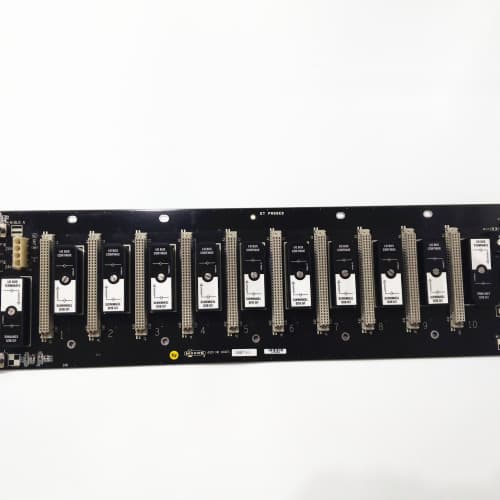
The MOORE 16407-1-1 is a Process Alarm or Limit Alarm Module from the Moore Products line of single-loop and multi-loop process controllers, likely from the 352 or 353 series. This module is a dedicated function card, not a modern PLC module, designed for use in panel-mounted control systems popular in the 1970s-1990s. Its primary function is to monitor an analog process signal (e.g., 4-20 mA or 1-5 VDC representing temperature, pressure, or flow) and provide independent high and/or low alarm setpoints with relay outputs. The 16407-1-1 would be installed alongside a Moore controller (like a 352 IDC or 353 PID) to add annunciator or interlock functionality, triggering lights, horns, or shutdown sequences when process limits were exceeded. For specific wiring and calibration, the original Moore 352/353 series technical manual for the 16407-1-1 is essential.
Technical Parameters and Characteristics
The 16407-1-1 alarm module is characterized by its analog monitoring and relay output:
-
Function: Dual-Setpoint Process Alarm Module.
-
Input Signal: Accepts a standard analog process input, typically 1-5 VDC or 4-20 mA (often via a built-in precision resistor for current).
-
Alarm Setpoints: Features two independent, adjustable setpoints. These were often set using precision multi-turn potentiometers on the front of the card for High and Low (or High-High and Low-Low) limits.
-
Outputs: Provides Form-C (SPDT) relay contacts for each alarm setpoint. The relays would change state (energize or de-energize) when the process signal crossed its configured threshold.
-
Adjustments: Includes potentiometers for setting the alarm trip points and often a deadband (hysteresis) adjustment to prevent relay chattering when the signal is near the setpoint.
-
Indication: May include LED indicators to show which alarm setpoint is active.
-
Mounting: Designed to plug into a dedicated slot within a Moore 352 or 353 series rack or chassis, which housed the power supply, controller, and other accessory cards.
Key Advantages and Features
For its era, the MOORE 16407-1-1 module offered reliable, standalone alarm functionality:
-
Simplicity and Reliability: As a dedicated hardware module with analog circuitry and electromechanical relays, the 16407-1-1 provided a very simple and robust solution for critical alarm functions without the complexity of software configuration.
-
Clear, Local Indication and Adjustment: The front-panel potentiometers and LEDs allowed operators and technicians to view setpoints and alarm status directly at the panel, enabling quick adjustments and troubleshooting.
-
Fail-Safe Output Options: The relay contacts could be wired in a fail-safe manner (e.g., normally de-energized for a critical alarm) to ensure a safe state on loss of power.
-
Integration with Moore Ecosystem: It was designed to work seamlessly with other Moore controllers and I/O cards, sharing the same power supply, backplane, and signal levels, creating a cohesive, vendor-specific control panel solution.
Application Cases in Various Fields
This module was used in continuous process industries for safety and operational alarms:
-
Chemical Processing: Providing high-temperature or high-pressure alarms on reactor systems.
-
Oil & Gas: Monitoring level in vessels or pressure in pipelines for alarm and pre-shutdown warnings.
-
Power Generation (Boiler Control): Serving as steam drum level or furnace pressure alarms.
-
HVAC for Large Facilities: Providing chilled water temperature or duct pressure alarms.
Comparison with Competing Products
In its time, the MOORE 16407-1-1 competed with similar alarm units from other panel controller manufacturers:
-
Foxboro alarm and limit stations.
-
Fisher (now Emerson) alarm modules.
-
Honeywell limit alarm cards for their analog controllers.
-
Standalone alarm trip amplifiers from vendors like Rochester Instrument Systems.
Moore’s products were known for their high quality and were often selected for critical applications. Today, its modern equivalent is a software-configured alarm block in a DCS/PLC or a digital alarm trip relay with analog input.
Selection Suggestions and Precautions
Working with this legacy module today requires specific considerations:
-
Legacy/Obsolete System Component: Moore products are legacy, and the 16407-1-1 is obsolete. It is only relevant for maintaining or sparing existing, aging installations. New projects would use modern PLC/DCS-based alarming.
-
Calibration is Critical: The analog setpoints drift over time. The module requires periodic calibration using a precision current/voltage source and a multimeter to ensure the alarms trip at the correct process values.
-
Signal Compatibility: Verify the input signal type (voltage or current) and ensure it matches the module’s configuration (e.g., installing the correct shunt resistor if required for current input).
-
Relay Contact Rating: Respect the relay contact ratings (voltage and current, typically 5A @ 120VAC). Do not use them to directly drive large loads; use them to pilot a larger contactor or as an input to a modern safety system.
-
Spares and Obsolescence Management: Securing genuine spare 16407-1-1 modules may be difficult. Plants using this technology should have a lifecycle management plan for migrating these functions to a modern control system.
MVME117-3 PLC
MMME117-4 DCS
MVME123 PLC
MME-1305 PLC
MVME131 PLC
MMME132 PLC
MVME133 CPU
MMME133-1 PLC
MVME-143S-2 PLC
MVME147 PLC
Reviews
There are no reviews yet.