
Description
Product Overview and Description
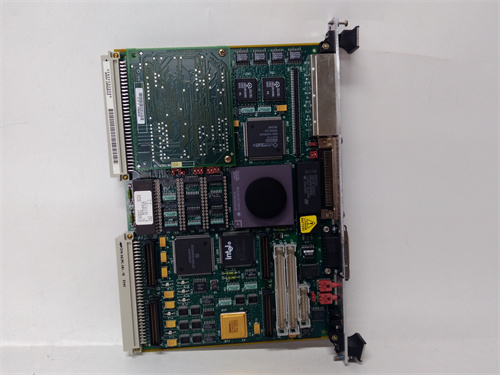
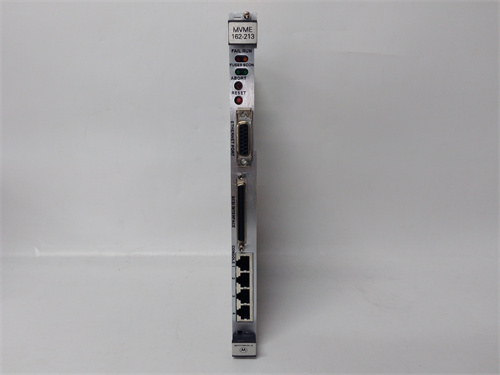
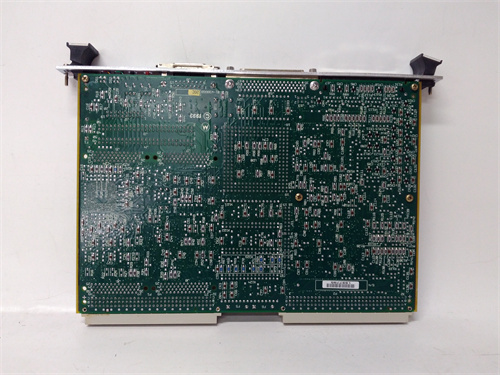
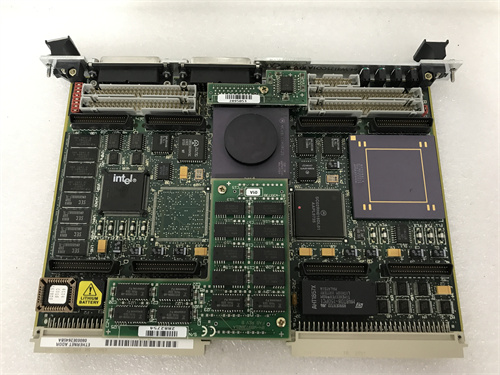
The MOTOROLA MVME162-012 is a classic and historically significant embedded computer board, not a conventional PLC module, but one that served as a powerful CPU and I/O controller within industrial computing and specialized automation architectures like VMEbus systems. This board was part of the renowned Motorola (now NXP) MVME162 series, built around the high-performance MC68040 or MC68EC040 microprocessor. It functioned as a single-board computer (SBC) that provided the computational engine for demanding real-time control, data acquisition, and machine automation applications when hosted in a VMEbus chassis. The MVME162-012 integrated core computing functions, memory, and critical interfaces like Ethernet and SCSI onto a single VME card, offering a compact and powerful solution for system integrators. Its design was pivotal for creating custom, high-performance controllers that went beyond the capabilities of standard PLCs of its era. Even today, the MOTOROLA MVME162-012 is encountered in legacy systems requiring maintenance or lifecycle management, representing a key piece of industrial computing history.
Product Parameters and Specifications
-
Product Type: VMEbus Embedded Single-Board Computer (SBC)
-
Manufacturer Part Number (MPN): MVME162-012
-
Brand: Motorola (Computer Group, now under NXP/Emerson)
-
CPU: MC68040 or MC68EC040 microprocessor, typically operating at 25MHz or 33MHz.
-
Memory: Equipped with DRAM (4MB or 8MB standard, expandable) and SRAM for critical data. Includes Flash memory for firmware/OS storage.
-
Bus Architecture: VMEbus (Versa Module Eurocard) interface, acting as a system controller or bus master in a backplane.
-
Key Onboard Interfaces:
-
Ethernet: 10BASE-T (10Mbps) interface via an AMD Lance controller.
-
SCSI: NCR 53C710-based SCSI-1 interface for connecting storage devices.
-
Serial Ports: Typically two RS-232/422/485 programmable serial channels.
-
Parallel I/O: Provides general-purpose digital I/O lines.
-
-
Real-Time Clock: Battery-backed for timekeeping.
-
Form Factor: Standard 6U VME card dimensions.
Key Advantages and Features
The primary advantage of the MOTOROLA MVME162-012 at its time of release was its high level of integration and raw processing power. By combining a 32-bit 68040 CPU, substantial memory, and versatile industrial communication ports on one card, it reduced system complexity and improved reliability compared to multi-board solutions. Its VMEbus interface provided high-throughput, deterministic data transfer to other specialized I/O cards in the chassis, such as analog/digital converters or motion controllers. The inclusion of early embedded Ethernet (10BASE-T) and SCSI was a significant feature, enabling network connectivity and local storage options that were advanced for industrial controllers of the late 1980s and early 1990s. The board’s robust design for industrial environments and its support for real-time operating systems (RTOS) like VxWorks or OS-9 made the MVME162-012 a preferred choice for creating powerful, customized automation brains.
Application Scenarios and Use Cases
The MOTOROLA MVME162-012 was deployed in complex, computation-intensive industrial applications. A classic use case was in semiconductor manufacturing equipment, where it acted as the main sequencer and data handler for wafer steppers or test handlers. In telecommunications, it served in network switching and transmission equipment. For scientific research, it was used in data acquisition and control systems for particle accelerators or large telescopes. In industrial automation, it powered sophisticated machine vision systems, robotic cell controllers, and custom test stands that required more computational power and flexibility than standard PLCs could offer. Systems built around the MVME162-012 were often the backbone of high-value, proprietary machinery where performance and reliability were critical.
Comparison with Competing Products
During its active period, the MOTOROLA MVME162-012 competed with other VME SBCs from manufacturers like Force Computers (Sun SPARC boards) and Performance Technologies. Its key differentiator was the widespread popularity and developer familiarity with the Motorola 68k processor architecture and its associated toolchains. Compared to a traditional rack-based PLC (e.g., Allen-Bradley PLC-5 or Siemens S5-115U), the MVME162-012 was not a pre-packaged logic solver with standard I/O. Instead, it was a flexible computing platform that required significant software development to implement control logic, offering far greater power and customization at the cost of ease of use. It represented the high-end, custom-engineered approach to automation versus the standardized, ladder-logic-focused world of PLCs.
Selection Guidelines and Important Notes
Selection Advice (Primarily for Legacy Maintenance & Replacement):
-
Verify Exact Configuration: The MVME162-012 had many variants with different CPU speeds, memory sizes, and firmware. For replacement, match the exact suffix and revision.
-
Assess System Compatibility: Ensure compatibility with the existing VME chassis, backplane, and any critical daughter cards or mezzanine modules that may have been used with the original board.
-
Consider Migration vs. Replacement: For active systems, a direct board-for-board replacement with a refurbished MOTOROLA MVME162-012 is often a near-term solution. For long-term viability, planning a migration to a modern industrial PC or PAC platform is strongly advised.
-
Source from Reputable Suppliers: Due to its age, source from specialized suppliers of legacy industrial electronics who can provide tested and guaranteed units.
Important Precautions:
-
Obsolescence Alert: This is a legacy product. New units are not available from the OEM. Long-term support and component sourcing are challenges.
-
ESD Protection: Always handle the board using proper anti-static (ESD) precautions to avoid damaging sensitive CMOS components.
-
Firmware and Software: Have complete backups of the system firmware (stored in Flash/EPROM) and application software. The loss of this data can render the board unusable.
-
Power Supply Requirements: The board requires clean, stable +5V DC power from the VME backplane. Verify the chassis power supply is within specification.
-
Battery Replacement: The onboard battery for the real-time clock and SRAM is likely depleted. Plan for its safe replacement to prevent leakage and board damage.
-
Documentation: Secure all available technical documentation, including the MOTOROLA MVME162-012 Installation and Use manual, hardware specifications, and any custom driver information.
1SBP260014R1001
1SBP260012R2002
1SBP260012R1001
1SBP260011R1001
1SBP260010R1001
1SBP260001R1001
GJV3075304R1

.jpg)

Reviews
There are no reviews yet.