
Description
Product Overview
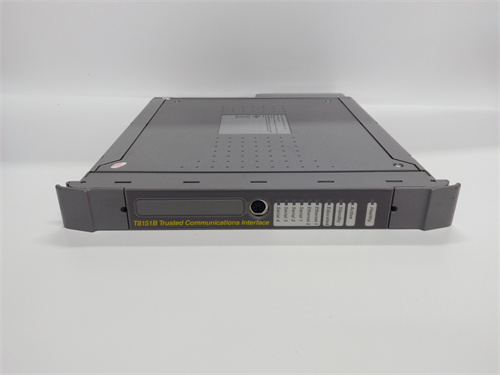
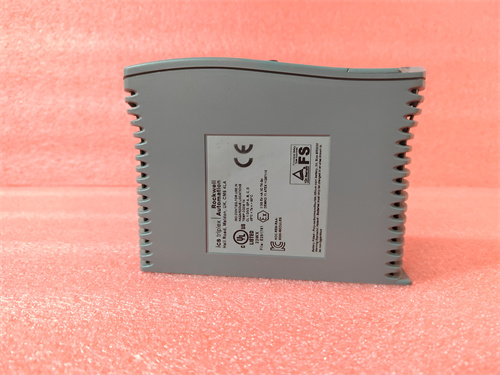
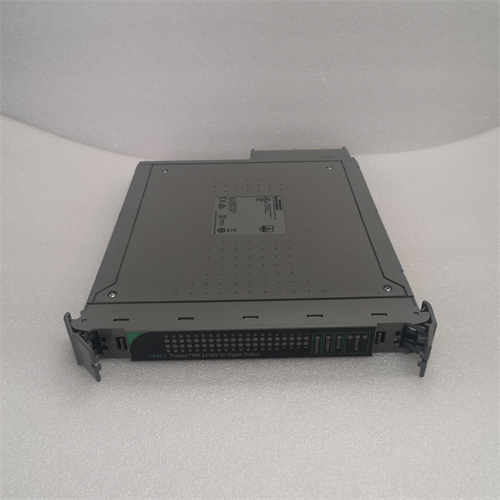
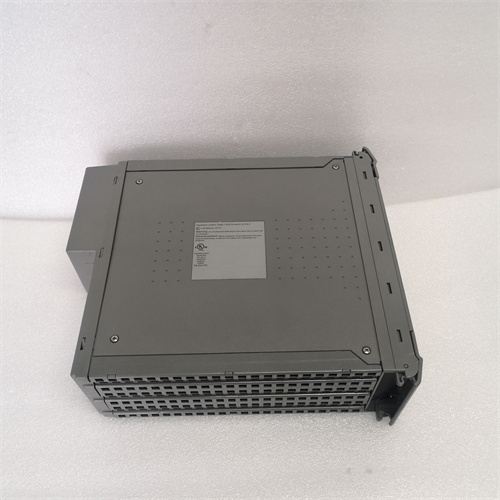
The ICS TRIPLEX T8151B is a critical communication or network interface module within the Trusted® TMR (Triple Modular Redundant) System, a premier safety and critical control platform. This module functions as a dedicated gateway or communication controller, enabling robust and secure data exchange between the high-integrity TMR control system (e.g., housed in a T8100 chassis) and external networks or devices. The ICS TRIPLEX T8151B is engineered to maintain the system’s fault-tolerant principles while providing reliable connectivity to Distributed Control Systems (DCS), operator workstations, historians, and other supervisory systems. Its role is crucial for integrating the safety layer into the broader plant architecture without compromising security or availability. Implementing the genuine ICS TRIPLEX T8151B is essential for ensuring seamless, high-integrity communication for mission-critical safety applications.
Product Parameters
-
Module Type: TMR Communication Interface Module / Network Controller.
-
System Compatibility: Designed for installation within the Trusted TMR system chassis (e.g., T8100 series), interfacing with the triple redundant backplane.
-
Primary Function: Acts as a communications front-end processor, managing data flow between the TMR controller’s three independent channels and external networks.
-
Supported Protocols: Typically supports industry-standard protocols for supervisory communication. Common protocols include:
-
Modbus TCP/IP and Modbus RTU (serial) for connectivity to HMIs, DCS, and other PLCs.
-
OPC (Classic or DA) for connection to SCADA and historian systems.
-
Proprietary Trusted Network (TNET) protocols for peer-to-peer communication between Trusted systems.
-
-
Redundancy: The module itself is typically configured in a redundant (dual or triple) pair to eliminate itself as a single point of failure in the communication path, aligning with the system’s overall high-availability design.
-
Data Handling: Manages the mapping of process data (both safe and unsafe values, diagnostics) from the TMR controller to the external network and vice-versa for setpoints or commands (with appropriate permissions).
-
Diagnostics: Includes comprehensive self-diagnostics and status reporting back to the main TMR controller and externally, indicating communication link health and module status.
-
Physical Interface: Features standard network ports (e.g., RJ45 for Ethernet, serial ports) on its front face for external connections.
Advantages and Features
-
Maintains System Integrity and Fault Tolerance: The ICS TRIPLEX T8151B is designed to be a reliable extension of the TMR architecture. By often being deployed in redundant configurations and featuring robust error checking, it prevents communication failures from impacting the core safety controller’s operation or causing nuisance trips.
-
Secure and Reliable Data Gateway: It provides a controlled and well-defined interface point between the safety system and other plant networks. This helps in implementing cybersecurity best practices by creating a single, managed gateway instead of exposing the controller directly, and ensures data consistency and integrity are maintained during transmission.
-
Simplifies Integration with Plant Systems: By supporting widely adopted protocols like Modbus TCP/IP and OPC, the T8151B module dramatically simplifies the engineering effort required to connect the Trusted system to a variety of DCS, HMI, and data acquisition systems from different vendors.
-
Enables Comprehensive System Monitoring: This module is the conduit for sending not only process values but also the rich diagnostic and health status information from the entire TMR system to the operator stations and maintenance systems. This is vital for predictive maintenance and overall plant awareness.
-
High Availability Design: Like other critical components in the Trusted system, the ICS TRIPLEX T8151B is built for continuous operation. Its ability to be configured redundantly and support online maintenance ensures that communication links remain active even during module replacement or a network segment failure.
Application Fields and Case Studies
Application Fields:
Used wherever an ICS Triplex Trusted TMR system is deployed and needs to communicate with the outside world. This spans all high-hazard industries:
-
Oil & Gas: Connecting Emergency Shutdown (ESD) and Fire & Gas (F&G) systems to the main DCS for operator display, alarm management, and event logging.
-
Chemical/Petrochemical: Linking Burner Management Systems (BMS) or reactor trip systems to plant-wide SCADA.
-
Power Generation: Integrating turbine control and protection systems with the plant’s central monitoring system.
-
Pharmaceutical: Allowing batch record systems to receive critical safety interlock status from a SIL 3 process protection system.
Application Case:
In a large liquefied natural gas (LNG) export terminal, the Trusted TMR system manages the critical safety functions for the refrigerant compressors. The ICS TRIPLEX T8151B communication modules are installed in redundant configuration. They continuously translate data from the TMR controllers into Modbus TCP/IP packets, which are then read by the facility’s main Experion DCS. Operators in the central control room see real-time status, pressures, temperatures, and any diagnostic alerts from the safety system seamlessly on their DCS screens. When a communication cable was accidentally damaged during maintenance, the redundant T8151B module immediately took over, and no data was lost to the DCS, ensuring continuous operator situational awareness without triggering any alarms related to communication loss.
Comparison with Competing Products
| Feature | ICS TRIPLEX T8151B (Dedicated TMR Communication Module) | Third-Party Protocol Gateway/Converter | Direct Controller Ethernet Port |
|---|---|---|---|
| System Integration & Integrity | Optimal. Native part of the TMR system, designed for fault-tolerant operation. Data mapping and diagnostics are seamless. | Good/Fair. Requires external configuration and mapping. Acts as a “black box,” potentially adding latency and a point of failure not under the safety system’s diagnostic umbrella. | Simplest but Riskiest. Exposes the safety controller directly to the plant network, creating cybersecurity and network traffic vulnerability. May lack necessary protocol support. |
| Redundancy & Availability | Designed for High Availability. Can be deployed redundantly and supports online maintenance. Failure of one module does not break communication. | Varies. High-end gateways may offer redundancy, but it is an additional, separate system to manage and diagnose. | None. The single port is a clear single point of failure. |
| Diagnostics & Security | Comprehensive. Diagnostics are part of the TMR system’s health reporting. Provides a managed security boundary. | Limited. Basic gateway status. Security configuration is separate. | Minimal. Very limited diagnostics for comms. Security must be handled entirely at the controller level, which may be limited. |
| Engineering & Support | Single Vendor. Engineering and support handled by the system integrator/ICS Triplex. Guaranteed compatibility. | Multi-Vendor. Requires coordination between safety system integrator and gateway vendor. Compatibility and support issues can arise. | Simple but Limited. Configuration is on the controller but may be complex for certain protocols. |
| Total Cost of Ownership | Higher initial cost, lower operational risk. Cost is justified by guaranteed reliability, security, and integration within the safety system lifecycle. | Lower initial cost, higher hidden costs. Costs include additional hardware, engineering for integration, and ongoing management of another device type. | Lowest initial cost, highest potential risk cost. Risks include cybersecurity breaches, communication-induced controller faults, and unplanned downtime. |
Selection Suggestions and Precautions
-
Define Communication Requirements Early: During the safety system design phase, clearly identify all external systems (DCS, HMI, Historian) that need data, the required protocols (Modbus TCP, OPC), data refresh rates, and the volume of data points. This determines the need and specification for the T8151B.
-
Implement Redundancy for Critical Links: For any communication path that is essential for operator control or monitoring of the safety function, configure the ICS TRIPLEX T8151B modules in a redundant pair. This aligns with the high-availability philosophy of the overall TMR system.
-
Plan the Network Architecture Carefully: Connect the T8151B to a dedicated and secure switch within the safety system network segment. Use proper network segregation (e.g., firewalls, VLANs) between this segment and the general plant network to enforce cybersecurity.
-
Utilize the Diagnostic Capabilities: Ensure that the status and diagnostic information from the T8151B module is configured to be visible both locally (on the module’s LEDs) and remotely through the data sent to the HMI/DCS. This is key for proactive maintenance.
-
Follow Vendor Configuration Guidelines: Data mapping and module configuration should be performed using the official ICS Triplex engineering tools and strictly follow the vendor’s application guidelines to ensure reliable and deterministic data exchange.
 JAMSC-B2602AV PLC
JAMSC-B2700V PLC
MPL-B330P-MJ74AA
PQMII-T20-C-A PLC
S-D4007-G
Emerson-VE4006P2 PLC
1775T-PMPP-1700 PLC
6SL3120-1TE21-8AA3 PLC
PTQ-PDPMV1
XBTGT2330 PLC
6ES7151-8FB01-0AB0 PLC
AKM42E-ANCNR-00 PLC


Reviews
There are no reviews yet.