
Description
Product Description
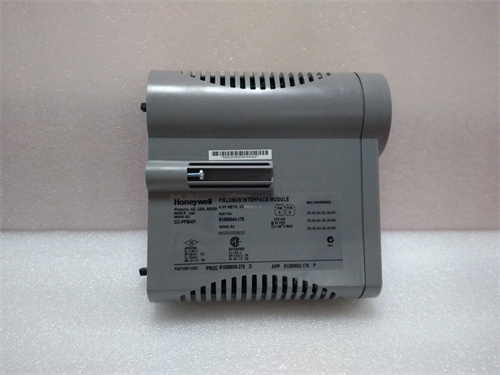
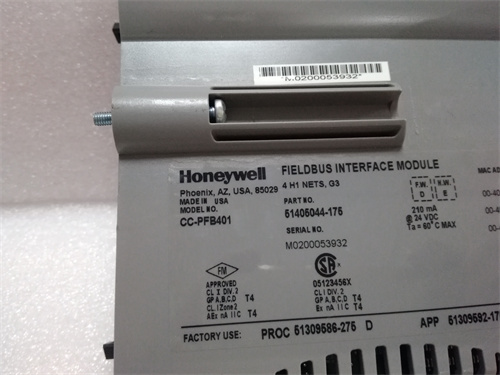
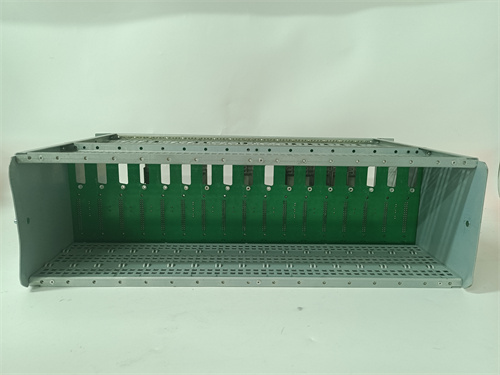
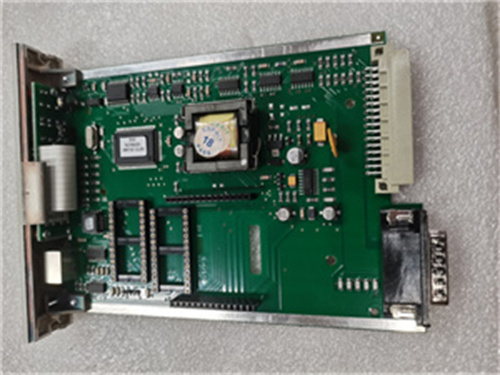
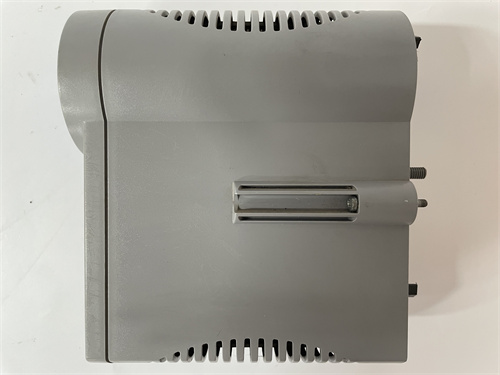
HONEYWELL CC-PFB401 is a high-performance fieldbus communication module designed for Honeywell’s Experion® PKS (Process Knowledge System) and ControlEdge™ PLC platforms, enabling seamless integration with Foundation Fieldbus (FF) H1 devices in critical industrial applications such as oil & gas refining, chemical manufacturing, and power generation. HONEYWELL CC-PFB401 supports Foundation Fieldbus H1 protocol (31.25 kbps) and features dual redundant fieldbus ports, ensuring reliable data exchange between control systems and smart field instruments (flow meters, pressure transmitters, temperature sensors). HONEYWELL CC-PFB401 is certified to IEC 61508 SIL 2/SIL 3 (depending on system configuration) and complies with ATEX/IECEx standards for hazardous environments, making it suitable for installation in explosive atmospheres. Additionally, HONEYWELL CC-PFB401 integrates advanced diagnostic capabilities and hot-swappable installation, minimizing maintenance downtime and enhancing system availability. As a core connectivity component of Honeywell’s control ecosystem, HONEYWELL CC-PFB401 guarantees secure, real-time communication with Foundation Fieldbus devices to support process control and safety interlock logic.
Product Parameters
- Brand/Model: HONEYWELL CC-PFB401
- Core Communication Parameters
- Supported Protocol: Foundation Fieldbus H1 (FF H1, 31.25 kbps)
- Communication Ports: 2×redundant FF H1 ports (RJ45/terminal block)
- Maximum Nodes per Port: 32 FF H1 devices (including couplers/linking devices)
- Bus Power: Integrated 24V DC bus power supply (compliant with FF H1 standards)
- Redundancy: Active/standby dual-port redundancy for FF H1 communication
- System & Diagnostic Parameters
- Compatible Systems: Honeywell Experion PKS, ControlEdge PLC, Safety Manager
- Diagnostic Functions: FF H1 bus status monitoring, device health alerts, communication error detection, bus power fault diagnostics
- Configuration Software: Honeywell Experion Engineering Environment, Fieldbus Configurator
- Environmental Ratings: ATEX/IECEx Zone 2 compliant (for hazardous area installation)
- Environmental & Physical Parameters
- Operating Temperature: -40°C ~ +70°C
- Storage Temperature: -40°C ~ +85°C
- Vibration Resistance: 5g (10-2000Hz, IEC 60068-2-6 standard)
- Shock Resistance: 30g (11ms half-sine wave)
- Power Supply: 24V DC (18-32V) redundant input, power consumption ≤ 15W
- Protection Grade: IP20 (cabinet installation)
- Installation Method: Honeywell standard rack mounting (DIN 35mm rail compatible)
- Dimensions: 140mm × 120mm × 45mm
Advantages & Features
- Foundation Fieldbus H1 Expertise: HONEYWELL CC-PFB401 is optimized for FF H1 protocol, supporting seamless integration with smart field instruments and enabling advanced functionality (e.g., device parameter tuning, predictive maintenance data collection) directly from the control system.
- Dual Redundant FF H1 Ports: With active/standby redundant ports, HONEYWELL CC-PFB401 ensures uninterrupted communication even if a fieldbus port or cable fails—critical for safety-critical applications where device communication loss could compromise process control.
- Integrated Bus Power Supply: The module includes a built-in FF H1-compliant bus power supply, eliminating the need for external power modules and simplifying fieldbus network design and installation.
- SIL Certification & Hazardous Environment Compliance: Certified to IEC 61508 SIL 2/SIL 3 and ATEX/IECEx Zone 2, HONEYWELL CC-PFB401 meets the safety requirements of critical industrial processes and can operate in explosive environments (e.g., refinery process units, chemical reactor areas).
Application Fields & Cases
- Oil Refinery FF H1 Network Integration: A major oil refinery deployed HONEYWELL CC-PFB401 modules in its Experion PKS system to connect 28 FF H1-enabled pressure transmitters and flow meters in a crude distillation unit. The dual redundant ports ensured continuous communication during a cable fault, while the integrated bus power supply reduced wiring complexity and installation costs.
- Chemical Plant Smart Instrumentation Control: A petrochemical plant integrated HONEYWELL CC-PFB401 into its ControlEdge PLC system to link FF H1 temperature sensors and level transmitters to the central control room. The module’s diagnostic capabilities detected a failing transmitter early, enabling proactive replacement before it caused process disruptions.
- Power Plant Boiler Efficiency Monitoring: A combined-cycle power plant used HONEYWELL CC-PFB401 to connect FF H1 gas analyzers and steam flow meters in its boiler system, supporting real-time efficiency optimization and safety interlock logic. The module’s Zone 2 certification allowed installation in the boiler’s hazardous environment, eliminating the need for remote I/O racks.
Competitor Comparison
| Comparison Dimension | HONEYWELL CC-PFB401 | Competitor 1 (Emerson DeltaV FF H1 Module) | Competitor 2 (Siemens S7-400 FF H1 Module) |
|---|---|---|---|
| Supported Protocol | Foundation Fieldbus H1 | Foundation Fieldbus H1 | Foundation Fieldbus H1 |
| Redundancy | Dual-port active/standby | Dual-port active/standby | Optional |
| Integrated Bus Power | Yes | Yes | No |
| SIL Certification | SIL 2/SIL 3 | SIL 2/SIL 3 | SIL 2 |
| Hazardous Environment Cert | ATEX/IECEx Zone 2 | ATEX/IECEx Zone 2 | Optional |
| Core Advantages | Honeywell ecosystem integration, integrated bus power | Emerson DeltaV native compatibility | Siemens TIA portal integration |
Selection Suggestions & Precautions
- Selection Suggestions: HONEYWELL CC-PFB401 is ideal for Honeywell Experion PKS/ControlEdge PLC users requiring Foundation Fieldbus H1 connectivity with redundancy and SIL certification (e.g., refineries, chemical plants). For Emerson DeltaV users, Emerson’s FF H1 module is preferred for native integration; Siemens S7-400 FF H1 modules suit Siemens TIA ecosystem users.
- Precautions:
- Configure FF H1 network parameters (e.g., baud rate, node addresses) via Honeywell’s Fieldbus Configurator to ensure compatibility with connected devices and avoid communication conflicts.
- Use shielded twisted-pair FF H1-certified cables (e.g., Belden 3076A) to minimize EMI interference and comply with FF H1 standards for signal integrity.
- Limit the number of nodes per port to 32 (including couplers) to maintain FF H1 communication performance and avoid bus overload.
- Regularly update firmware to support new FF H1 device profiles and patch security vulnerabilities, maintaining compliance with industrial safety standards.
- Test redundant port failover (quarterly) by disconnecting the primary FF H1 port to verify seamless switchover to the standby port and validate communication continuity.
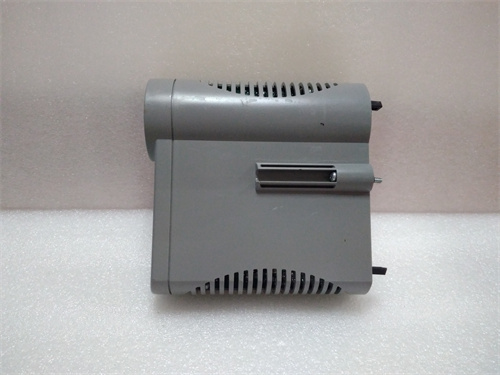
CC-PFB401
CC-PFB401
-1.jpg)

Reviews
There are no reviews yet.