
Description
Product Overview
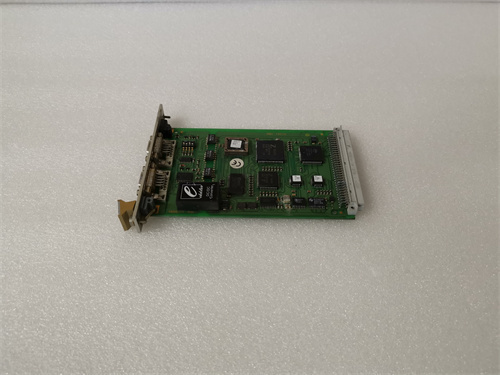
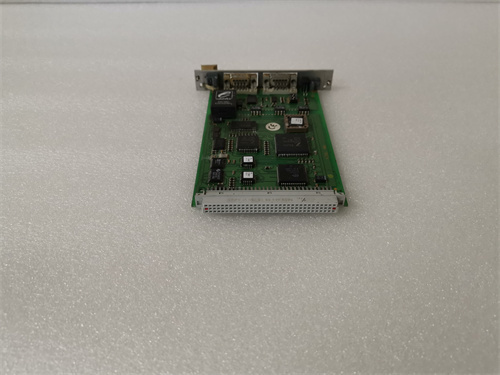
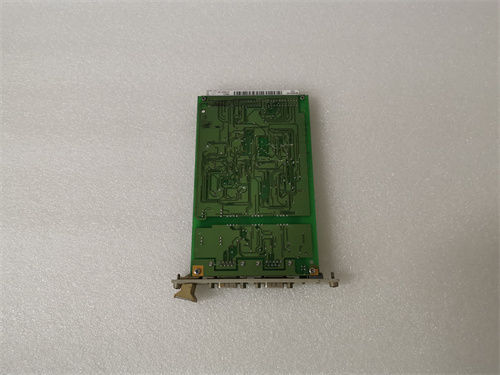
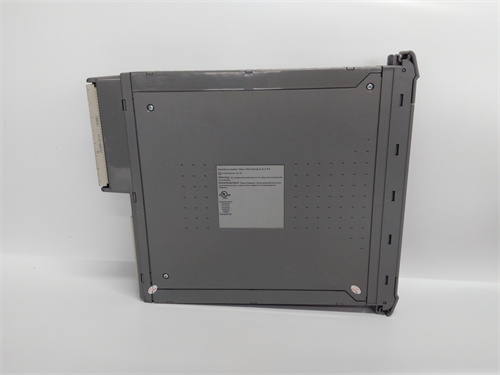
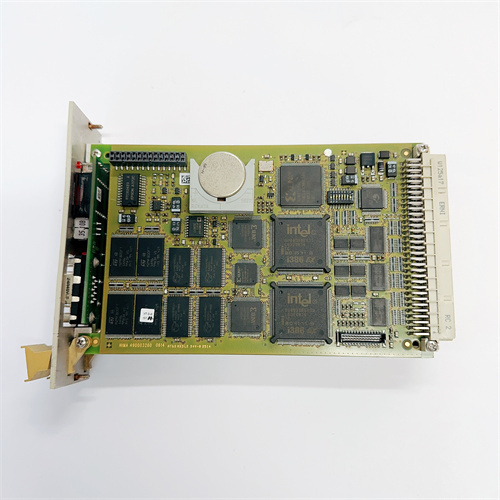
The HIMA Z1001 is a central processing unit (CPU) module for the HIMax® safety controller system, a leading platform in functional safety automation. As the computational core of a safety-related control system, the HIMA Z1001 is specifically engineered to execute safety logic for Emergency Shutdown (ESD), Fire and Gas (F&G), Burner Management (BMS), and other critical Safety Instrumented Systems (SIS). Unlike standard PLCs, the HIMA Z1001 is designed from the ground up with certified hardware and software to meet the rigorous demands of international safety standards. Its primary function is to reliably process input data, execute the safety application program, and command outputs to bring a process to a safe state when required. For engineers designing high-integrity protection layers, selecting the genuine HIMA Z1001 CPU module is a foundational choice for achieving certified Safety Integrity Levels (SIL 3 and SIL 4) and ensuring process safety.
Product Parameters
-
Module Type: Safety CPU module for HIMax system.
-
Safety Standards: Certified according to IEC 61508:2010 and IEC 61511:2016 for use in SIL 3 and SIL 4 applications. Also certified by TÜV and other global agencies.
-
Architecture: Based on a single-channel architecture with extensive internal self-testing and diagnostics. The HIMax system achieves high safety through advanced diagnostics rather than hardware redundancy at the CPU level, though the system supports redundant CPU configurations for higher availability.
-
Processor & Performance: Features a powerful microprocessor optimized for deterministic execution of safety logic. It provides predictable scan times suitable for fast-acting safety functions.
-
Memory: Equipped with fault-secure memory (RAM and Flash) with error detection and correction (ECC). The memory stores the safety application, operating system, and configuration data.
-
Diagnostics (Key Feature): Incorporates Continuous Functional Monitoring (CFM). This includes extensive periodic and non-periodic self-tests of the CPU, memory, and internal buses during runtime to detect over 99% of dangerous failures.
-
Communication Interfaces:
-
System Bus: Connects to the HIMax backplane for communication with I/O and communication modules.
-
Ethernet Port(s): For engineering (programming/troubleshooting), connection to HMIs, and system networking (e.g., via HIMA’s SAFEmine or other protocols).
-
-
Programming: Programmed using HIMA’s Safety-oriented Programming Languages, which are constrained versions of IEC 61131-3 (like F-FBD, F-LD, F-ST) within the Safety-Editor engineering software to prevent unsafe coding practices.
-
Operating Temperature: Designed for industrial control panel environments, typically 0°C to 60°C.
Advantages and Features
-
Certified for the Highest Safety Integrity Levels (SIL 4): The HIMA Z1001‘s most significant advantage is its certification for SIL 4 applications, the highest level defined by IEC 61508. This makes it suitable for the most critical safety functions where the consequences of failure are catastrophic.
-
High Diagnostic Coverage (DC) and CFM: The module’s exceptional safety is achieved through its Continuous Functional Monitoring (CFM) system. This sophisticated self-diagnostic suite can detect both permanent and transient faults with a very high Diagnostic Coverage (DC), ensuring a high probability that a dangerous failure is identified and the system can transition to a safe state.
-
Deterministic and Reliable Execution: The HIMA Z1001 is built for reliable, deterministic operation. Its hardware and safety-oriented operating system are designed to avoid common cause failures and ensure that safety logic is executed predictably and without interruption.
-
Comprehensive Engineering Environment: The CPU is fully integrated with HIMA’s Safety-Editor software. This environment includes features like a certified function block library, automatic proof-test interval calculation, and comprehensive documentation tools that support the entire safety lifecycle, simplifying compliance.
-
Flexible System Configuration: While the HIMA Z1001 itself is a single channel, the HIMax platform allows it to be configured in redundant (1oo2, 2oo3) architectures for applications requiring higher availability alongside high safety. The genuine HIMA Z1001 is the core component in such setups.
Application Fields and Case Studies
Application Fields:
Deployed in industries where process safety is legally mandated and failure could have severe consequences.
-
Oil & Gas: Offshore/onshore Emergency Shutdown (ESD), Fire & Gas (F&G) detection and control, Turbine Control, Subsea safety.
-
Chemical & Petrochemical: Burner Management Systems (BMS), Reactor Emergency Cooling, High-Integrity Pressure Protection Systems (HIPPS).
-
Power Generation: Turbine Overspeed Protection, Boiler Protection.
-
Rail Transport: Interlocking and Signaling Systems (where applicable to the platform variant).
Application Case:
In a large ethylene cracker plant, the HIMA Z1001 CPU is the heart of the SIL 3-rated Emergency Shutdown System protecting the critical cracking furnaces. It continuously monitors hundreds of safety-related inputs (temperature, pressure, flow) via HIMax I/O modules. The Z1001‘s internal CFM constantly runs self-tests. During operation, a rare cosmic ray event causes a soft error (bit flip) in the CPU’s internal cache memory. The module’s advanced diagnostic circuitry detects this transient fault within milliseconds, identifies it as a dangerous failure, and immediately initiates a controlled safe shutdown of the furnace. The system logs the detailed diagnostic event (“CPU internal memory parity error”), allowing engineers to confirm it was a random hardware fault and not a systematic error. The safety function performed exactly as designed, preventing equipment damage.
Comparison with Competing Products
| Feature | HIMA Z1001 (High-Diagnostics SIL 4 CPU) | TMR (Triple Modular Redundant) Safety Controller | Dual Redundant (1oo2D) Safety PLC |
|---|---|---|---|
| Primary Safety Philosophy | High Diagnostic Coverage (CFM). Achieves high SIL via advanced self-testing of a single channel. | Hardware Redundancy & Voting. Achieves high SIL and availability through three channels and voting. | Redundancy with Diagnostics. Uses two channels with cross-comparison and diagnostics. |
| Fault Tolerance | High for detected faults. Can tolerate and safely respond to internal faults that are detected by its diagnostics. | Very High. Tolerates any single undetected or detected hardware fault in one channel. | High. Tolerates a detected fault in one channel, with switchover. |
| Hardware Complexity | Lower (Single Channel). Simpler hardware architecture within the module. | Higher (Three Channels). Three times the components at the CPU level. | Medium (Two Channels). |
| Diagnostic Depth | Extremely High. Focus on detecting faults within the single CPU with very high coverage. | High. Diagnostics per channel, plus voting discrepancies indicate faults. | High. Based on comparison between two channels. |
| Typical Application Focus | Ultimate Safety (SIL 4). Where the highest possible safety integrity is the paramount requirement. | High Safety & High Availability (SIL 3). Where both safety and continuous operation are critical. | High Safety & Good Availability (SIL 3). A common architecture for many SIS applications. |
| Cost Orientation | Premium for SIL 4 capability and advanced diagnostics. | Premium for high availability and hardware fault tolerance. | Competitive for mainstream high-integrity safety. |
Selection Suggestions and Precautions
-
Perform a Rigorous SIL Assessment: The HIMA Z1001 is capable of SIL 4. Its use must be justified by a formal Process Hazard Analysis (PHA) and SIL Determination. Using it for a lower SIL requirement (e.g., SIL 2) may not be cost-effective.
-
Understand the Safety Philosophy: Recognize that the HIMA Z1001 achieves safety through high diagnostics rather than hardware redundancy. Ensure this philosophy aligns with your company’s safety standards and risk tolerance. For higher availability needs, plan a redundant system configuration using multiple CPUs.
-
Invest in Certified Engineering Tools and Training: The Safety-Editor software and its constrained languages are integral to the system’s safety certification. Engineers must be specifically trained on this toolchain. Do not attempt to program with standard IEC 61131-3 tools.
-
Design a Reliable Power Supply: The high diagnostic coverage depends on continuous operation. Provide a highly reliable, often redundant, 24V DC power source with sufficient buffering to ensure the CPU and its diagnostics are never inadvertently powered down.
-
Implement Comprehensive Proof Testing: While online diagnostics are excellent, a periodic proof test of the entire Safety Instrumented Function (SIF) is still required by standards. The Safety-Editor can help calculate intervals, but you must plan and execute these tests.
 0-49046
DAI05 PLC
DSAO120A-3BSE018293R1 plc
HIEE300936R0101-UFC718AE101 PLC
3BHL000391P0101 PLC
DSAO120A24VDC1
05701-A-0302 PLC
ST6-220-T0-B0-0-2-0-0-10R2/MA0-20 PLC
A16B-1010-0210 PLC


Reviews
There are no reviews yet.