
Description
Product Overview
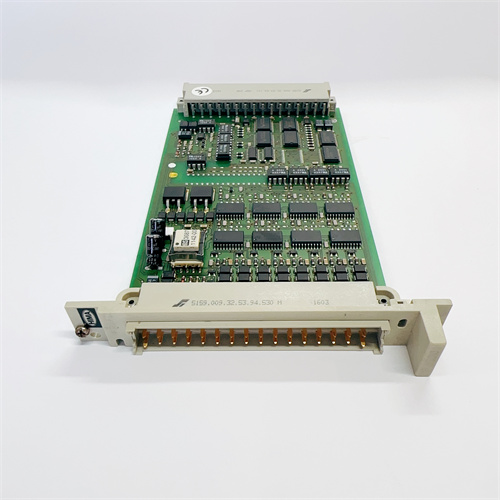
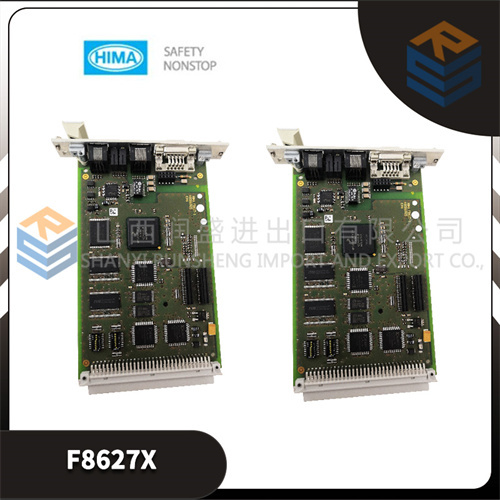
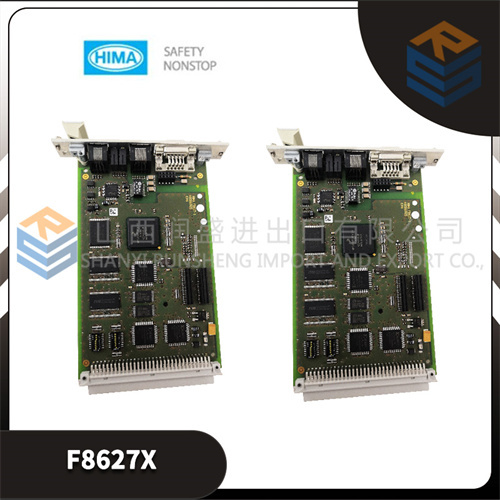
The HIMA F6705 is a specialized communication module or interface module for the HIMA safety controller systems, primarily within the HIMax or HIQuad product families. This module serves as a vital gateway, enabling robust and secure communication between the high-integrity safety system (CPU, I/O) and external control networks, operator stations, or other subsystems. Its core function is to manage protocol conversion and data exchange while maintaining the safety system’s independence and integrity. The HIMA F6705 is engineered to facilitate necessary integration for monitoring and control without compromising the certified safety functions, making it a crucial component for building a transparent and manageable Safety Instrumented System (SIS). Implementing the genuine HIMA F6705 is essential for achieving reliable, secure, and standards-compliant connectivity in critical safety applications.
Product Parameters
-
Module Type: Communication / Interface Module for Safety Systems.
-
Compatible Systems: Designed for integration with HIMA safety controllers such as those in the HIMax or HIQuad series.
-
Primary Function: Acts as a protocol gateway and data concentrator. It reads data from the safety controller’s backplane and makes it available to external systems via standard industrial protocols.
-
Supported Communication Protocols: Commonly supports widely used protocols for integration, which may include:
-
Modbus TCP/IP (for Ethernet-based SCADA, DCS, and HMI connectivity).
-
Modbus RTU (for serial communication).
-
OPC (DA/UA) for connection to historians and advanced visualization systems.
-
HIMA’s proprietary protocols for peer-to-peer communication between safety systems.
-
-
Data Mapping: Allows configuration of data points (process values, diagnostics, system status) from the safety controller to be mapped to registers or tags in the external protocol.
-
Interface Ports: Typically features physical ports such as RJ45 Ethernet and/or serial ports (RS-232/485).
-
Safety Integrity: While not executing safety logic itself, the module is designed for use in safety systems. It operates in the non-safety domain but is built to high reliability standards to ensure communication availability without affecting the safe operation of the controller.
-
Diagnostics: Includes self-diagnostic capabilities and status indicators (LEDs) to monitor communication link health and module operation.
-
Configuration: Configured using HIMA’s engineering software suite (e.g., Safety-Editor or dedicated configurators).
Advantages and Features
-
Secure Integration Without Compromising Safety: The primary advantage of the HIMA F6705 is that it provides a clearly defined boundary between the safety system and other plant networks. This separation is a key principle in safety engineering, preventing unauthorized access or disturbances from the business/control network from impacting the safety controller’s certified operation.
-
Reliable Data Exchange for Operational Awareness: This module enables the safe and reliable transfer of crucial information from the SIS to the Distributed Control System (DCS) or operator workstations. This includes process values, device diagnostics, and system health status, giving operators full visibility into the state of the safety layer, which is essential for effective plant management.
-
Use of Standard Protocols Simplifies Engineering: By supporting ubiquitous protocols like Modbus TCP/IP, the HIMA F6705 dramatically reduces the complexity and cost of integration. Plant engineers can use familiar tools and knowledge to establish the communication link, avoiding the need for custom drivers or complex gateways.
-
Enhanced Diagnostic Visibility: The module facilitates the transmission of the safety system’s rich diagnostic data to higher-level asset management or plant information systems. This enables predictive maintenance strategies for the SIS itself, as trends in device health can be monitored over time.
-
Robust and Purpose-Built Design: As part of the HIMA ecosystem, the genuine HIMA F6705 is built to the same high standards of quality and environmental tolerance as the safety controllers, ensuring reliable performance in industrial settings. Its configuration is validated within the safety engineering toolchain.
Application Fields and Case Studies
Application Fields:
Used wherever a HIMA safety system needs to communicate with the wider plant architecture. This spans all high-hazard process industries:
-
Oil & Gas: Connecting Emergency Shutdown (ESD) and Fire & Gas (F&G) systems to the main DCS for alarm display, event logging, and shutdown cause-and-effect reporting.
-
Chemical/Petrochemical: Linking Burner Management Systems (BMS) or reactor trip systems to the plant SCADA for operator monitoring and historical data collection.
-
Power Generation: Allowing turbine protection systems to send status and trip information to the plant’s central control room.
-
Pharmaceutical: Enabling batch record systems to receive confirmations of critical safety interlock states.
Application Case:
At a large refinery, the HIMA HIMax system managing the Fire & Gas detection network uses a HIMA F6705 communication module. The module is configured to map all gas detector concentrations, alarm statuses, and system diagnostic messages to Modbus TCP/IP registers. The refinery’s main Experion DCS periodically polls these registers. Operators see real-time gas levels and F&G system status directly on their DCS overview screens, providing a unified operational view. When the F6705 module itself detects a loss of communication with a downstream network switch, it flags a diagnostic alarm both locally and in the data stream to the DCS. This allows network technicians to address the switch issue promptly, maintaining the integrity of the safety data flow without any false fire or gas alarms.
Comparison with Competing Products
| Feature | HIMA F6705 (Dedicated Safety System Gateway) | Third-Party Universal Protocol Gateway | Direct Controller Network Port |
|---|---|---|---|
| System Integration & Safety | Optimal. Native part of the safety system’s architecture. Maintains clear safety/non-safety boundary. Configuration is part of the safety project lifecycle. | Fair. Requires external mapping and acts as an unmanaged “black box” between systems. May not be recognized or supported by the safety system vendor. | Risky. Blurs the boundary between safety and non-safety networks, potentially exposing the safety controller to cyber threats and network disturbances. |
| Reliability & Support | High. Designed for the application with full vendor support. Failure impacts communication but not safety function. | Variable. Depends on the gateway manufacturer’s quality. Support may involve multiple vendors. | Direct but Vulnerable. Relies entirely on the controller’s networking stack. |
| Diagnostic Integration | Seamless. Module diagnostics are part of the safety system’s overall health reporting. | Isolated. Gateway diagnostics are separate and may not be integrated into the plant’s alarm management system. | Limited. |
| Engineering & Configuration | Integrated. Configured within the safety engineering environment, ensuring consistency. | Separate. Requires an additional configuration tool and step, increasing complexity and risk of error. | Simple but Limited. May offer fewer protocol options and less flexible data mapping. |
| Total Cost of Ownership | Higher initial cost, lower lifecycle risk. Justified by guaranteed compatibility, support, and adherence to safety integration principles. | Lower initial cost, higher hidden cost. Includes additional hardware, separate engineering, and ongoing management of another device. | Lowest initial cost, highest potential risk. Cybersecurity and network-related risks can lead to severe safety and operational consequences. |
Selection Suggestions and Precautions
-
Define Communication Requirements Clearly: During the SIS design phase, document exactly what data needs to be sent to external systems (DCS, Historian), the required update rates, and the preferred protocol. This determines the necessity and specification of the F6705.
-
Adhere to Network Segmentation Best Practices: Install the HIMA F6705 module within the safety system cabinet and connect it to a dedicated switch that is part of a separate network segment (VLAN) for safety communications. Use a firewall or data diode if connecting to a less trusted network like the corporate IT network.
-
Implement Read-Only Access for External Systems: As a fundamental precaution, configure the F6705 so that external systems (like the DCS) have read-only access to the safety system data. Write access (for commands) should be severely restricted, physically separated, or not provided at all to prevent unauthorized control.
-
Leverage Diagnostic Mapping: Ensure that not only process values but also key module and system diagnostic bits are mapped and visible to the DCS/SCADA. This turns the gateway into a transparent window into the health of the communication link itself.
-
Follow Vendor Configuration Guidelines: Use the official HIMA engineering tools to configure the module. Pay close attention to data types, scaling, and update rates to ensure data integrity and performance on the external network.
F6705
2711-K6C10 PLC
269PLUS-100P-240 PLC
KPS-600/20-ESC PLC
MMD-202
CL6921X1-A8VIO PLC
LP090-M01-5-111-000
6ES7332-8TF00-0AB0
MVI71-MNET



Reviews
There are no reviews yet.