
Description
Product Description
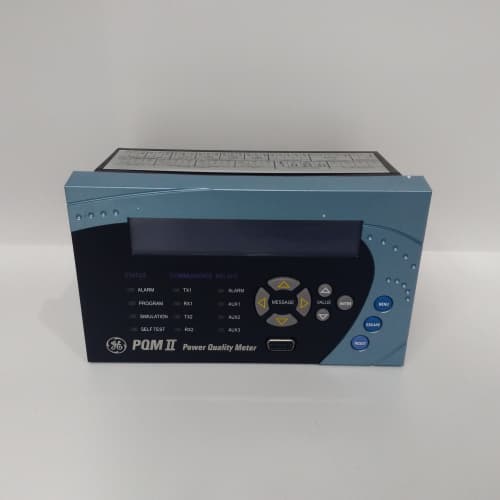
The GE PQMII-T20 is a microprocessor-based power quality meter and digital indicator that provides comprehensive measurement and display of electrical parameters in three-phase power systems. This versatile instrument continuously monitors voltage, current, power, energy, and various power quality parameters, presenting the information on a high-visibility digital display for local observation while making data available for remote monitoring via communication interfaces.
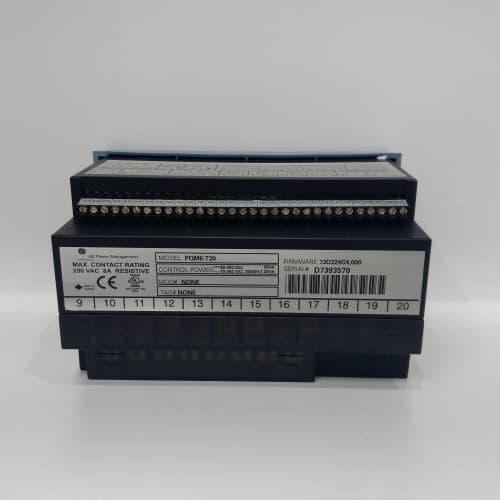
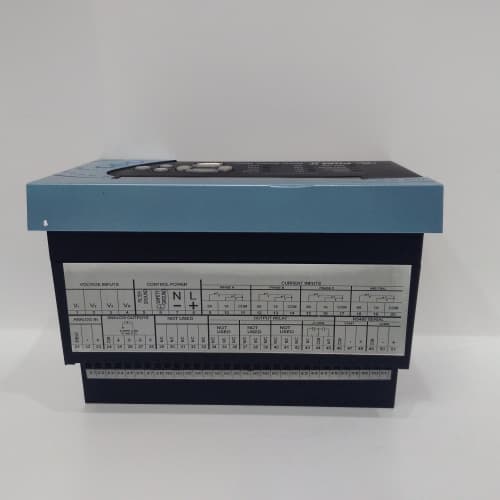
The GE PQMII-T20 accepts direct connection to voltage circuits up to 600V AC and current inputs from standard current transformers (5A or 1A secondary), making it suitable for a wide range of low and medium-voltage applications. The device calculates true RMS values for all parameters, ensuring accuracy even with distorted waveforms common in modern electrical systems with non-linear loads.
Beyond basic metering, the GE PQMII-T20 provides comprehensive power quality analysis including harmonic distortion measurement (THD) up to the 31st harmonic, demand monitoring, and disturbance recording. These capabilities enable operators to identify power quality issues, verify compliance with standards, and troubleshoot problems affecting sensitive equipment.
The device features a bright, easy-to-read LED or LCD display (depending on variant) that can be configured to show various parameters in engineering units. Programmable setpoints with alarm outputs allow the GE PQMII-T20 to function as a simple protection or alarming device, notifying operators of abnormal conditions such as overvoltage, undervoltage, or excessive harmonic distortion.
Communication capabilities include standard RS-485 with Modbus RTU protocol, enabling integration with PLCs, SCADA systems, building management systems, and energy management platforms. This connectivity allows centralized monitoring of power parameters across multiple locations, essential for comprehensive energy management programs.
Built for industrial environments, the GE PQMII-T20 features rugged construction with wide operating temperature range and high immunity to electrical noise. The device mounts in a standard panel cutout, with finger-safe terminals simplifying wiring. Front-panel buttons provide local access to measurements, configuration, and diagnostic information without requiring external software.
The GE PQMII-T20 includes data logging capabilities, capturing historical trends of key parameters for energy analysis and troubleshooting. Non-volatile memory retains configuration and logged data during power outages, ensuring continuity of monitoring.
Parameters and Specifications
| Parameter | Specification |
|---|---|
| Model Number | PQMII-T20 |
| Manufacturer | GE (General Electric) |
| Product Type | Power Quality Meter / Digital Indicator |
| Measurement Type | True RMS |
| System Type | Single-phase, three-phase (3 or 4 wire) |
| Voltage Inputs | Up to 600V AC direct (phase-to-neutral), 0-600V AC L-N, 0-1000V AC L-L with PTs |
| Current Inputs | 5A or 1A nominal (from CTs) |
| Frequency | 50/60 Hz (automatic detection) |
| Measured Parameters | V, A, kW, kVAR, kVA, PF, Hz, kWh, kVARh, kVAh, demand, THD |
| Harmonic Analysis | Up to 31st harmonic |
| Accuracy (Voltage/Current) | ±0.5% of reading |
| Accuracy (Power/Energy) | ±1.0% of reading (typical) |
| Display | LED or LCD, multi-line (depending on variant) |
| Display Format | Engineering units with auto-scaling |
| Digital Inputs | 2-4 programmable (24V DC) |
| Digital Outputs | 2-4 programmable relay outputs (Form A or C) |
| Analog Output | Optional (4-20 mA, programmable) |
| Communication | RS-485, Modbus RTU protocol |
| Baud Rate | 1200 to 38400 bps |
| Programmable Setpoints | 8-16 (depending on configuration) |
| Data Logging | Internal memory for trend recording |
| Power Supply | 90-265V AC/DC (universal) |
| Power Consumption | <10 VA |
| Operating Temperature | -20°C to +60°C |
| Storage Temperature | -40°C to +85°C |
| Humidity | 5% to 95% non-condensing |
| Enclosure Rating | IP52 (front panel when installed) |
| Dimensions (H x W x D) | 96 mm x 96 mm x 120 mm (approx.) |
| Cutout Dimensions | 92 mm x 92 mm |
| Weight | Approximately 0.8 kg |
| Mounting | Panel mount (flush) |
| Certifications | CE, UL, CSA |
| RoHS Compliance | Yes |
Advantages and Features
The GE PQMII-T20 offers numerous benefits that make it an ideal choice for power monitoring applications:
Key Advantages
-
Comprehensive Measurements: The GE PQMII-T20 provides a complete set of electrical parameters from a single device, eliminating the need for multiple meters and simplifying panel installations.
-
True RMS Accuracy: True RMS measurement ensures accuracy even with distorted waveforms from variable frequency drives, UPS systems, and other non-linear loads common in modern facilities.
-
Power Quality Analysis: Harmonic measurement up to the 31st order enables identification of power quality issues that can affect sensitive equipment, cause transformer overheating, or create neutral conductor problems.
-
Flexible Connectivity: Multiple communication options allow the GE PQMII-T20 to integrate with various monitoring systems, from simple local alarming to comprehensive enterprise energy management platforms.
-
User-Friendly Display: The bright, multi-line display shows multiple parameters simultaneously, reducing the need for scrolling and improving readability from a distance.
-
Programmable Alarms: Built-in setpoints with relay outputs enable the GE PQMII-T20 to provide local alarming or initiate control actions based on power conditions, adding value beyond basic monitoring.
-
Compact Size: The 96mm x 96mm form factor matches standard industrial panel instruments, simplifying retrofit of existing analog meters with digital technology.
-
Universal Power Supply: Acceptance of 90-265V AC/DC simplifies ordering and installation, accommodating various control power voltages without special configurations.
-
Data Logging: Internal trend recording provides historical data for energy analysis, load profiling, and troubleshooting, reducing the need for external data collection systems.
-
Rugged Construction: Designed for industrial environments, the GE PQMII-T20 withstands temperature variations, electrical noise, and vibration typical of manufacturing facilities.
-
Easy Installation: Finger-safe terminals and intuitive wiring diagrams simplify installation, reducing labor costs and minimizing wiring errors.
Application Fields and Cases
The GE PQMII-T20 is extensively deployed across various applications requiring comprehensive power monitoring:
Primary Application Areas
-
Industrial Facilities:
-
Manufacturing plant main incoming feeders
-
Machine power monitoring
-
Process line energy measurement
-
Compressor and pump power monitoring
-
-
Commercial Buildings:
-
Main switchboard monitoring
-
Tenant submetering
-
HVAC system power measurement
-
Lighting panel monitoring
-
-
Data Centers:
-
UPS output monitoring
-
PDU (Power Distribution Unit) metering
-
Generator output measurement
-
Critical load power verification
-
-
Infrastructure:
-
Water treatment plant electrical monitoring
-
Pump station power measurement
-
Tunnel ventilation power monitoring
-
Airport facility power management
-
-
Power Generation:
-
Station service power monitoring
-
Auxiliary system load measurement
-
Generator output verification
-
Application Case Examples
-
Automotive Manufacturing Plant: A large automotive assembly plant installed GE PQMII-T20 meters on all main substation feeders and major process lines as part of an energy management initiative. The comprehensive measurements enabled identification of overnight energy waste, leading to operational changes that reduced facility energy consumption by 12%. The harmonic analysis capability proved essential for verifying the impact of new VFD installations on power quality, ensuring compliance with utility interface requirements.
-
Data Center Expansion: A hyperscale data center operator standardized on the GE PQMII-T20 for power monitoring across multiple new facility expansions. The compact size allowed high-density installation in PDU panels, while the communication capability enabled integration with the data center infrastructure management (DCIM) system. When a UPS anomaly occurred, the meters’ disturbance recording captured voltage and current data that helped engineers identify the cause and implement corrective measures before critical loads were affected.
-
Commercial Office Building: A large commercial office complex utilized GE PQMII-T20 meters for tenant submetering and building main monitoring. The Modbus communication enabled integration with the building automation system, providing facility managers with real-time visibility into energy usage patterns. The programmable alarm outputs notified maintenance staff of abnormal conditions, such as a tenant leaving equipment running after hours, enabling rapid response to reduce energy waste.
-
Water Treatment Facility: A municipal water treatment plant installed GE PQMII-T20 meters on all major pump stations and process equipment. The demand monitoring capability helped operators optimize pump scheduling to reduce peak demand charges, saving approximately $50,000 annually in utility costs. The power quality monitoring identified harmonic issues from VFDs that were causing nuisance tripping of downstream equipment, enabling targeted filtering solutions.
Comparison with Competitors
When compared to similar power meters from other manufacturers, the GE PQMII-T20 demonstrates several distinctive characteristics:
| Feature | GE PQMII-T20 | Eaton IQ 250 | Siemens PAC3200 | Schneider PM2100 |
|---|---|---|---|---|
| Measurement Type | True RMS | True RMS | True RMS | True RMS |
| Harmonic Analysis | Up to 31st | None | Up to 31st | None |
| Display | LED/LCD multi-line | LED | LCD graphical | LED |
| Communication | RS-485 Modbus | RS-485 Modbus | RS-485 Modbus, Profibus | RS-485 Modbus |
| Digital I/O | 2-4 inputs, 2-4 outputs | 2 inputs, 2 outputs | Optional | 2 outputs |
| Analog Output | Optional | None | Optional | None |
| Data Logging | Internal | None | Optional | None |
| Accuracy | ±0.5% | ±1.0% | ±0.5% | ±1.0% |
| Form Factor | 96×96 mm | 96×96 mm | 96×96 mm | 96×96 mm |
| Typical Application | Industrial, commercial | Commercial | Industrial | Commercial |
Comparative Advantages
-
Power Quality Focus: With harmonic analysis up to the 31st order, the GE PQMII-T20 provides power quality capabilities that basic meters from competitors lack, offering better value for facilities concerned about power quality issues.
-
Integrated I/O: Built-in digital I/O on the GE PQMII-T20 eliminates the need for external modules for basic alarming and control applications, reducing cost and complexity.
-
Data Logging: Internal trend recording capability distinguishes the GE PQMII-T20 from competitors requiring external systems for historical data collection.
-
GE Ecosystem Integration: For facilities with other GE power management equipment, the GE PQMII-T20 integrates seamlessly into a cohesive monitoring solution.
-
Display Readability: The multi-line display shows more information simultaneously than competitors’ single-line displays, improving usability.
Selection Suggestions and Precautions
Selection Criteria
When considering the GE PQMII-T20 for your application, evaluate the following factors:
-
System Voltage: Verify that your system voltage is within the meter’s direct connection range (600V AC L-N) or plan for appropriate potential transformers (PTs) for higher voltages.
-
Current Transformer Requirements: Ensure that your CT secondary rating (5A or 1A) matches the GE PQMII-T20 input specifications. CTs must be appropriately sized for your load.
-
Wiring Configuration: Determine whether your system is 3-phase 4-wire (wye) or 3-phase 3-wire (delta). The GE PQMII-T20 supports both with appropriate wiring.
-
Measurement Requirements: Identify which parameters are critical for your application. The GE PQMII-T20 provides comprehensive measurements suitable for most applications.
-
Power Quality Needs: If harmonic analysis is required, the GE PQMII-T20 provides this capability. For basic monitoring only, consider whether this feature justifies the cost.
-
Communication Requirements: Determine whether remote monitoring via Modbus is needed. The GE PQMII-T20 includes RS-485 communication as standard.
-
I/O Requirements: Identify required digital inputs and outputs for alarming or control functions. The GE PQMII-T20 provides built-in I/O; additional requirements may need external modules.
-
Analog Output Needs: If a 4-20 mA output is required for connection to legacy systems or chart recorders, specify the analog output option.
-
Environmental Conditions: Ensure the installation environment falls within the meter’s operating temperature range. The GE PQMII-T20 is rated for -20°C to +60°C, suitable for most indoor applications.
-
Panel Cutout: Verify that your existing panel cutout matches the GE PQMII-T20 dimensions (92 mm x 92 mm) for retrofit applications.
Installation Precautions
-
Safety First: Installation should only be performed by qualified personnel following all applicable safety procedures. Always de-energize circuits before connecting to the GE PQMII-T20.
-
CT Circuit Safety: Current transformer circuits must never be opened while energized. Ensure CT shorting terminals are properly used during installation and removal.
-
Wiring Practices:
-
Use properly sized wire for all connections
-
Follow GE’s recommended wire types and terminal tightening torques
-
Maintain proper separation between power and communication wiring
-
Use shielded cable for communication wiring
-
Properly terminate shields according to GE’s guidelines
-
-
Voltage Connection Verification: Before applying power, verify that voltage connections match your system configuration (phase-to-phase or phase-to-neutral) and that the GE PQMII-T20 voltage rating is appropriate.
-
CT Polarity: Observe correct CT polarity for accurate power and energy measurements. Improper polarity will cause incorrect readings.
-
Configuration: After installation, configure the GE PQMII-T20 with correct system type, CT ratios, PT ratios, and communication parameters before relying on measurements.
-
Communication Setup: If using Modbus communication, configure proper address, baud rate, and protocol settings to match your network.
-
Commissioning:
-
Verify display operation and parameter readings
-
Compare readings with known values or other meters
-
Test alarm setpoints by simulating conditions
-
Verify communication with SCADA or monitoring system
-
Document all settings and test results
-
-
Labeling: Clearly label the GE PQMII-T20 with the circuit or equipment being monitored to facilitate identification.
-
Periodic Verification: Establish a schedule for verifying meter accuracy against calibrated test equipment, particularly for revenue-critical applications.
Conclusion
The GE PQMII-T20 represents a versatile and capable power quality meter that provides comprehensive electrical monitoring in a compact, panel-mounted package. Its combination of true RMS measurement, harmonic analysis, programmable I/O, and communication capabilities makes it an excellent choice for industrial, commercial, and infrastructure applications requiring detailed insight into power system behavior.
By delivering accurate real-time measurements and historical trend data, the GE PQMII-T20 enables facility operators to optimize energy usage, verify power quality, troubleshoot disturbances, and make informed decisions about electrical system operation and upgrades. The built-in alarming capability provides immediate notification of abnormal conditions, while communication interfaces enable integration with broader monitoring and control systems.
For facilities seeking to improve energy efficiency, reduce downtime, and maintain reliable power quality, the GE PQMII-T20 provides the measurement foundation for effective power management programs. Its rugged construction, user-friendly interface, and flexible configuration options ensure value throughout years of service in demanding environments.
Whether monitoring main incoming feeders in a manufacturing plant, tracking tenant usage in a commercial building, or verifying power quality in a data center, the GE PQMII-T20 delivers the dependable performance and comprehensive data required for modern electrical system management. For purchasing or additional technical information about the GE PQMII-T20, please visit: GE PQMII-T20 Product Page
6SE7012-OTP50-Z V1.4 PLC
6SE7012-OTP50 Y1.6 PLC
6FC5103-0AD03-0AA0 PLC
SERVOSTAR 620 PLC
iPC-I XC16/PCIe PLC
6ES5955-3LF41 PLC

Reviews
There are no reviews yet.