Industrial Automation In manufacturing plants, the F8650X can be used as a control unit for production lines. It can receive data from sensors on the line, process the information, and send control signals to actuators. For example, it can control the movement of conveyor belts, the operation of robotic arms, and the start/stop of processing machines.
Building Automation In commercial buildings, it can manage building systems such as lighting, ventilation, and air – conditioning. By connecting to environmental sensors and occupancy sensors, it can adjust the operation of these systems to optimize energy consumption and provide a comfortable environment.
Power Generation and Distribution In power plants and substations, it can monitor electrical parameters such as voltage, current, and power factor. Based on the monitored data, it can control circuit breakers and other equipment to ensure the stability and reliability of the power grid.
Weight and Dimensions
Weight The F8650X weighs approximately 1.5 – 2 kg, which is relatively light, facilitating easy installation and handling.
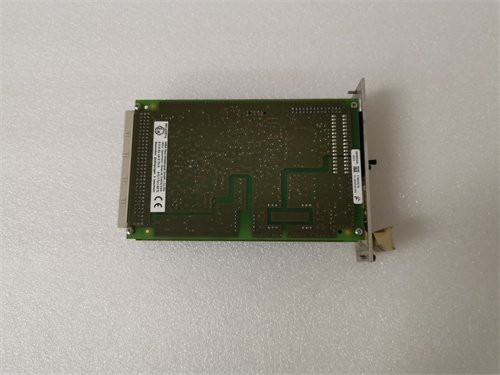
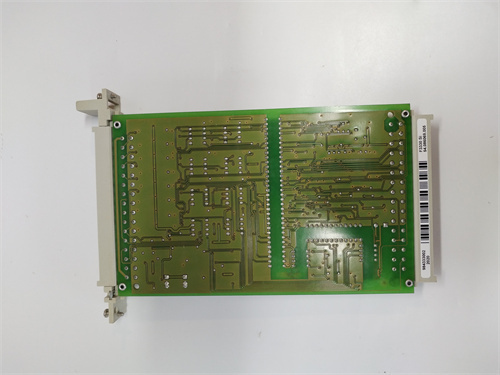
Dimensions It has a compact design with dimensions around 180mm (length) x 150mm (width) x 60mm (height). This allows it to be installed in standard control cabinets or on DIN rails.
Power Supply The F8650X operates on a 24V DC power supply. The power consumption is around 10 – 15W, designed to be energy – efficient for continuous operation in industrial settings.
Processor and Memory
It is equipped with a high – performance processor optimized for real – time data processing and control. The clock speed is sufficient to handle complex algorithms and respond promptly to input changes.
The module has 128 MB of RAM for storing and processing real – time data. There is also 32 MB of non – volatile flash memory for storing the operating system, control programs, and configuration data.
Input/Output Channels
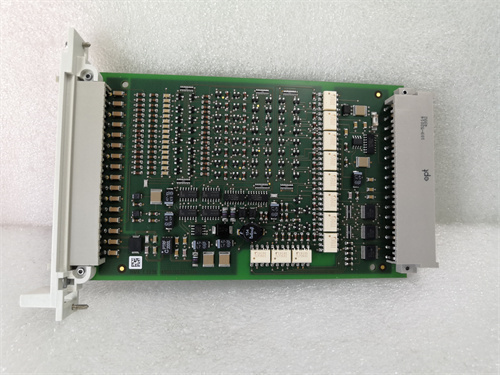
Digital Inputs: There are 16 digital input channels. These inputs can interface with various digital sensors like proximity sensors, limit switches, and photoelectric sensors. The input voltage range is 18 – 30V DC.
Digital Outputs: It offers 8 digital output channels. Each output channel can handle a resistive load of up to 2A and an inductive load of up to 1A, suitable for controlling relays, solenoid valves, and small – sized motors.
Analog Inputs and Outputs: There are 4 analog input channels and 2 analog output channels. The analog inputs can accept signals in ranges such as 0 – 10V or 4 – 20mA for measuring parameters like temperature, pressure, and flow rate. The analog outputs can provide corresponding control signals for actuators.
Communication Interface The F8650X supports multiple communication interfaces. It has an Ethernet port for high – speed network communication, enabling connection to other devices in an industrial network. It also supports Modbus TCP/RTU and Profibus protocols for seamless integration with a wide range of industrial equipment.
Uses
Industrial Automation In manufacturing plants, the F8650X can be used as a control unit for production lines. It can receive data from sensors on the line, process the information, and send control signals to actuators. For example, it can control the movement of conveyor belts, the operation of robotic arms, and the start/stop of processing machines.
Building Automation In commercial buildings, it can manage building systems such as lighting, ventilation, and air – conditioning. By connecting to environmental sensors and occupancy sensors, it can adjust the operation of these systems to optimize energy consumption and provide a comfortable environment.
Power Generation and Distribution In power plants and substations, it can monitor electrical parameters such as voltage, current, and power factor. Based on the monitored data, it can control circuit breakers and other equipment to ensure the stability and reliability of the power grid.
Weight and Dimensions
Weight The F8650X weighs approximately 1.5 – 2 kg, which is relatively light, facilitating easy installation and handling.
Dimensions It has a compact design with dimensions around 180mm (length) x 150mm (width) x 60mm (height). This allows it to be installed in standard control cabinets or on DIN rails.
Characteristics
High – Performance and Flexibility With its powerful processor and multiple I/O channels, the F8650X offers high – performance control and great flexibility. It can be customized to meet the specific requirements of different industrial applications.
Easy Configuration and Programming It provides user – friendly configuration and programming tools. Engineers can easily set up input/output parameters, communication settings, and control logic without complex programming knowledge.
Diagnostic Capabilities The module is equipped with built – in diagnostic functions that can detect faults in the I/O channels, communication interfaces, and power supply. This helps in quick troubleshooting and minimizing system downtime.
Stability and Reliability
Robust Design The F8650X has a durable housing and high – quality electronic components, enabling it to withstand harsh industrial environments, including high levels of vibration, dust, and temperature variations.
Redundancy Options Some configurations may support redundant power supplies and communication paths. In case of a single – point failure, the system can continue to operate without significant disruption, ensuring high – availability in critical applications.
Long – Term Testing The module has undergone extensive long – term testing under various operating conditions to ensure its stability and reliability over an extended service life.
Actual Cases
Automotive Assembly Line In an automotive assembly line, the F8650X was used to control a robotic painting station. It received data from sensors on the robots and the car bodies, and sent control signals to adjust the movement and painting parameters of the robots. This improved the painting quality and production efficiency.
Commercial Building HVAC Management In a large commercial building, the F8650X was installed to manage the HVAC system. It monitored the temperature, humidity, and occupancy in different areas of the building through sensors. Based on this data, it adjusted the operation of the air – handling units and fans via digital and analog outputs, resulting in energy savings and a comfortable indoor environment.




Reviews
There are no reviews yet.