
Description
Product Description
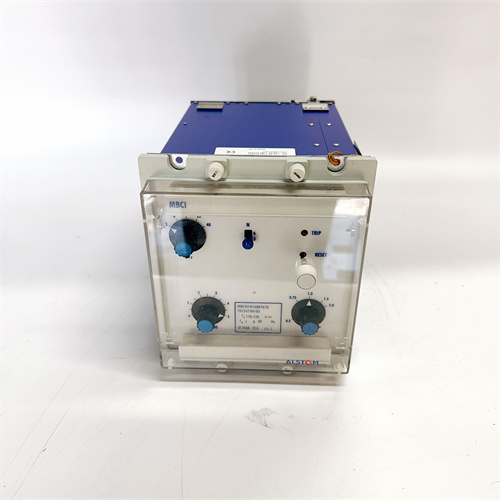
The ALSTOM MBCI01N1AB0761B is a specialized and high-precision analog input module from Alstom’s (now part of GE Vernova) automation portfolio, designed for critical temperature measurement applications in power generation and industrial process control. The “BCI” prefix strongly indicates a module dedicated to Bridge Completion and Conditioning for Resistance Temperature Detectors (RTDs). This module is engineered to accurately measure the small resistance changes in RTD sensors (such as Pt100 or Pt1000) and convert them into high-resolution digital temperature readings for the control system.
Product Parameters
-
Model: ALSTOM MBCI01N1AB0761B.
-
Function: Multi-channel RTD (Resistance Temperature Detector) Input Module.
-
Sensor Type: Compatible with standard RTD types, most commonly 2-wire, 3-wire, or 4-wire Pt100 (100 Ohm at 0°C) or Pt1000 sensors.
-
Number of Channels: Typically 8 or 16 isolated input channels.
-
Measurement Principle: Utilizes a constant current source or bridge completion circuit to excite the RTD and measures the resulting voltage drop to calculate resistance and temperature.
-
Accuracy: High accuracy specification (e.g., ±0.1°C or better) with excellent long-term stability. Includes automatic lead wire resistance compensation for 3-wire and 4-wire connections.
-
Input Range: Covers the full resistance range corresponding to the RTD’s temperature span (e.g., -200°C to +850°C for Pt100).
-
Isolation: High channel-to-channel and channel-to-system isolation to prevent ground loops and noise interference.
-
Communication Interface: Connects to the control system via a proprietary backplane (e.g., for Alspa controllers) or a standard industrial network.
-
Diagnostics: Includes diagnostics for sensor break (open circuit), short circuit, and out-of-range conditions.
Advantages and Features
-
High Precision and Stability: Specifically designed for RTD measurement, offering superior accuracy and lower drift compared to universal analog modules, which is critical for temperature-based control and protection.
-
Advanced Lead Resistance Compensation: For 3-wire and 4-wire RTD connections, the ALSTOM MBCI01N1AB0761B automatically compensates for lead wire resistance, eliminating a significant source of measurement error, especially over long cable runs.
-
Excellent Noise Immunity: The combination of high isolation, differential measurement, and filtering ensures reliable and stable readings even in electromagnetically noisy industrial environments.
-
Multi-Wire Configuration Support: Flexibility to connect 2-wire, 3-wire, or 4-wire RTDs on a per-channel basis, allowing optimization for accuracy versus installation cost.
-
Comprehensive Diagnostics: Real-time channel-level fault detection alerts operators to sensor or wiring failures, enabling prompt maintenance and preventing undetected loss of critical temperature monitoring.
Application Cases in Relevant Fields
-
Turbine Bearing and Winding Temperature Monitoring: The ALSTOM MBCI01N1AB0761B is extensively used in power plants to monitor temperatures of generator bearings, stator windings, and thrust bearings using embedded Pt100 sensors, providing data for alarms and protective trips.
-
Process Reactor and Vessel Temperature Profiling: In chemical and pharmaceutical industries, it measures temperatures at multiple points within reactors and vessels using 4-wire Pt100 sensors for precise batch control and safety.
-
HVAC and Building Management Critical Systems: Monifies temperatures in critical areas like data centers or cleanrooms using high-accuracy RTDs for environmental control.
-
Industrial Motor and Transformer Temperature Protection: Used to monitor winding temperatures in large motors and dry-type transformers via embedded RTDs, initiating cooling or shutdown commands if temperatures exceed safe limits.
Comparisons with Competing Products
Compared to universal analog input modules configured for resistance measurement or simple RTD transmitters, the ALSTOM MBCI01N1AB0761B is a dedicated, high-performance solution.
-
Superior Accuracy for RTDs: It is optimized for the specific excitation, measurement, and compensation requirements of RTDs. A generic analog input module will have significantly larger errors due to lack of proper lead compensation and non-ideal measurement circuits.
-
Integrated Functionality: Combines signal conditioning, lead compensation, and isolation in one dedicated module. Using separate transmitters and analog inputs adds cost, complexity, and potential points of failure.
-
System Integration within DCS/PLC: When used within an Alstom/GE process control system, the ALSTOM MBCI01N1AB0761B offers direct integration with temperature control loops and faceplates, whereas a transmitter-based solution adds an extra conversion layer. For optimal accuracy and integration in critical temperature measurement, the authentic ALSTOM MBCI01N1AB0761B is the specified choice.
Selection Suggestions and Precautions
-
Verify RTD Type and Wiring Configuration: Confirm the module supports your specific RTD type (Pt100, Pt1000) and that you configure each channel correctly for 2-wire, 3-wire, or 4-wire connection. Using the wrong setting causes large measurement errors.
-
Use Correct RTD Wire and Cable: For 3-wire and 4-wire connections, use dedicated, matched-conductor cable to ensure lead resistance compensation works correctly. Do not use dissimilar wire types or lengths.
-
Source from Authorized Process Instrumentation Suppliers: Purchase from authorized GE Vernova/Alstom distributors or reputable temperature measurement specialists. The accuracy of RTD measurement is highly dependent on the quality of the conditioning electronics.
-
Implement Proper Installation Practices: Route RTD wires away from power cables and sources of heat. Ensure good termination at the module’s terminals to avoid contact resistance issues.
-
Configure for Engineering Units: In the control system software, correctly scale the raw resistance or digital value into engineering units (°C or °F) using the standard IEC 60751 (or equivalent) RTD curve.
-
Establish a Calibration Schedule: While highly stable, critical temperature loops (e.g., for protection) should be verified periodically against a precision resistance standard or calibrated temperature source to ensure ongoing accuracy.
1756-1F8IH AB
1756-IM16I AB
1756-1T16 AB PLC
1756-IV16 AB PLC
1756-L63 AB
1756-L63S AB
1756-L65 AB
1756-L71 AB PLC
1756-1A32 AB CAD/
1756-0A8 AB PLC
1756-OA8D AB PLC
1756-0A8E AB PLC
.jpg)

Reviews
There are no reviews yet.