
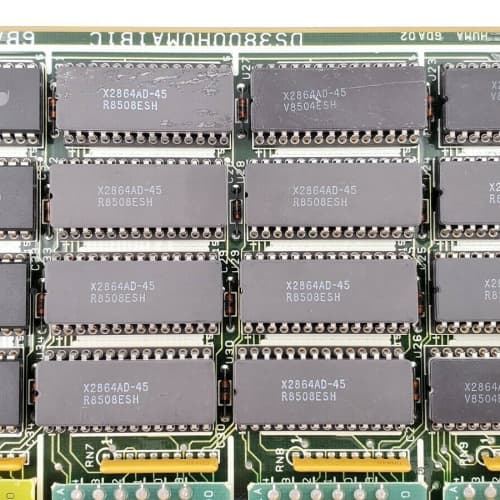
Description
Key Parameters
-
Channels: 4 isolated analog inputs
-
Sensor Type: Pt100 (2‑wire, 3‑wire, or 4‑wire – software‑configurable per channel)
-
Resolution: 24‑bit ADC
-
Accuracy: ±0.05°C (Pt100, 25°C); ±0.2°C over –40°C to +70°C
-
Excitation Current: Software‑selectable 0.1 mA, 0.5 mA, 1 mA (per channel)
-
Excitation Power: 24 V DC (field‑supplied) – requires external 24 V DC supply for sensor excitation
-
Module Power Input: 18–72 V DC (wide‑range) – compatible with 24 V, 48 V, and 60 V DC systems
-
Lead Resistance Compensation: Automatic for 3‑wire and 4‑wire configurations
-
Measurement Range: –200°C to +850°C
-
Sampling Rate: Up to 50 Hz per channel (with 50/60 Hz noise rejection)
-
Diagnostics: Open‑circuit detection, short‑circuit detection, over‑range/under‑range, signal‑loss detection, per‑channel LED status
-
Isolation: 1500 V RMS (field‑to‑backplane); 500 V RMS between channels (per‑channel isolation)
-
Terminal Type: Screw‑type – per suffix “A”
-
Power Consumption: ≤4.5 W (module logic + sensor excitation)
-
Operating Temperature: –40°C to +70°C
Advantages
-
Wide‑range DC power input (18–72 V) – compatible with 24 V, 48 V, and 60 V DC systems; eliminates the need for separate power converters in non‑standard installations.
-
Premium accuracy – ±0.05°C; high precision for demanding applications.
-
24‑bit resolution – provides superior measurement fidelity.
-
Per‑channel isolation – 500 V between channels; prevents ground loops and cross‑channel interference.
-
Automatic lead compensation – for 3‑wire/4‑wire RTDs, cancels lead resistance errors for accurate temperature readings.
-
Software‑configurable per channel – wire configuration and excitation current independently settable.
-
Built‑in linearization – provides direct temperature readout in °C or °F; no scaling required.
-
Enhanced diagnostics – includes signal‑loss detection for proactive maintenance.
-
Open/short detection – detects broken wires or sensor shorts instantly.
-
Hot‑swappable – replace without rack power‑down.
-
Wide measurement range – –200°C to +850°C covers most industrial applications.
Applications
-
Telecom & data centers – temperature monitoring in 48 V DC environments
-
Rail & transportation – onboard temperature monitoring in 24–110 V DC systems (with appropriate supply range)
-
Renewable energy – solar and wind installations with 48 V or 60 V DC bus systems
-
Industrial machinery – equipment with non‑standard DC power buses
-
Off‑grid installations – battery‑powered systems with variable DC voltages
-
Oil & gas – remote monitoring with solar‑powered 24 V or 48 V systems
-
HVAC – building‑wide temperature monitoring
-
Pharmaceutical manufacturing – fermenter, reactor, and storage temperature control
Competitor Comparison
| Feature | DS3820PSWA | DS3820PSSB (24 V Spring) | DS3820PSLB1A (Line‑Powered Spring) |
|---|---|---|---|
| Channels | 4 | 4 | 4 |
| Resolution | 24‑bit | 24‑bit | 24‑bit |
| Accuracy | ±0.05°C | ±0.05°C | ±0.05°C |
| Max Sampling Rate | 50 Hz | 50 Hz | 50 Hz |
| Module Power Input | 18–72 V DC | 24 V DC only | 85–265 V AC / 110–300 V DC |
| Terminal Type | Screw‑type | Spring‑clamp | Spring‑clamp |
| Vibration Resistance | Medium | High | High |
| Cable Length Capability | Standard | Standard | Excellent (line‑powered) |
| Cost | Mid | Mid | High |
The DS3820PSWA is the wide‑range DC power input variant – the most flexible solution for plants with non‑standard DC buses (24 V, 48 V, or 60 V). Compared to the standard DS3820PSSB (24 V only), it offers broader power compatibility at a similar cost. Against the line‑powered DS3820PSLB1A, it is more cost‑effective but requires a local DC supply. For applications with 48 V or 60 V DC systems, the DS3820PSWA eliminates the need for separate power converters, simplifying installation and reducing panel space.
Selection Tips
-
Choose DS3820PSWA when your plant operates on 24 V, 48 V, or 60 V DC power and you need Pt100 temperature monitoring with screw‑terminal wiring.
-
Ideal for telecom, rail, renewable energy, and off‑grid installations with non‑standard DC power buses.
-
Verify the wire configuration (2‑wire, 3‑wire, or 4‑wire) – software‑configurable per channel.
-
For 2‑wire sensors, lead resistance adds error – use 3‑wire or 4‑wire for accurate measurements.
-
If vibration resistance is critical, consider the spring‑clamp variant DS3820PSWB (if available) instead.
-
If your sensors are located far from the control panel (>100 m), consider the line‑powered DS3820PSLB1A variant for superior long‑distance performance.
-
Not suitable for Pt1000, Ni RTDs, or thermocouples – use dedicated modules.
-
Ensure your PLC/DCS can handle the data format from DS3820PSWA.
Precautions
-
Power input range: The DS3820PSWA accepts 18–72 V DC – do not exceed 72 V DC to avoid damage.
-
Lead resistance: For 2‑wire sensors, lead resistance directly adds error – use 3‑wire or 4‑wire for accurate measurements. The DS3820PSWA compensates for 3‑wire/4‑wire automatically.
-
Excitation current: Higher currents (1 mA) produce self‑heating errors in small Pt100 elements – use 0.1 mA or 0.5 mA for sensitive sensors.
-
Wiring: Use shielded twisted‑pair cables; ground shield at module end only. For 4‑wire, use separate pairs for excitation and sense leads.
-
External 24 V supply: Ensure the field supply has sufficient capacity for the excitation current of all channels (up to 4 mA total at 1 mA per channel).
-
Signal‑loss detection: Requires minimum sensor impedance – very low‑impedance sensors may not trigger detection.
-
Power sequencing: Apply backplane power before field power.
-
Calibration: Perform periodic calibration using precision resistors to maintain accuracy.
-
Spare: Keep one spare DS3820PSWA for critical temperature loops – the wide‑range power variant may have longer lead times.
A-B 2711-K5A8Ĥ
A-B 1747-BA
NI SCXI-1125


Reviews
There are no reviews yet.